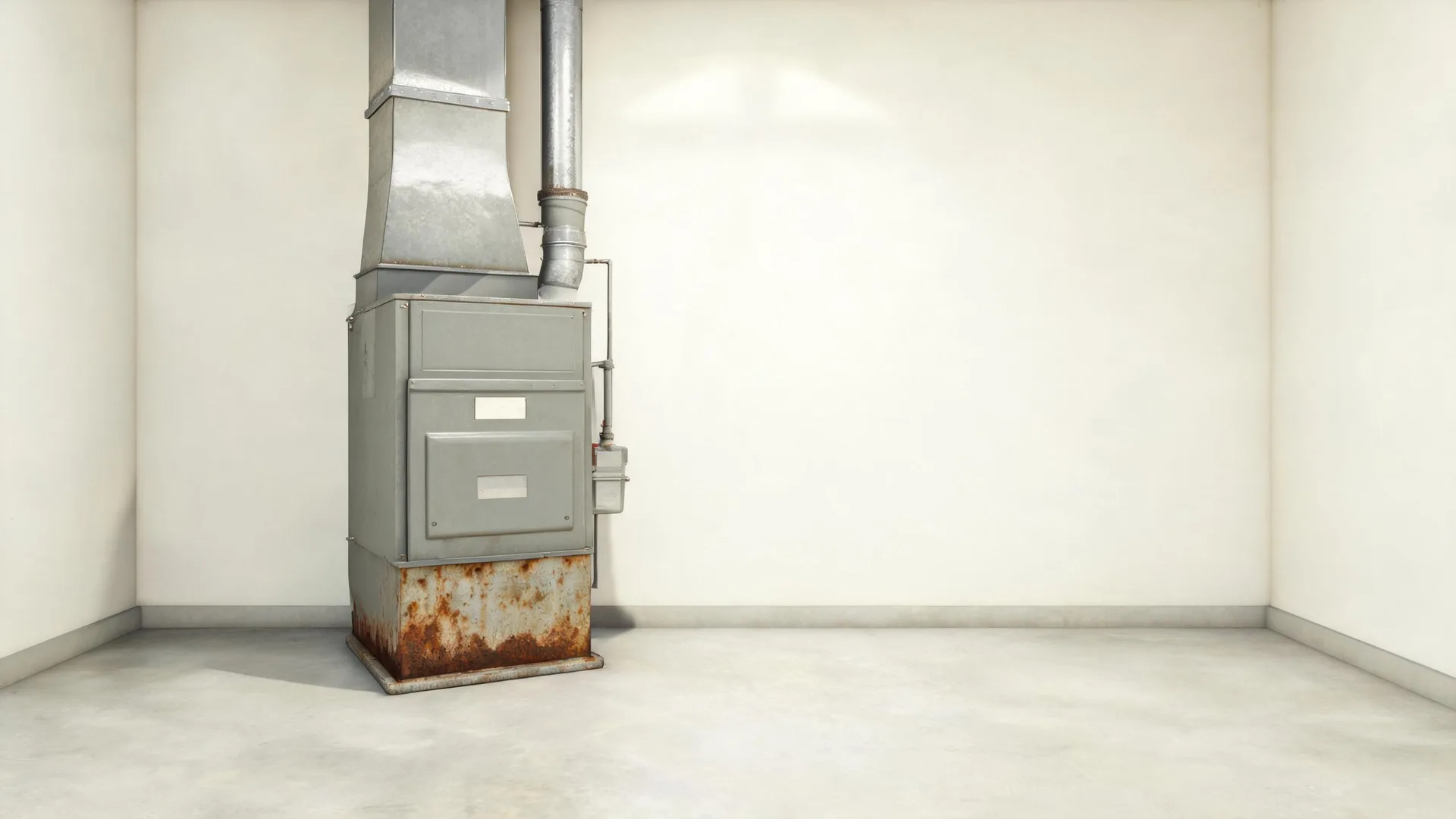
Eight months of work a year
Furnaces in Pahrump run from October through May, with overnight lows averaging 23°F in December, January and February. That's a long stretch of hard running, not just a few cold snaps.
Takes about a minute. No obligation.
Furnaces in Pahrump run from October through May, with overnight lows averaging 23°F in December, January and February. That's a long stretch of hard running, not just a few cold snaps.
Nye County saw 51 winter storms between 2015 and 2024, from heavy snow to ice to blizzard conditions. A furnace that already runs long hours gets pushed harder still when weather like that moves through.

NOAA nClimDiv, 1991–2020 normals
Nye County saw 356 damaging wind events between 2015 and 2024, far more than hail or tornadoes.
Most furnace trouble in Pahrump still traces back to long hours of running, not the weather outside.



September is worth a call before heat ever kicks on in October. Furnaces sit idle all summer, and a part that was already going, a cracked heat exchanger, a weak igniter, a failing limit switch, tends to give out the moment the system starts running long hours again. That first cold stretch in October is when a lot of furnaces in Pahrump show their age. Catching it in September means a repair, not a cold house and an emergency call once the season's eight months of running have already started.
Electricity in Nevada runs $43.95 per million Btu. A furnace that's short-cycling, running constantly, or working around a bad part uses more of it than one running right, for as long as it stays that way. Worth getting looked at now, while it's a repair and not a guessing game.
Find a contractor
Eight months of running a year wears parts down on a schedule. If your furnace is acting up now, in the middle of that stretch, it's worth finding out which part gave out rather than just resetting it and hoping. A tech who sees the actual wear, on the igniter, the heat exchanger, the limit switch, can tell you if it's a quick fix or the start of something bigger.
An igniter that won't glow hot enough. A flame sensor coated with residue. A limit switch that trips for no clear reason. Each one stops the furnace the same way. It shuts down before it starts, or it shuts off mid-cycle. These parts wear out from doing their job over and over, not from any single bad day.
A motor that hums but won't spin has a seized bearing or a failed capacitor behind it. One is a quick swap. The other means the motor itself is done. A furnace that starts fine but blows cold air almost always comes down to the blower, not the burners, so that's where a tech looks first.
Before calling anyone, check the thermostat is set to heat, not just on, and that the batteries aren't dead. Then pull the filter and look at it. A filter clogged with dust chokes off airflow and can trip the limit switch or make the furnace short-cycle, and you can see the problem just by holding it up to a light. Check the breaker box too. Furnaces run on a dedicated circuit, and a tripped breaker kills the whole system with no warning light to tell you why. Outside, look at the vent hood and make sure nothing, no debris, no nest, no buildup, is blocking it. If the furnace runs but the air coming out is cold, that's not something to chase further on your own. That points to the blower or the ignition system, and it's a job for a tech, not a reset button.
A tech who's already there can usually tell you in a few minutes whether a repair makes sense, because it comes down to what failed and what else is close behind it. A cracked heat exchanger ends the conversation. That's a safety issue, not a repair, and the furnace gets replaced. A bad igniter, a dirty flame sensor, a failed capacitor are different. Those parts fail on their own, the rest of the furnace is unaffected, and swapping one brings the whole system back to normal. Age matters too, but not by itself. A furnace that keeps coming back for one repair after another is telling you something a single burned-out igniter isn't. The question isn't just what broke. It's whether this is a furnace that fails once and runs fine for years, or one that's started failing in a pattern.