

Furnace carbon monoxide signs in Nevada

A local pro who knows furnaces gets your details and gets in touch.

Get a furnace pro

What are the signs of carbon monoxide from my furnace?

Your furnace runs most mornings and nights once the weather turns, and a gas furnace that isn't venting right can put carbon monoxide into the house without any smell or color to warn you. You want to know what to actually watch for, in the furnace itself and in how you feel, so you know when it's a real problem and not just a dusty filter.

Soot near the furnace, a yellow flame instead of blue, and headaches that ease when you leave the house

Carbon monoxide has no smell, so the signs show up elsewhere. Streaks of soot around the furnace cabinet or vent pipe mean something isn't burning clean. A furnace flame should burn steady and blue. If it's flickering yellow or orange, the fuel isn't burning all the way, and carbon monoxide is a byproduct of that. Rust on the vent pipe or moisture collecting near the furnace points to a draft problem keeping exhaust from leaving the house. In people, the signs look like a bad flu that never quite turns into one: headaches, nausea, dizziness, feeling tired for no reason. If those ease up when you're away from the house and come back once you're home, the furnace is worth checking before you run it again.

A gray furnace with white PVC vent pipes stands beside sheet-metal ductwork in a basement with a smooth concrete floor, exposed wood framing, and plastic sheeting on the walls.

Normal operation

A furnace running right burns clean. The flame behind the window is steady and blue, not yellow or flickering. No soot around the cabinet, no rust streaking down from the flue pipe. The vent pipe outside stays clear and draws exhaust straight out without smoke curling back toward the house.


A beige furnace with two access panels stands against a concrete basement wall, with galvanized sheet-metal ductwork, a white PVC pipe, flexible conduit and insulated ducting around it.

Signs of trouble

Rust on the cabinet or flue pipe means moisture is escaping where it shouldn't. A yellow flame instead of blue, soot stains near the burner, or a flue pipe that's come loose at a joint all point to exhaust going somewhere other than outside. Any of these is worth a call before you run the furnace again.

House Signs vs. Furnace Signs

Signs in the house

  • A CO alarm sounding means act on it immediately, even if nobody feels sick yet.
  • Headaches, nausea, or drowsiness that show up when the furnace is running and ease when you leave the house.
  • Soot stains around the furnace cabinet or registers point to incomplete combustion inside the unit.
  • A pilot light or burner flame that looks yellow instead of blue is burning the gas wrong.
  • Condensation or rust forming on windows and walls near vents can mean exhaust isn't leaving the house.
  • Pets acting sluggish or sick for no clear reason sometimes show symptoms before people do.

Signs at the furnace itself

  • A cracked heat exchanger lets combustion gases mix with the air your furnace blows through the house.
  • Rust or streaking on the flue pipe means exhaust has been leaking instead of venting outside.
  • A flue pipe that's disconnected or has a visible gap can't carry carbon monoxide out of the house at all.
  • Scorch marks or melted wiring near the burner compartment show heat and exhaust aren't going where they should.
  • A blocked or capped vent outside, from nesting birds or debris, forces exhaust back toward the furnace instead of away from it.
  • An inducer motor that sounds strained or runs rough can fail to pull exhaust out the way it's built to.
A beige residential gas furnace with white PVC vent pipes, copper and yellow gas lines, and adjacent sheet-metal ductwork stands on a concrete floor beside a plain white wall.

Why the flame color matters

A furnace burns natural gas with a set amount of air mixed in. Get that mix right and the flame burns blue and complete, turning the gas into heat, water vapor, and carbon dioxide that vents outside. Get it wrong, from a dirty burner or a cracked heat exchanger, and the gas burns incomplete. That incomplete burn is where carbon monoxide comes from. A yellow or orange flame tip is the burner telling you the mix is off before a detector ever has to.

A gray high-efficiency furnace with white PVC vent pipes and metal ductwork stands on a concrete floor beside a plain off-white wall in a basement.

Why venting has to stay clear

The flue pipe carries exhaust gas out of your house and away from the rooms you live in. It relies on a steady draft pulling upward, and anything that blocks or weakens that draft, a bird's nest, a dented pipe, backdrafting from a bathroom fan, sends that exhaust back into the house instead. This is why a furnace can run for years without trouble and then start pushing CO indoors the same winter a vent gets blocked, with nothing else about the unit having changed.

A smiling man in a denim shirt and white t-shirt stands in an open dark doorway of a stucco house, facing a woman with long brown hair and a green jacket seen from behind in the foreground.

What a bad furnace puts at risk in your house

Nevada homes seal up tight once the nights turn cold, and that's exactly when a furnace runs longest, in the early morning and again after dark. Every hour it runs on a bad burn is an hour that gas stays in the house instead of going out the flue. Nobody in the house has to be awake to breathe it in. A sleeping household can go eight hours without anyone noticing a thing.

If you've seen soot around the cabinet, a yellow flame, or a CO alarm that's gone off even once, that furnace needs a look before it runs again, not after the next cold snap. Sending in your information connects you with a contractor who takes it from there, so you're not the one calling around trying to find somebody who can come out this week.

A gray upholstered sofa with a matching cushion sits beside a potted plant and a wooden table holding a small green plant in a stone pot, near a curtained window.
A smiling man in a dark navy sweater sits on a light sofa in a living room, with a glass bowl of popcorn on a wooden coffee table and bookshelves behind him.
A smiling man in a dark green sweater sits on a tan leather sofa in a dimly lit living room, with a bowl of popcorn in the foreground and a kitchen area blurred behind him.
A smiling middle-aged man in a dark shirt sits on a gray sofa in a living room, with a bowl of popcorn on a side table and shelves, a window and kitchen area behind him.
A smiling bearded man in a dark gray t-shirt sits on a gray couch in a living room, with a large glass bowl of popcorn on a wooden table in the foreground.

Matched to your furnace job

A furnace with a cracked heat exchanger or a blocked vent doesn't announce itself. It keeps heating the house the same as always, and the only clues are the ones the sections above lay out: a flame that's turned yellow, soot where there shouldn't be any, a headache that lifts the minute you step outside. None of that tells you how bad the crack is or whether the blockage is a bird's nest or a collapsed pipe, and it isn't something to wait on through another cold morning to find out. A tech who works on furnaces in Nevada homes can check the exchanger, the venting, and the flame itself in one visit and tell you what's actually happening inside that cabinet. Once you send the request, that's what you're waiting on, not a search for who to call.

If you have a CO alarm

A CO alarm that goes off is telling you something a furnace can't. Get everyone outside into fresh air, including pets, and don't go back in to search for the source. Call the gas company or 911 from outside if anyone has a headache, feels dizzy, or is sick to their stomach. Leave the furnace off until someone qualified has looked at the heat exchanger and the vent pipe. An alarm that keeps tripping after the house has aired out is not a false alarm to reset and ignore. It means the furnace is still putting carbon monoxide into the air, and running it again before it's checked puts the house back where it started.

If you only have a feeling

Maybe nobody's sick, there's no alarm, but something about the furnace seems off this winter. A pilot light that looks more yellow than it used to, a faint smell near the vents, a headache that keeps showing up in the room where the furnace is loudest. None of that proves carbon monoxide is in the house, but it's worth acting on anyway, because the symptoms that come before an alarm trips are the same ones that come after. Have the furnace looked at before the next cold morning, not after. A furnace that's venting wrong doesn't fix itself, and the months it runs longest are the months this matters most.

A gas furnace with a louvered upper panel stands on a concrete pad in a basement, flanked by sheet-metal ductwork, white PVC and metal pipes, and insulated columns.
Before you get your furnace repair
A dark high-efficiency furnace on a concrete pad in a basement, connected to galvanized ductwork, white PVC vent pipes, and copper and black gas piping, with concrete walls and wood framing nearby.
After you get your furnace repair

Old furnace, same house

If your furnace came with the house and you haven't had the heat exchanger checked, the risk is harder to rule out. Metal that's cracked or rusted through can leak combustion gas into the air the furnace pushes into your rooms, and you can't see a hairline crack by looking through the cabinet window. A furnace can run for years past the point where the exchanger is sound. The only way to know is to have someone check it, not to wait for a sign that may never show up before the gas does.

New or recently serviced

A furnace that's newer or had a tune-up recently is less likely to be the source, but it isn't ruled out. A cracked exchanger can happen to a newer unit, and a vent pipe can get blocked by a bird nest or debris regardless of the furnace's age. If the flame still burns blue and steady, there's no soot, and the vent pipe outside draws clean, that's a good sign. It's not a guarantee. A CO alarm in the house is still worth having, no matter how new the furnace is.

Winter nights average 33°F statewide

A 33°F night means your furnace isn't cycling on and off a few times, it's running long stretches to keep up, often straight through the early morning hours. Every one of those hours depends on the heat exchanger and vent working right.

NOAA nClimDiv 1991-2020 county normals weighted by homes

A beige high-efficiency furnace with white PVC vent pipes stands beside galvanized sheet-metal ductwork in a basement with a concrete floor, exposed wood studs, and metal piping along the wall.
A steady blue flame and a clear vent pipe mean the furnace is burning gas all the way to carbon dioxide and water vapor, not CO.
An older beige furnace with a louvered vent panel stands on a concrete basement floor beside galvanized sheet-metal ductwork, a metal flue pipe and vertical pipes along a concrete wall.
A cracked flue connection or a flame pulling away from the burner can push exhaust into the house instead of outside.
  1. Burner ignites and mixes gas with air for combustion.

  2. Flame heats the heat exchanger from inside its chambers.

  3. Blower pushes house air across the hot exchanger walls.

  4. Exhaust gas exits through the flue to outside air.

A woman in a dark gray sweater reclines on a light sofa with eyes closed and a slight smile, under a textured gray blanket with an open book resting on her lap, with a lit table lamp and plant in the background.
A smiling bearded man in a navy crewneck sweater sits at a dinner table with a glass of red wine, plates and glasses in the foreground, in a dimly lit room with a lamp and framed picture behind him.
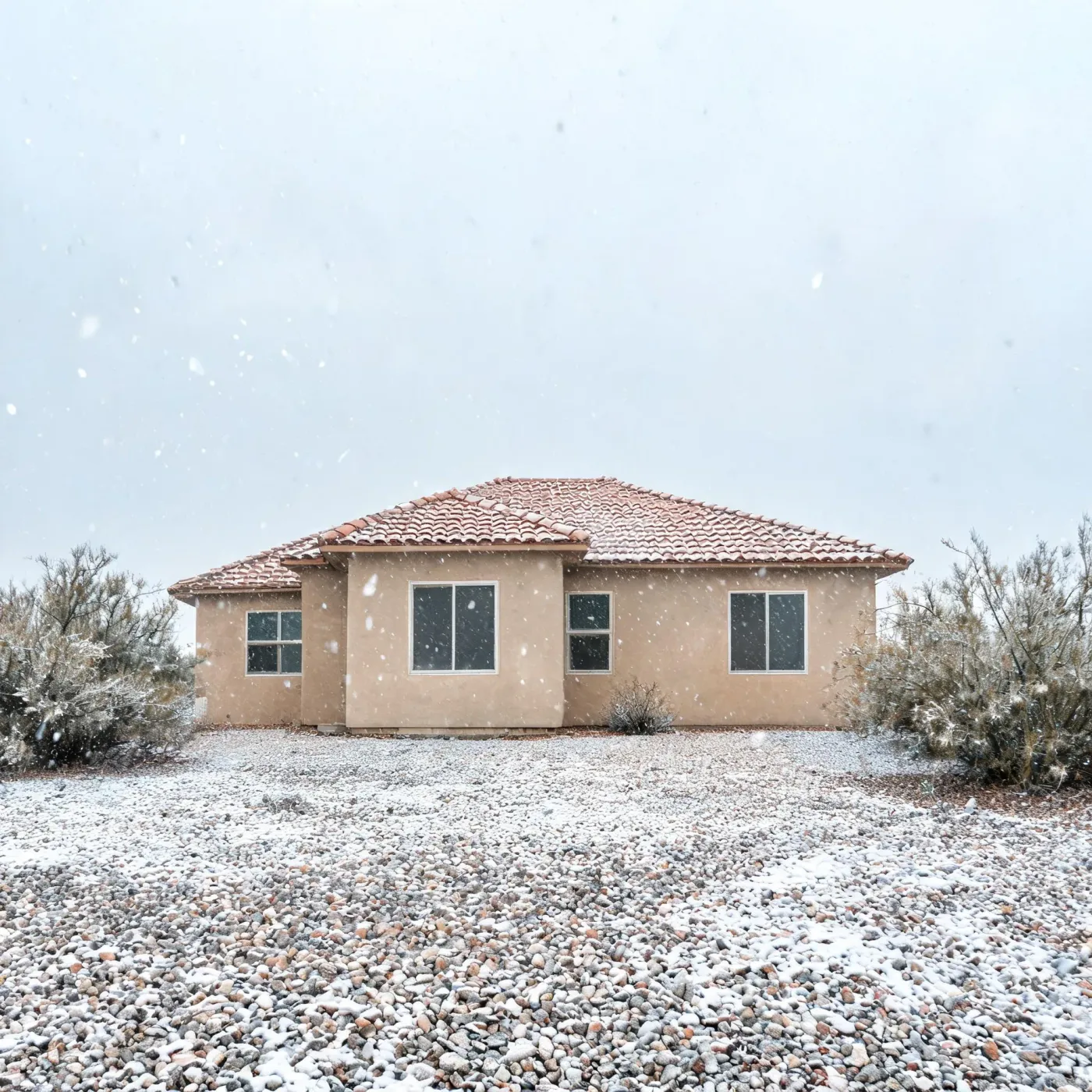
A single-story tan stucco house with a red tile hipped roof during falling snow, surrounded by light snow-dusted gravel ground and desert shrubs under a pale overcast sky.

Winter nights average 33°F across Nevada, per NOAA climate data. That's cold enough that your furnace isn't just kicking on for a few minutes here and there. It's running long stretches, often from before sunrise through the coldest part of the night, to keep the house at temperature. More hours running means more hours the heat exchanger and flue are doing their job under load. If there's a crack in the exchanger or a blockage in the vent, those long overnight runs are when it matters most, while everyone in the house is asleep and least likely to notice a problem starting.

NOAA nClimDiv 1991-2020 county normals weighted by homes

A furnace that's venting wrong gives you a yellow flame, soot around the cabinet, a vent pipe that won't stay clear, or a CO alarm that won't stop. Any one of those is enough reason to get the heat exchanger and vent checked before the next cold night. You don't have to figure out which part failed or whether it's serious enough to act on. Send the form and that stops being something you have to work out alone. A contractor who handles this gets your information and reaches out to you, and from there it's off your plate. Nevada winters put a furnace through long stretches of runtime, night after night, and a problem that's been building doesn't need to keep building while you decide what to do about it. Whatever you noticed, the flame, the smell of exhaust indoors, a headache that eases once you're outside, you've already done the hard part by catching it. Getting someone out to look is the easy part from here.

A gray high-efficiency furnace with two access panels stands on a concrete basement floor, connected to sheet-metal ductwork and white PVC vent pipes, with wood framing and a gas line nearby.

A furnace pro near you

RepairFurnace or heatingNevada
Step 1 of 2

What ZIP code is the job in?