Profile view of a bearded man wearing a black baseball cap and a dark gray T-shirt against a plain light background.

Why your house is dry with the heat on in Nevada

Tune-up, service, or cleaningFurnace or heatingNevada
Step 1 of 2

What ZIP code is the job in?

Your furnace is not adding moisture back into the air, and in Nevada the air it starts with is already dry. Gas furnaces heat air by pushing it past a hot heat exchanger. Nothing in that process puts water vapor back in, and warm air holds whatever little moisture was there to begin with even less comfortably than cold air does. Outside, Nevada's air is dry most of the year. Once your furnace heats it, the relative humidity inside your house drops further, which is why your skin, nose, and throat feel it the most once the heat kicks on for the season. This is normal for a gas system and not a sign anything is broken. A furnace that is cycling properly, with clean filters and a sound heat exchanger, will still leave the house feeling dry. A whole-house humidifier added to the system is the usual fix, and it is worth asking about during a maintenance visit rather than as a separate repair.

A smiling man in a gray long-sleeved shirt stands in a kitchen looking to the side, with open shelves of dishes, a white mug on the counter, a potted plant, and a view through a doorway into a living room.
A smiling bearded man in a green sweater sits at a white marble kitchen island with a mug, potted plant and bowl of fruit, in a bright white interior with open shelving and an arched doorway.
A smiling man with dark curly hair and a beard, wearing a dark green knit sweater, stands at a white marble kitchen counter with a dark blue mug, with open shelving, pendant lights and a houseplant behind him.
A smiling man in a green ribbed sweater stands behind a wooden table holding a ceramic mug of coffee in a kitchen with white subway tile, shelves of potted plants, and a bowl of fruit.

Relative humidity is just a ratio: how much water vapor is in the air compared to how much it could hold at that temperature. Heat the air without adding moisture and the ratio falls, because the top of that ratio just climbed while the actual water vapor stayed the same. Nevada starts most of that air dry to begin with, whether it's pulled in from outside or drawn through an attic space. Then the furnace cycles on and off all day, every call for heat pushing more of that same dry air through the house. If the house is sealed up tight, that air doesn't get traded out for anything wetter. It just keeps circulating, drying out a little more each pass. You'll feel it as static when you touch a doorknob, see it as cracked skin or furniture joints pulling loose. A thermostat only controls temperature, so it can't do anything about the moisture side. That's a separate job, and it's what a whole-house humidifier tied into the ductwork is built to handle.

Why the dryness keeps building

  • Relative humidity measures water vapor against what the air could hold at its current temperature, so heating air without adding moisture drops that percentage fast.
  • Air pulled into your return ducts from outside or a dry attic space carries whatever moisture Nevada's climate gave it, which is not much most of the year.
  • Each time the thermostat calls for heat, the furnace cycles on, pushes that dry air through the house, and shuts off, repeating all day.
  • A tight, well-sealed house traps that dried-out air instead of exchanging it with outside air, so the dryness builds over a heating cycle.
  • Static shocks, cracked skin, and wood furniture pulling apart at the joints are signs the air has dropped well below comfortable humidity levels.
  • Whole-house humidifiers tie into the ductwork and add moisture to the air stream as the furnace runs, which a thermostat alone cannot do.
A smiling man with dark curly hair in a navy t-shirt sits on a gray couch indoors, with a large-leafed plant and a window in the background.
A bearded man in a plaid flannel shirt stands in a kitchen looking out a window toward snow-covered shrubs, with a steaming mug on the windowsill and potted plants on a shelf behind him.

Can I just run a humidifier instead of getting the furnace checked?

A humidifier feels like the simpler fix. Plug it in, let it run, skip the service call. If Nevada's dry air is the real problem, it seems like adding moisture back in should solve it on its own, no furnace inspection needed.

A humidifier helps the air, not the furnace

A humidifier adds moisture to the room. It does nothing for what's happening inside your furnace. If the igniter is weak, the flame sensor is dirty, or the heat exchanger has a problem, a humidifier running in the next room won't catch any of it. Those issues don't announce themselves the way dry skin or static shock does. They show up as a furnace that short cycles, takes longer to light, or in the worst case, cracks a heat exchanger and lets combustion gases into your ducts. A humidifier is worth running for comfort. It's not a substitute for someone checking the furnace itself, and it won't tell you if something inside it is wearing out.

A gray residential furnace with two panel doors stands against a plain light wall in a concrete-floored room, connected to metal ductwork and white and copper pipes.

Where the dry air comes from

Nevada's air carries little moisture to begin with, long before it reaches your furnace. Heating it pushes the relative humidity down further, because warm air can hold more water vapor than cold air, so the same amount of moisture reads as a lower percentage once it's heated. That's why the house feels driest on the coldest mornings, when the furnace is running longest to keep up.

A gray high-efficiency furnace with white PVC venting pipes stands against a plain wall in a basement, connected to sheet-metal ductwork on a concrete floor.

What a tune-up actually checks

A maintenance visit looks at the burner flame, the heat exchanger, and the blower, not at humidity levels, since humidity isn't something the furnace controls. What it can catch is a cracked heat exchanger or a dirty flame sensor, problems that have nothing to do with dry air but get blamed on it anyway because they show up the same months. Catching those early keeps a small repair from turning into a furnace replacement.

What you're probably noticing around the house

Static shocks off doorknobs and light switches. Skin that feels tight by evening, lips that chap no matter how much balm you put on. Wood floors with gaps that weren't there in July, cabinet doors that stick or stop closing right. A sore throat most mornings, or a nosebleed that comes out of nowhere. Houseplants that need water twice as often. None of this means the furnace is broken. It means the air moving through your house has almost nothing left to give. Left alone, wood trim and flooring can crack or pull apart at the joints over a winter, and that's a repair bill with a different cause than the one you'd expect.

A gray high-efficiency furnace with white PVC vent pipes stands against a concrete basement wall beside sheet-metal ductwork, a small condensate pump on the floor, and exposed wood framing at left.

A furnace running clean

This is what a gas furnace looks like doing its job. The burners fire, the heat exchanger warms the air, the flue carries the exhaust out through the PVC pipe. Nothing here was ever going to add moisture back into your house. That was never the furnace's job.


A gray sheet-metal furnace with flue pipe and adjacent ductwork stands against a stone basement wall on a concrete floor, with white PVC and metal pipes running nearby.

A furnace nobody's looked at

This one still heats the house. But a cracked heat exchanger, a dirty flame sensor, or a clogged condensate line won't show up by looking at the dry air in your rooms. In Nevada you'll blame the skin and the static long before you think to check the furnace itself.

A metal furnace with louvered panels stands against a concrete basement wall, connected to sheet-metal ductwork and a round flue pipe, with wooden framing posts and a pipe nearby.
Before you get your furnace maintenance
A gray gas furnace stands on a concrete basement floor, connected to sheet-metal ductwork, white PVC vent pipes, and a yellow gas line, with plastic sheeting covering the walls.
After you get your furnace maintenance

Finding a pro stops being your job

Skip searching for a furnace pro and answer a few questions instead.

No fee to send it, and nothing to sign.

What maintenance actually changes

  • A dirty flame sensor or ignitor can make a furnace short cycle, running for a few minutes then shutting off before the air ever gets fully warm.
  • Short cycling pulls in more cold, dry outside air through the ducts per hour than a furnace that runs a normal length cycle.
  • A clogged filter restricts airflow across the heat exchanger, forcing the blower to run longer to reach the thermostat setting.
  • The longer the blower runs, the more dry air gets pushed through your house and the lower the humidity drops.
  • A technician checks static pressure in the ductwork, since leaks or blockages let in unconditioned air from the attic or crawlspace.
  • Combustion air for the burners is pulled from inside the house unless the furnace has a dedicated outside air intake, drawing dry indoor air toward the flue.

A furnace that short cycles is working against you twice over. Each restart pulls in another slug of cold, dry air from outside, and the burners never settle into the longer, steadier cycle that would actually bring the house up to temperature efficiently. Most of the time the cause is small: a flame sensor coated with a thin layer of oxidation, or an ignitor that's starting to fail. Either one can shut the burners off early, again and again, all day. A clogged filter does something different but related. Airflow across the heat exchanger drops, the blower senses the house isn't catching up to the thermostat, and it keeps running past the point it normally would. Longer blower run time means more air movement through your ducts, and in Nevada that air is dry to begin with. Static pressure matters too. A technician checking it can find duct leaks or blockages that let in unconditioned attic or crawlspace air, which is almost always drier than what's already circulating inside. And unless your furnace has a dedicated outside air intake, the burners are pulling combustion air from inside the house itself, drawing on the same indoor air you're trying to keep humidity in. None of this is about adding moisture back. It's about stopping the furnace from making the dry air worse than it has to be.

Winter nights average 33°F statewide

33°F is the average overnight low here from December through February. That cold air can't hold much moisture to start, so your furnace is working with a thin supply before it even fires. The colder the night, the drier the air it pulls in.

NOAA nClimDiv 1991-2020 county normals weighted by homes

  1. Thermostat calls for heat and opens the gas valve.

  2. Igniter glows hot enough to light the burners.

  3. Burners fire and warm the heat exchanger.

  4. Blower pushes air across the hot exchanger into your ducts.

A gray high-efficiency furnace in a basement with sheet-metal ductwork, white PVC vent pipes, metal plumbing lines, a condensate pump on the floor, and a window showing green trees outside.
A furnace running clean moves air through the house without adding anything else to your problem, which is as good as it gets for dry winter air.
An older metal furnace with PVC and metal pipes stands on a concrete basement floor beside galvanized ductwork, with wooden stairs and a water tank in the background.
A furnace choked with dust and corrosion forces the blower to run longer, pulling more dry air through your ducts to make up the difference.
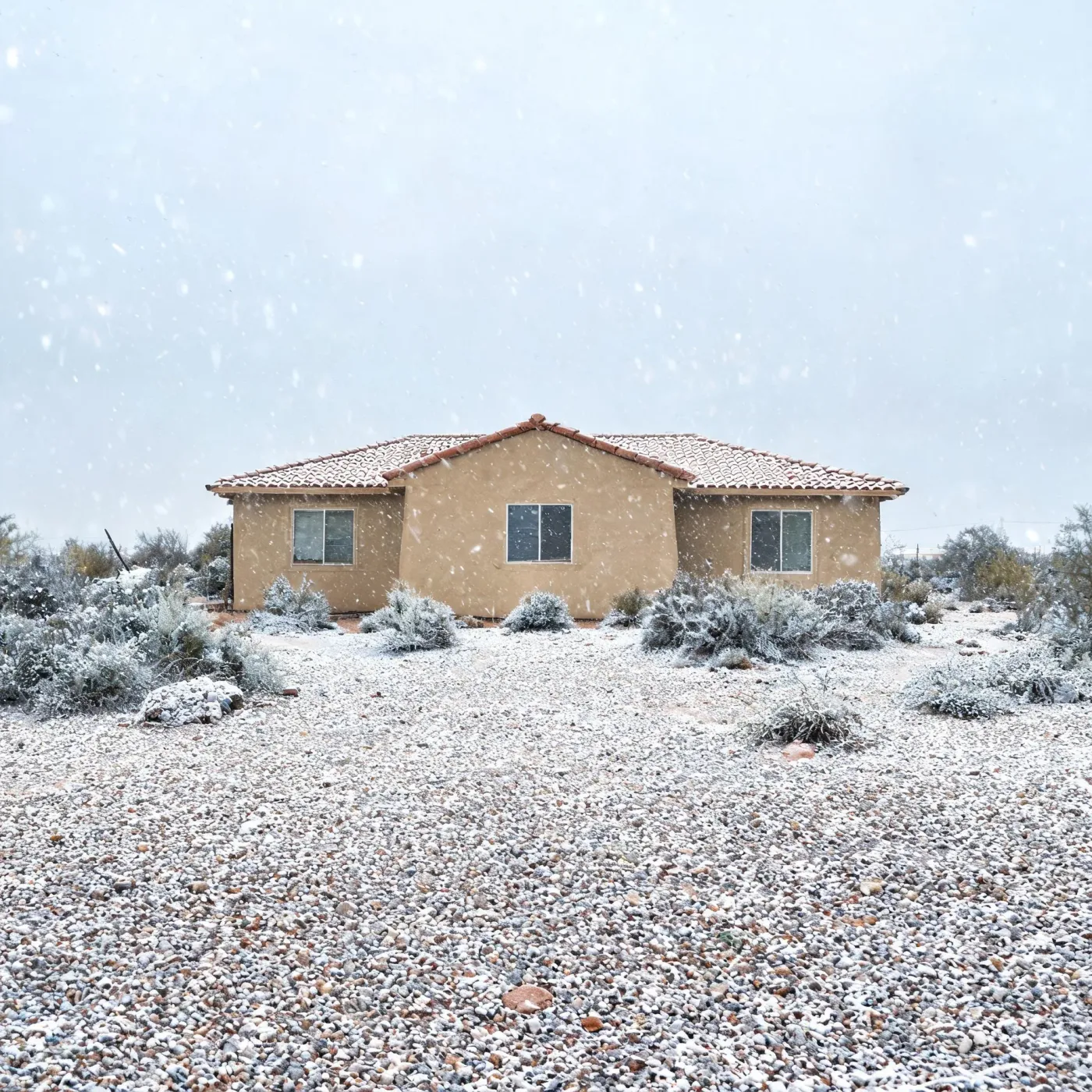
A single-story tan stucco house with a tile roof stands behind snow-dusted desert shrubs and a gravel yard during falling snow.

Nevada winter nights average 33°F statewide, according to NOAA climate records. Air that cold holds almost no moisture before your furnace ever touches it, so each time the burners fire, they're heating a thin, dry supply and pushing it even drier through your ducts. That's why the house feels parched by morning even with the thermostat set low. A furnace running clean just moves that dry air through. One that's short cycling or starved for airflow pulls in more of it per hour, so the gap between what your house needs and what the night air gives it only gets wider.

NOAA nClimDiv 1991-2020 county normals weighted by homes

A closed silver laptop and a ceramic mug of dark coffee sit on a wooden table in front of two chair backs, with a kitchen counter, tiled backsplash, wooden cutting boards, a vase of greenery and a potted plant by a window behind.

Your furnace isn't the cause, but it isn't helping either

Nevada air starts dry and your furnace makes it drier still. That's the whole answer. A furnace running clean does the least amount of damage possible, moving air through your ducts without choking the blower or pulling extra cold air in through a short cycle. A furnace that's overdue for a look does more of both, and your skin, your floors and your doorknobs feel it first.

A tune-up won't put moisture back into your air. Only a humidifier does that. What a tune-up does is stop the problem from getting worse than Nevada already makes it. If you've been putting off the search for someone to look at it, that part is the easy piece to hand off. Finding a licensed contractor, calling around for quotes, explaining the short cycling three different times to three different companies, that's the work this page clears out of your way.

A living room corner with a light beige sofa holding a textured taupe cushion, a large ceramic vase of olive branches by a window, a framed neutral artwork on the wall, and a dark bowl with stacked books in the foreground.
A single-story house with a dark tile hip roof, stucco walls and stone-clad entry, with a saguaro cactus in the left foreground and desert hills and mountains in the background.

Let someone else find the pro

Hand it over

Sending the form costs nothing.

A furnace that's cycling longer than it should pulls more dry air through your house every day you wait. Getting it checked once takes that off your plate, no calling around, no repeating the same story to three different contractors.