Describe what your furnace is doing once, in one form.
A furnace ignitor that keeps failing isn't bad luck. Something is making it fail again, and replacing the part a second or third time without finding that cause just buys you a few more weeks before it quits again, usually on a cold night when you need the heat most.
Nevada's dry air plays a part in this more than people think. So does dust pulled through a dirty filter, a crack in the flame sensor circuit, or a draft problem in the venting that stresses the ignitor every time the burners try to light. A tech who works on furnaces around here all winter has seen this pattern before and knows where to look first.
Finding that person is usually the slow part. You'd be searching through listings, calling a few numbers, explaining the same thing about your furnace and this same ignitor each time, then waiting on quotes to come back so you can compare them against each other. That's time you're spending before anyone has even looked at your furnace.
This page connects you to one licensed Nevada contractor instead, someone local who already knows gas furnaces and what tends to go wrong with them in this climate. No field of companies competing for your call, no sorting through bids. Just the person who can get a look at your ignitor and tell you, specifically, why yours won't hold.
From here, the rest of this page walks through what actually causes repeat ignitor failures and what to check before you call anyone. When you're ready for someone to take a look, the button below is what starts that.
Why does my furnace ignitor keep failing in Nevada?
Your furnace worked fine all winter, then the ignitor failed. You had it replaced, and a few months later it failed again. That's not normal wear, and you want to know what's actually causing it before you pay for a third one. You're not looking for a quick patch, you want someone who can find the real reason and fix that instead.
Usually a wiring or airflow problem is burning out the new part along with the old one
A hot surface ignitor is built to handle being switched on and off, but it can't handle the wrong voltage or restricted airflow hitting it every cycle. In most cases the ignitor itself isn't the problem. Something upstream, a loose connection, a failing control board, a dirty flame sensor making the system retry ignition over and over, is stressing it each time the furnace fires. Nevada homes run the furnace for several months each winter, and because the furnace sits idle the rest of the year, a wiring issue can go unnoticed until the system starts up again and the same failure repeats.
Is your furnace clicking and never catching
You hear the igniter glow, then clicking or a faint whoosh that doesn't hold, and the furnace shuts itself off before any warm air comes through the vents. Maybe a burner lights late, or with a small pop instead of a steady catch. Some mornings it starts fine, other mornings it takes two or three tries. Left alone, a furnace that keeps failing to light will eventually stop lighting at all, usually on the coldest night of the stretch, when the parts inside are working their hardest and you and your household are left without heat until someone can get out to look at it.
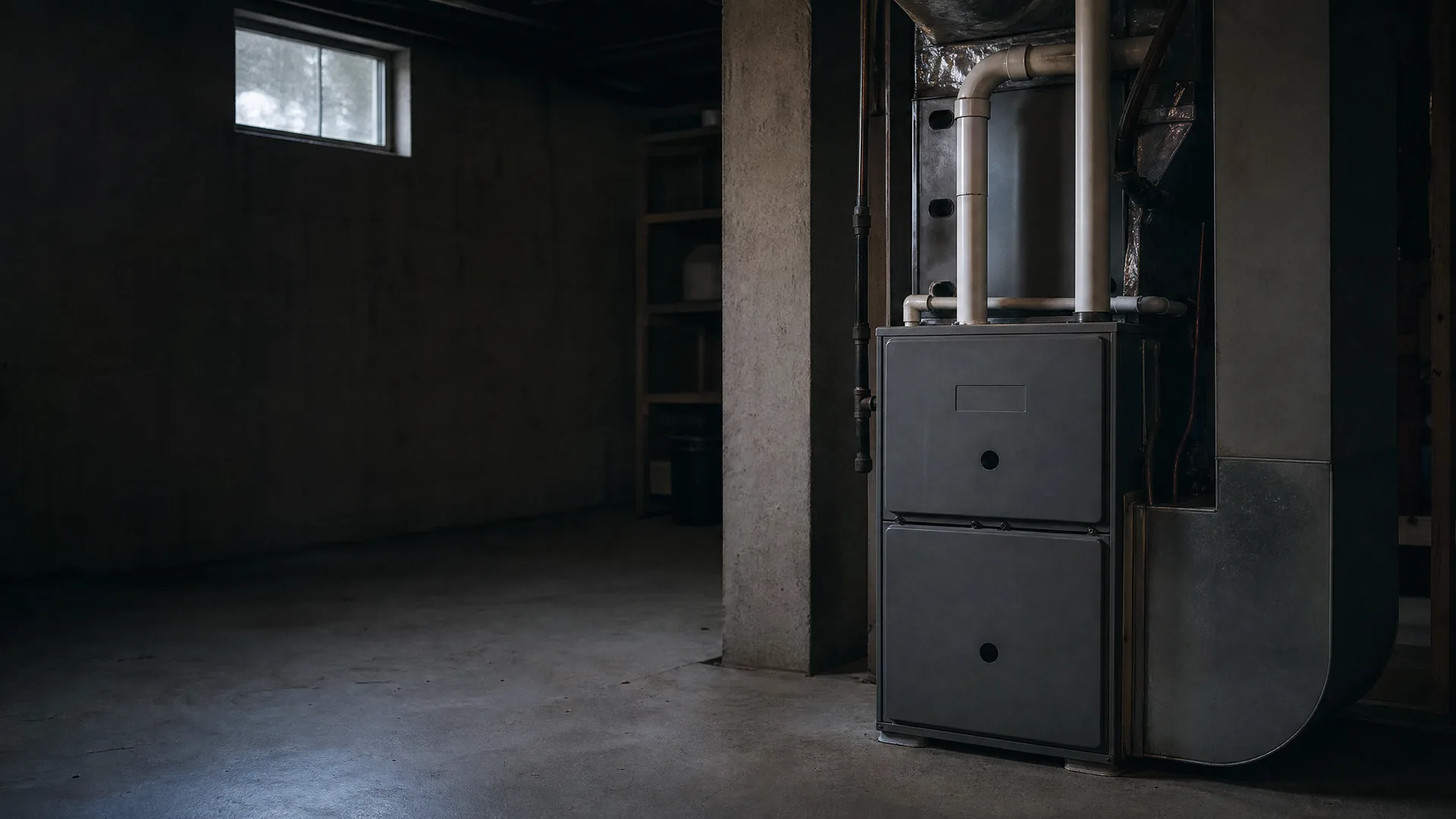
It's a November evening and the basement is cold enough that you notice it on your arms. The furnace sits dark, quiet, nothing moving. You crouch by the access panel and see the faint haze still hanging in the air where dust kicked up when the blower cycled a minute ago, before the clicking started again and it shut itself down. This is the second ignitor this year. You already know the number for the company that replaced it in January, and you're not calling them again. You want someone who'll look past the part this time, find out why it keeps happening, and not have you standing here in the cold a third time.
Only one pro gets your request, so you hear from one company.
Sending the form costs nothing.
Why the furnace sits idle all summer
Nevada summers run long, and for months the furnace does nothing at all. It sits in a hot attic or closet from April through October while the air conditioner does the work. That heat builds up around the cabinet and the circuit board, and dust settles on everything that isn't moving. When the thermostat finally calls for heat in October or November, the ignitor has to work on the first try after half a year of sitting in that heat. A part that's already stressed by temperature swings doesn't get any easier use just because it's been idle.
What a silicon nitride ignitor can take
Most furnaces built in the last couple decades use a silicon nitride ignitor, and it's rated for a set number of cycles, not a number of years. Every time it glows and cools back down, that's one cycle against its life. A furnace that's short-cycling, whether from a dirty flame sensor, a clogged filter, or a draft problem in the vent, runs through those cycles fast. A technician who checks what's cycling the furnace, not just the ignitor itself, can tell you if the part is failing on its own or being burned out early by something else in the system.
Replace the ignitor again
A new ignitor gets you heat for a while. If the real cause is a cracked heat exchanger flexing on startup, a stuck flame sensor, loose wiring at the control board, or dust and heat damage from sitting unused since spring, that same stress hits the new part too. Most ignitors are silicon nitride or carbide, and both crack under the wrong voltage or a bad ground long before they'd normally wear out. Swap it again and you've bought a few weeks, maybe a season, before it fails the same way. Nothing about the furnace has changed, so nothing about the outcome does either.
Find out what's killing it
A contractor local to Nevada who works on furnaces every fall knows which causes show up here first, after months of summer heat sitting unused in an attic or closet. They check the flame sensor, the wiring, the gas pressure, and the exchanger itself before touching the ignitor. That means one visit instead of calling around to different companies, explaining the same failure twice, and sorting through quotes that may not even be looking at the right part. Once the actual cause is found and fixed, the new ignitor has a reason to last instead of failing the same way again.
Before you get your furnace repairAfter you get your furnace repair
Statewide, winter nights average 33°F, cold enough to run the furnace but not cold enough to run it hard. That matters for an ignitor that keeps failing. A furnace cycling on and off for a mild 33 degree night, rather than holding a steady burn through a hard freeze, puts more wear on the ignitor than a colder climate would, because it's heating in short bursts rather than one long stretch. If yours has failed more than once, the number of cycles it's gone through may matter more than how cold it's actually been outside.
NOAA nClimDiv 1991-2020 county normals weighted by homes
Replace The Part Or Fix The Cause
Replace the ignitor again
A new silicon nitride ignitor runs you heat for a while, but it doesn't tell you why the last one cracked or burned out early.
If the failure is coming from a loose connection at the control board, the new ignitor sees the same bad voltage the old one did.
Dust and heat damage from a furnace sitting idle since April doesn't go away because the part is new.
A cracked heat exchanger flexing on startup can crack an ignitor the same way it cracked the last one.
You're back at this same point in a few months, except now it's a colder night and you notice it faster.
Find the actual cause
A contractor who works on furnaces all year in Nevada has seen ignitors fail from heat-soaked wiring, voltage issues, and flame sensor problems, and checks for those first.
Testing the control board and connections takes the guessing out of whether the next ignitor will hold.
If the cabinet sat through a Nevada summer with no airflow, checking what that did to the wiring and board is part of finding the cause, not a separate job.
One visit answers whether it's the ignitor, the board, the sensor, or something mechanical, instead of replacing parts one at a time to see what sticks.
A furnace that keeps failing the same part is telling you something specific, and a diagnosis gets you the actual answer instead of another guess.
1
Thermostat calls for heat and opens the gas valve circuit
2
Control board sends power to the ignitor first
3
Ignitor heats to about 2,000 degrees in seconds
4
Flame sensor confirms burners lit or the board shuts gas off
Winter nights average 33°F statewide
A 33 degree night doesn't ask much of your furnace. It cycles on, heats the house a little, shuts off, and starts again a short while later. All that stopping and starting puts more stress on the ignitor than one long burn through a harder freeze would, and it happens most nights all winter.
NOAA nClimDiv 1991-2020 county normals weighted by homes
A furnace ignitor that fails more than once is telling you something upstream of the part itself is wrong, whether that's a flame sensor, a loose connection at the control board, or a cabinet that sat through a hot Nevada summer before being asked to fire up again. Finding that cause takes someone who works on furnaces through every one of those mild 33 degree nights, not just the day yours quit. When you request service here, it goes to one licensed Nevada contractor who already knows what tends to go wrong in furnaces that sit idle from April through October, not a handful of companies competing for the job and your phone number. You explain the problem once, to the person who's going to look at it. From there, you know who's coming, you know they're qualified for gas furnace work in this state, and you can get back to a house that holds heat on a cold night without the ignitor giving out again.