

Will a heat pump keep up on the cold nights here
Winter here is long, eight months of heat from October through May, and most of those nights are not that cold. The average overnight low across December, January and February is 23°F. Freezing nights number about 75 a year, under a third of the nights the heat runs, and nights at 0°F or below come to about one every five years. This is not the kind of cold a heat pump struggles with for most of the season.
The nights that matter are the ones at or below freezing, and a standard heat pump does change on those nights. Below 40°F it puts out less heat than its rating. Below about 35°F it often leans on backup heat to make up the difference. Every one of this county's roughly 75 freezing nights falls below both marks, so some backup heat most winters is the realistic case, not the exception.
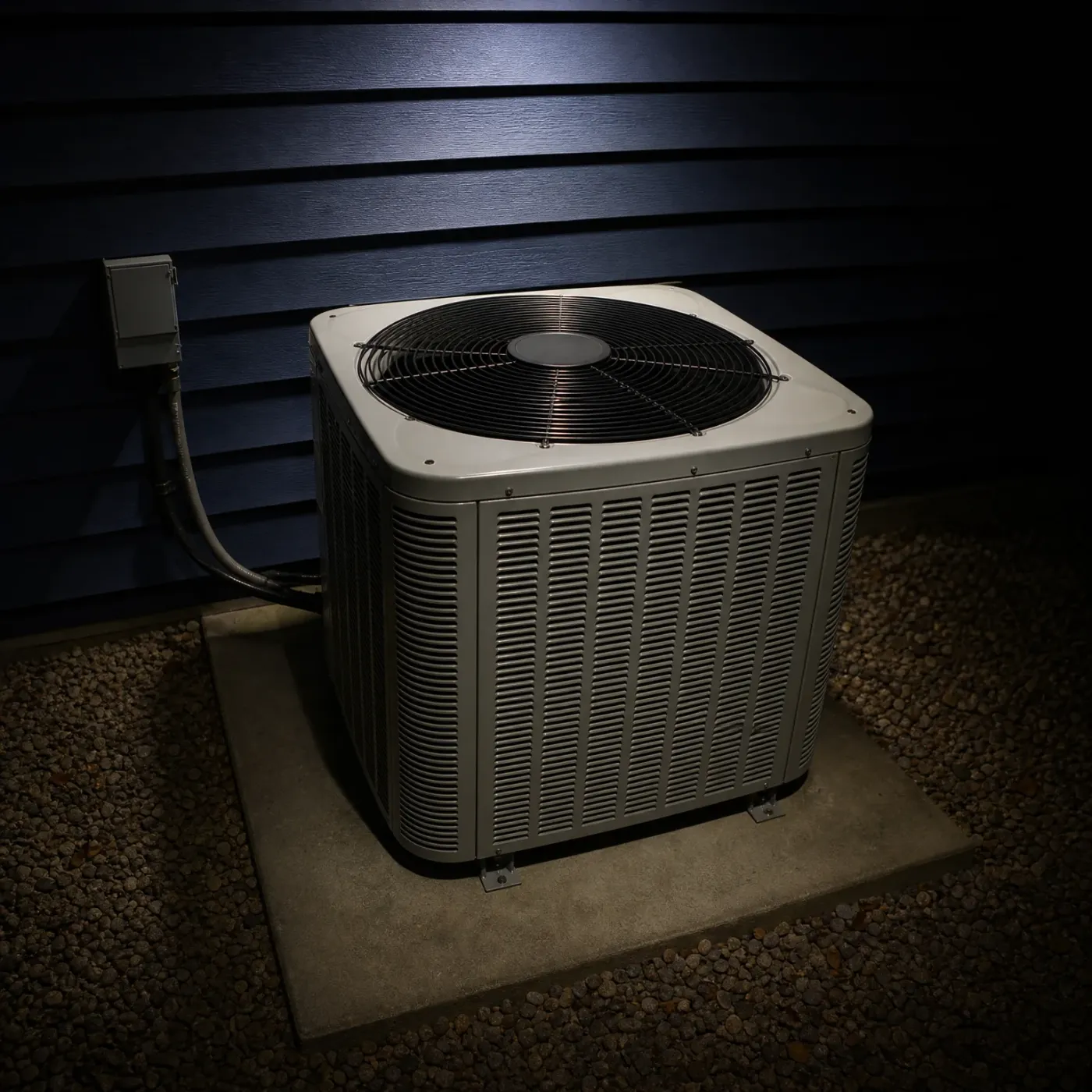
That is the case for a heat pump built to the federal minimum, the one priced in the running cost above. A unit carrying the ENERGY STAR Cold Climate mark is held to a different standard, required to keep most of its heating power and a real efficiency down at 5°F, well below anything this county sees on an average night. Field testing of cold-climate models backs that up: backup heat covered only a small share of the load between 0°F and 35°F, and running on backup alone was rare even at 0°F. The federal minimum unit and the cold-climate one are not the same machine, and which one goes into the house changes how much of this argument applies.