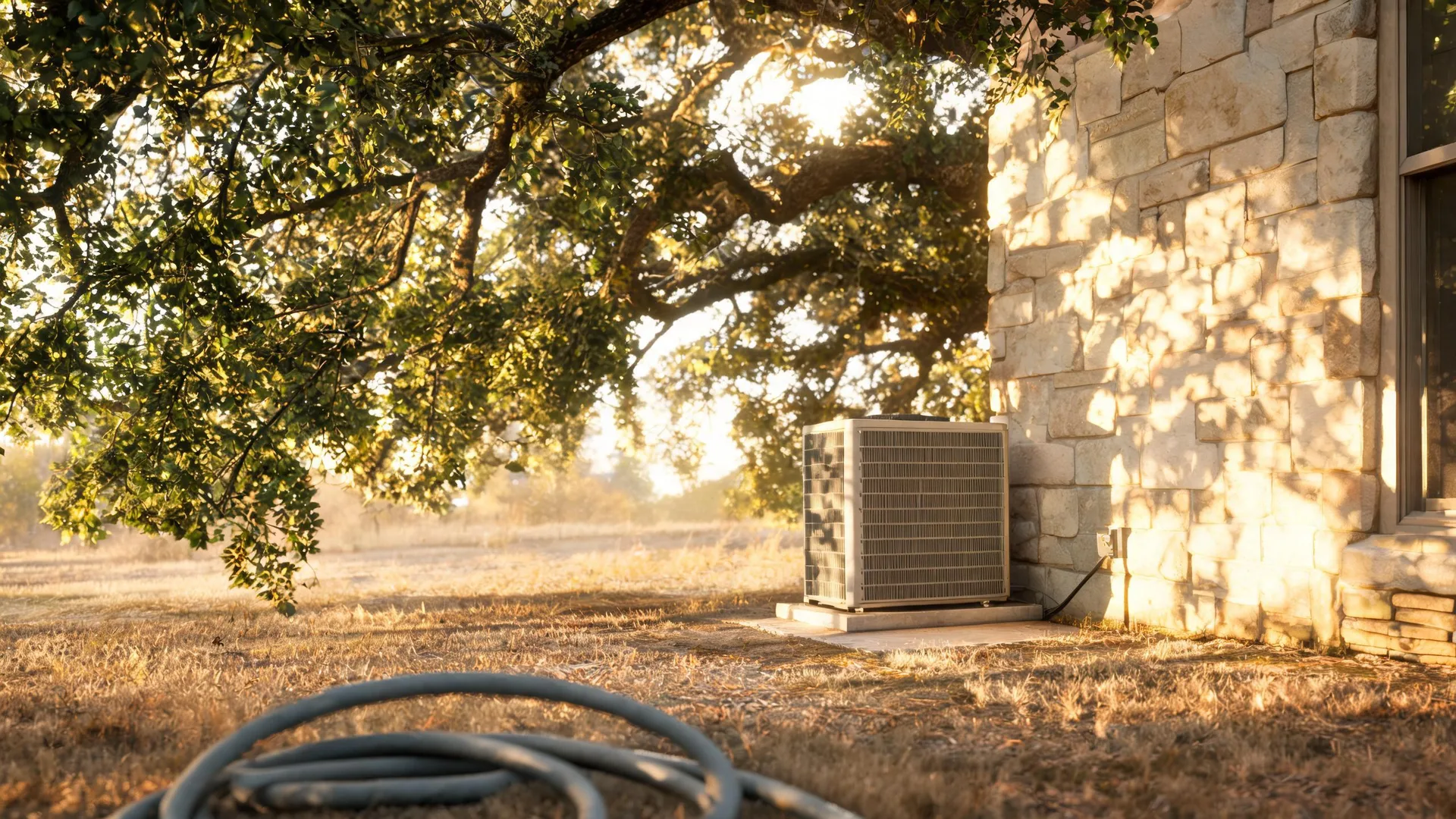
October is when weak systems show it
Heat here switches on in October after sitting idle since May. A heat pump with a worn part or a low charge can coast through summer and still fail the moment it has to push warm air instead of cool.
Takes about a minute. No obligation.
Heat here switches on in October after sitting idle since May. A heat pump with a worn part or a low charge can coast through summer and still fail the moment it has to push warm air instead of cool.
Cooling starts back up in June after months of running heat. If a capacitor or contactor was already marginal, the first hot stretch is when it gives out, not partway through August.
NOAA nClimDiv, 1991–2020 normals
Pahrump gets its share of damaging wind and winter storms, same as the rest of Nye County.
None of that is what wears out a heat pump here. A dirty coil or a weak capacitor still does the job.



Half the homes in Nye County were built in 1998 or later. If that's your house, your heat pump is probably not old enough to be failing on its own. Compressors and coils that make it past the first few years tend to run for a long stretch after that. A system acting up in a newer home usually points to one part doing the damage, not the whole unit wearing out. Worth finding out which part before anyone talks about replacing it.
Nye County sees its share of wind and the odd winter storm, but none of that is what's wearing on your heat pump. The usual cause is a worn capacitor, a dirty coil, or a low charge, the same as anywhere else. Get the actual cause found before paying for anything bigger.
Find a contractorGet the part diagnosed before anyone brings up a new unit. A heat pump in a newer home has no business being replaced over a bad capacitor or a stuck contactor. Those parts get swapped out on their own, and the compressor keeps running long after.
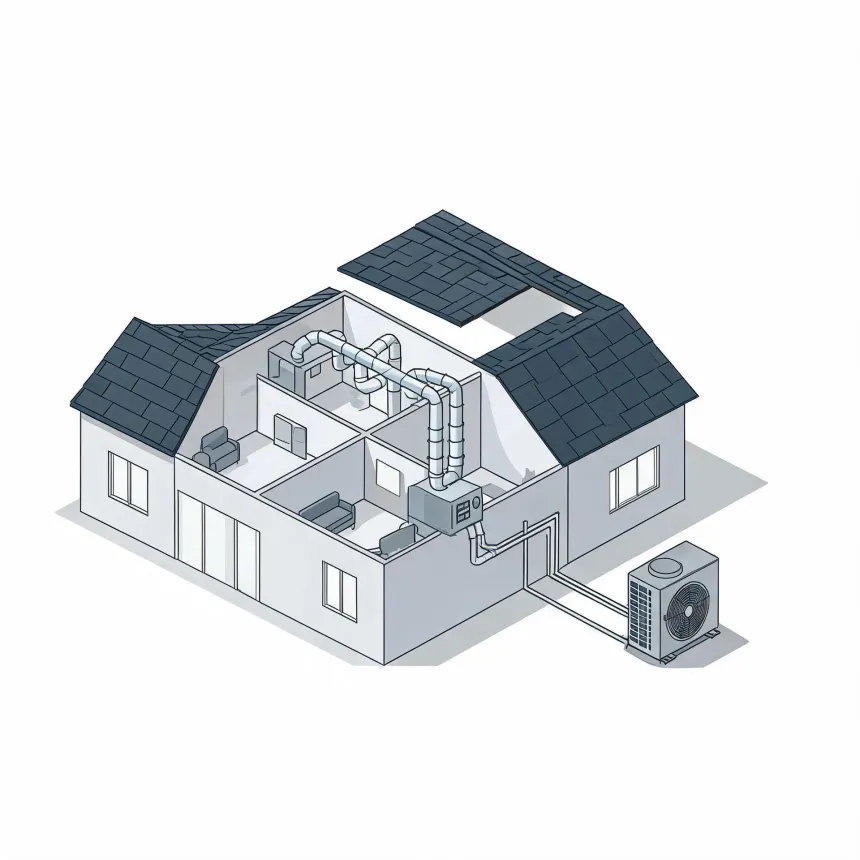
A heat pump has one part a straight air conditioner doesn't have. The reversing valve is what lets it switch between heating and cooling. When it sticks, the system keeps running but stops switching. It blows cold air when it should be warm, or warm when it should be cold. That's a valve problem, not a sign the whole unit is wearing out.
A heat pump pulls heat from outside air all winter, so the outdoor coil can frost over. The system runs a defrost cycle to clear that ice. If the cycle isn't kicking in, ice builds up and blocks airflow across the coil. Left alone, that strain is what burns out a compressor that otherwise had years left.
A heat pump in trouble usually tells you before it quits. Air coming out lukewarm instead of properly warm or cool is the first sign, especially if the system runs longer than it used to just to hold the temperature. Listen for it cycling on and off more than it should, or running nonstop without getting there. Ice on the outdoor unit outside of a normal defrost is worth a look, and so is the outdoor fan not spinning when the indoor side is clearly working. A hissing or bubbling sound near the lines usually means refrigerant is escaping somewhere it shouldn't. None of these mean the unit is done. They mean a part is failing, and the longer it runs that way, the more it can take the compressor down with it.
The question isn't the age on the nameplate, it's which part failed and what it was doing when it failed. A capacitor or a contactor going bad is routine wear, the kind of thing that gets replaced on its own without touching the compressor or the coils. A compressor failure is different, because the compressor is the one part that's expensive enough and central enough to make replacement worth discussing. So the real test is whether the failure is isolated or whether it took other parts down with it. A reversing valve stuck in one position is a valve problem. A compressor that seized because refrigerant had been low for a long stretch is a bigger conversation. Get the specific part named before deciding which conversation you're having.