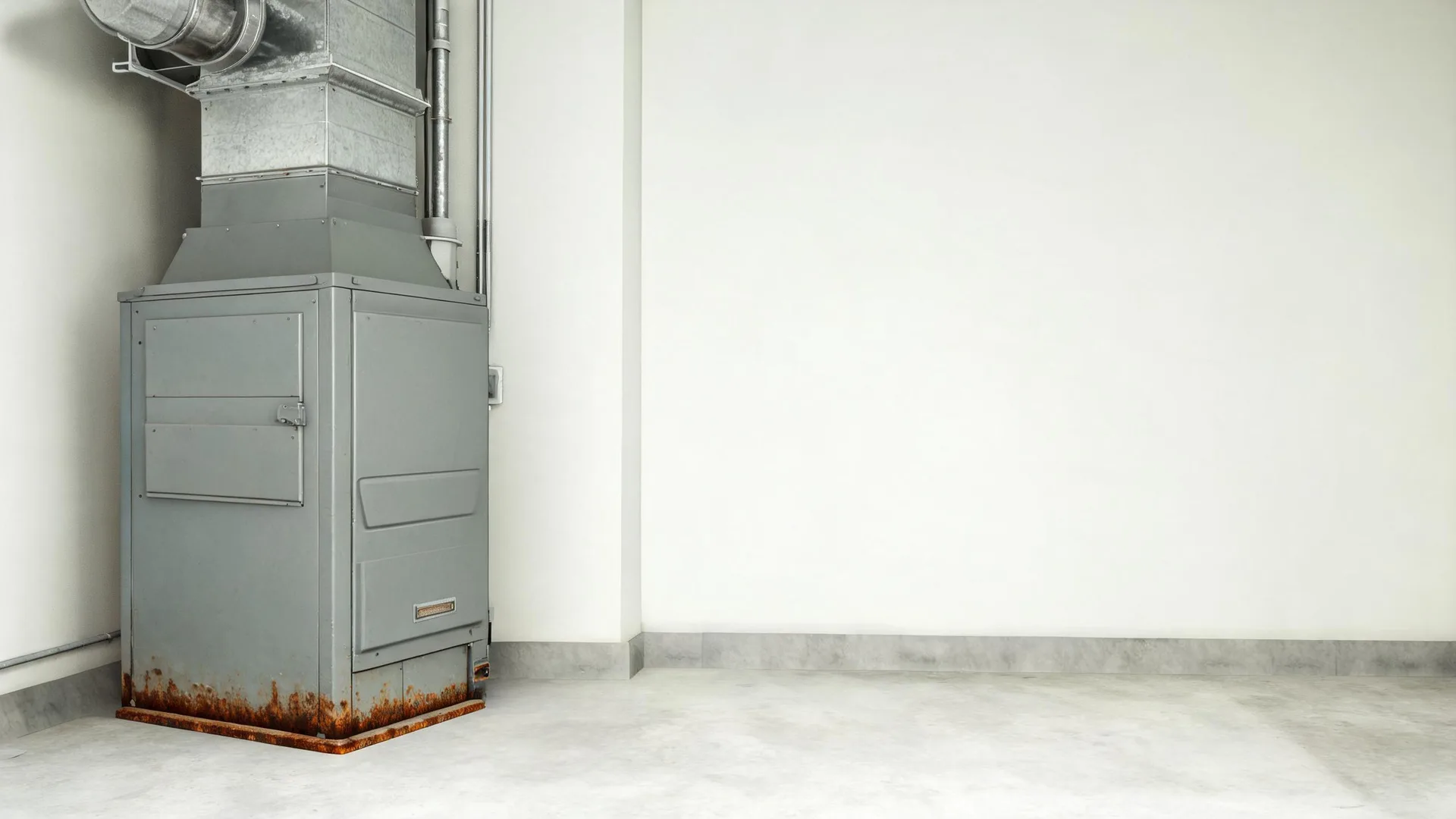
A gray forced-air furnace with sheet-metal ductwork stands in an unfinished basement with exposed wooden joists, concrete walls, and a hanging incandescent bulb.

Furnace Repair in Las Vegas, NV

Tell us about the job

Takes about a minute. No obligation.

RepairFurnace or heatingClark County, NV
Step 1 of 2

What ZIP code is the job in?

The tech checks before touching anything

A tech starts by asking what the furnace was doing before it quit. Short cycling, cold air, a tripped breaker, a strange noise, each points somewhere different. Then comes a visual look at the igniter, the flame sensor, the flue, and the burner before any panel comes off. That look tells the tech whether the problem is ignition, airflow, or the control board, before a single part gets tested.

Why the diagnosis comes before the fix

A furnace can show the same symptom for different reasons. A dirty flame sensor and a failing control board can both cause the burners to shut off right after lighting. Testing the actual parts, not guessing from the symptom, is what keeps a homeowner from paying to replace something that was never the problem.

6 months
November through April, your furnace is on duty
37°F
the average winter night it heats against
60%
of homes here heat with gas, so most furnaces here burn gas
36 winter storms
in ten years, the nights a failure hurts most
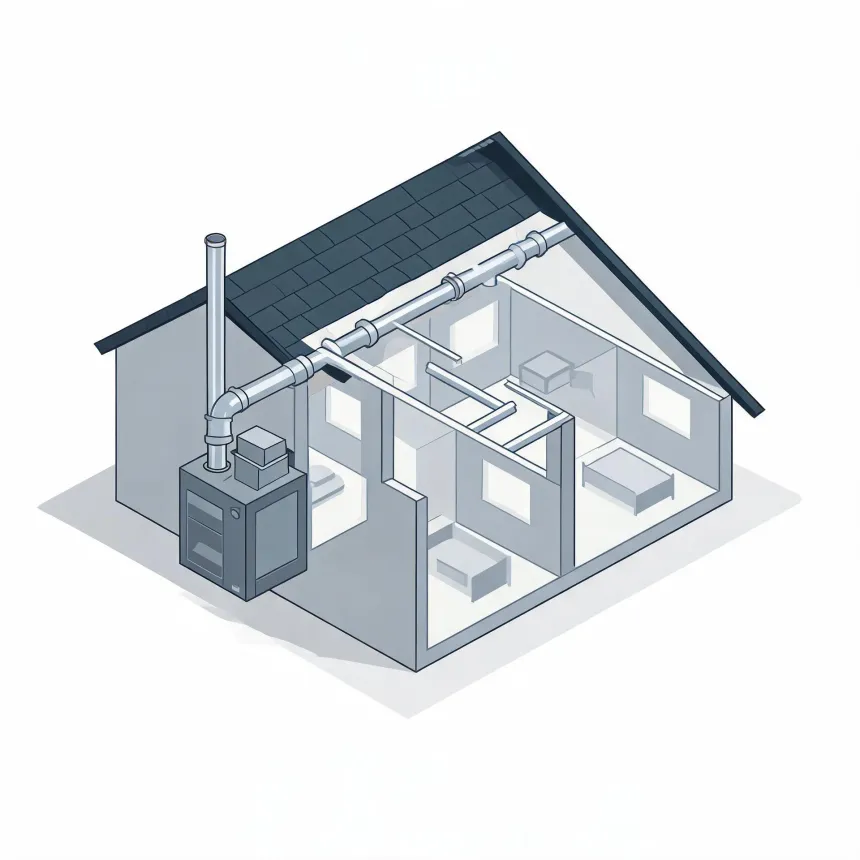
Isometric cutaway illustration of a small house showing interior rooms, ductwork running through the attic, and a furnace unit with a vertical flue pipe on the exterior wall.
Your furnace works hardest from November through March.

NOAA nClimDiv, 1991–2020 normals

Furnaces in Las Vegas only run about six months a year, November through April.

A furnace with a shorter workload like that is usually dealing with one worn part, not a system on its last leg.

Las Vegas doesn't put the strain on a furnace that other places do

389 severe weather events from 2015 to 2024
13% of homes statewide lost power a day or more in 2024
306 damaging wind events from 2015 to 2024
Las Vegas furnaces wait all summer, then get tested in NovemberHeat runs November through April here, and October is when it's worth a look first.

That six-month season also means a lot of mild nights mixed in. Overnight lows only average 37 in December and January, the coldest stretch of the year, so the furnace isn't fighting single digits night after night. A few times a winter, a storm comes through and it runs harder for a few days. That kind of use calls for fixing the part that failed, not replacing the unit. If the furnace was keeping the house warm before whatever broke, broke, there's no reason to think the rest of it is far behind.

Half the homes here were built in 1998 or later

Half the homes in Clark County were built in 1998 or later. If yours is one of them, it hasn't been through much. Mild winters, a short season, and a newer build all point the same way. Whatever failed is usually worth fixing, not replacing.

Find a contractor
A man in a cap, dark jacket and tan work pants carries a canvas tool bag up white porch steps toward a dark blue paneled front door, with a potted shrub beside the entry.
A gray residential gas furnace installed in an unfinished basement, connected to sheet-metal ductwork and PVC pipes.

Waiting doesn't shrink the problem

A worn part doesn't stay the same size of problem if the furnace keeps running on it. A flame sensor coated with oxidation still lets the burner light, just weaker each cycle, until it stops catching at all. A blower motor with a failing bearing runs hot and loud for a while before it seizes, and every hour it strains, more heat backs up into the cabinet around it. A cracked heat exchanger can run for a long time showing nothing but a faint smell or an odd sound, but each cycle flexes that crack a little further. None of that is the furnace itself giving out. It's one part wearing on a schedule of its own, and the furnace has no way to rest it between calls for heat. That's still a one-part problem. It's just one that answers better to a tech sooner rather than later.

Most failures start with ignition or airflow

An igniter wears out from the repeated heat of lighting the burners, cycle after cycle, until it cracks or stops glowing hot enough to catch gas. A flame sensor coated with oxidation can't tell the control board a flame is lit, so the board shuts the gas back off. A blower wheel packed with dust or a clogged filter chokes airflow, and the furnace overheats and trips its limit switch before it ever gets the house warm.

The part tells you what's wrong, not the symptom

A furnace that won't light could be a bad igniter, a dirty flame sensor, or a closed gas valve. One burns out from age, one just needs cleaning, one might not even be a furnace problem. The fix and what it's worth doing depend entirely on which part actually failed, not on what the furnace happened to do when it quit.

An unfinished basement featuring exposed ceiling joists, a metal HVAC unit with round ductwork, a hanging light bulb, and scattered boxes and debris along the left wall.

A new furnace would cut about $60 a year off heating for a typical Clark County home.

  • A new high-efficiency furnace$270 a year
  • An older furnace$330 a year

Estimates for a typical Clark County home, compared with an older unit built to the previous federal minimum, from EIA household energy data, Nevada fuel prices and NOAA climate normals. Your home will differ.

Repair makes sense when one part has failed and the heat exchanger is sound.

Replacement makes sense when the heat exchanger is cracked or the furnace keeps needing parts.

A furnace is worth fixing when the failure is one part doing its job badly, not the whole system straining. An igniter, a flame sensor, a blower motor, a control board, these fail one at a time, and swapping the one that's bad brings the furnace back to doing exactly what it did before. That's different from a cracked heat exchanger, which isn't a part wearing out so much as the furnace's main chamber failing, and isn't something to patch around. The other thing worth weighing is how the furnace behaved right up until it quit. One that heated the house fine and then tripped on one bad part is telling you something different than one that's been short cycling, struggling to keep up, or needing a repair every season. The first is a furnace worth fixing. The second is a furnace telling you it's tired, and no single repair changes that.