Adobe-style desert homes lit by warm exterior lights at dusk, surrounded by saguaro cacti and native desert plants.

Furnace Maintenance in Las Vegas, NV

Tell us about the job

Takes about a minute. No obligation.

Tune-up, service, or cleaningFurnace or heatingClark County, NV
Step 1 of 2

What ZIP code is the job in?

The flame tells a story your eyes can't read alone

A technician pulls the burner assembly and looks at the flame pattern, checking for a steady blue cone instead of one that's yellow or lifting off the burner. That color change points to a dirty burner or a venting problem long before it causes a breakdown. From across the room a furnace can look and sound perfectly normal while the flame underneath tells a different story.


A cracked heat exchanger won't announce itself

The heat exchanger is sealed inside the cabinet, so a hairline crack never shows up as a smell or a sound a homeowner would notice. A technician checks it with a camera or a combustion analyzer because that crack can let exhaust mix into the air moving through the house. Finding it during a routine check is the difference between a repair and a furnace that gets shut down on the spot.

A furnace in Las Vegas runs about six months a year, November through April.

Six months of work a year means a yearly check is usually enough to keep it running.

Have it checked in October, because November is when it starts working for real

Heat runs November through April
Winter nights average 37°F
36 winter storms from 2015 to 2024

One yearly check is what this furnace needs

One check in the fall catches a worn igniter or a cracked exchanger before the cold sets in. With six months of work a year, a furnace here can run a long time on that alone.

Find a contractor
A man in a cap, olive shirt and dark pants carries a canvas tool bag up concrete steps toward a dark blue front door, with a potted shrub beside the entry.
A gray residential gas furnace installed in an unfinished basement, surrounded by ductwork, a metal flue pipe, and a gas supply line.

A real tune-up opens the cabinet, not just the filter door

A quick visit gets you a filter swap and a glance at the flame. A thorough one gets the cabinet opened up. The technician should pull the burners to look at the flame pattern, check the flame sensor for corrosion, and test the igniter under load rather than just eyeballing it cold. The heat exchanger gets inspected with a camera or checked with a combustion analyzer, since a crack in it doesn't show itself any other way. Gas pressure gets measured at the manifold, not assumed. Amp draw on the blower motor gets checked against what the motor is rated for, because a motor can run while pulling more current than it should. The difference shows up in how long the visit takes. A tune-up that's done in a few minutes skipped most of this.

The filter is the one job that's yours

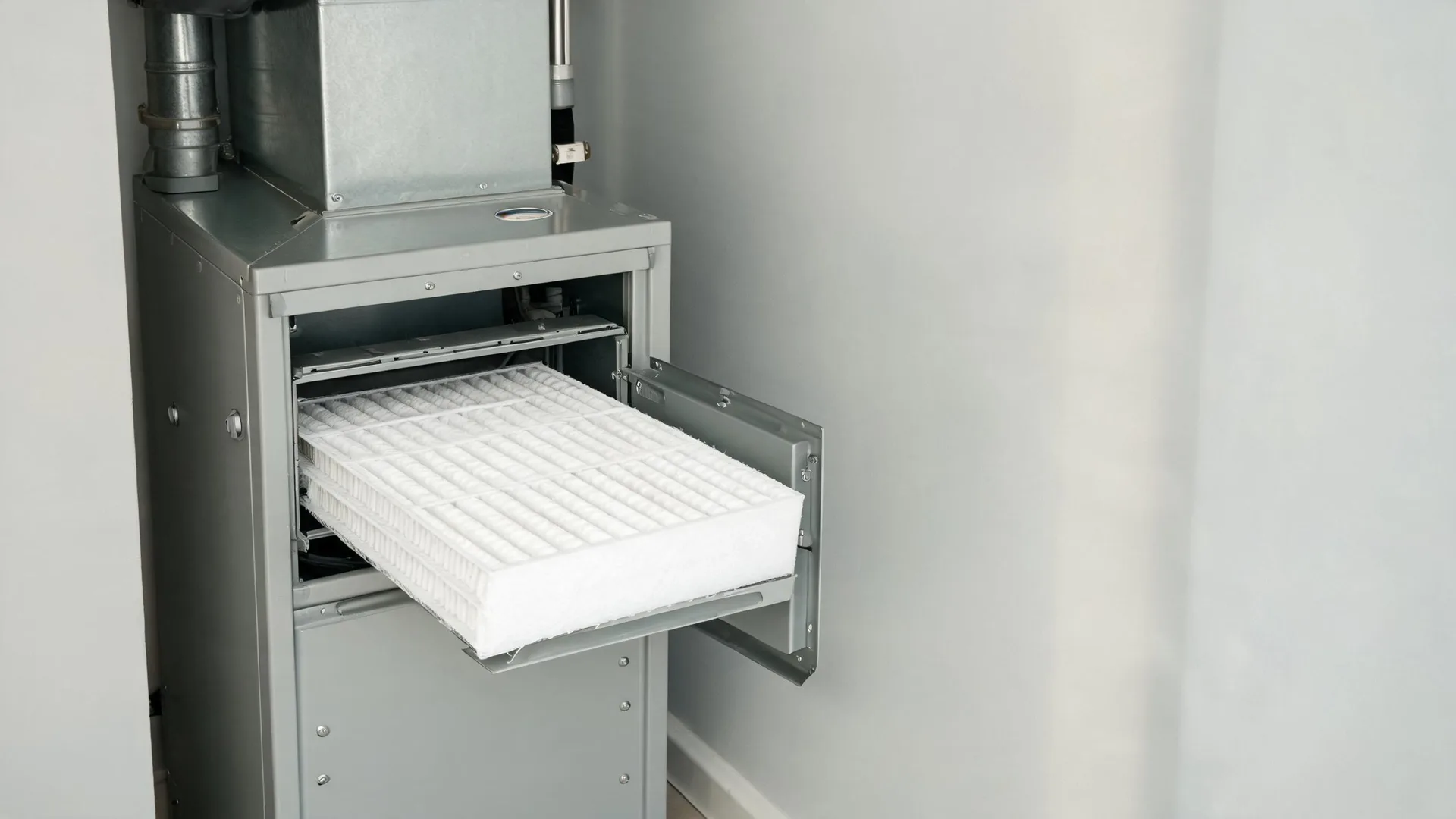
A dirty filter chokes the airflow a furnace needs to run safely. When it's clogged, the heat exchanger can overheat, and the blower has to work harder to push air through it. Check it once a month during the season and swap it when it looks gray or matted. Hold it up to a light. If light barely gets through, neither does enough air.

Past the filter, leave the cabinet closed

Don't open the burner compartment or the blower housing between visits. Gas pressure, flame pattern and the heat exchanger all need a meter or a trained eye to check safely. An untrained hand can knock a connection loose without knowing it. What you can do is keep the area around the furnace clear so it gets the air it needs to burn clean, and listen for anything that changes. A new rattle, a burning smell, a flame you can see through a vent that looks more yellow than blue, all mean it's time to call before the next scheduled visit.

A furnace that never gets looked at doesn't fail all at once, it fails a little more each season until something gives out. The igniter weakens bit by bit until one morning it won't light. The flame sensor picks up a film of corrosion that makes the furnace shut off seconds after it starts, so you get short bursts of heat instead of a steady run. A blower motor pulling too much current keeps working right up until it doesn't, usually with no warning the day it quits. The one that matters most is the heat exchanger. A hairline crack doesn't show itself in any sound or smell a homeowner would catch, so it only gets worse the longer it goes unseen. None of this is a reason to check more than once a year. It's the reason not to skip the one check a year this furnace needs.

A tune-up also covers the parts that move air, not just the parts that burn gas. The blower wheel collects dust over time, and a dirty wheel moves less air even when the motor runs fine. The technician checks the belt or coupling on older units, and on direct-drive motors checks the mount for wear, since a wobble there shows up as noise long before it shows up as a failure. Electrical connections get checked too. A loose wire at the control board can cause a furnace to shut down intermittently, and that kind of fault is easy to miss unless someone is looking for it on purpose. Every safety switch, the limit switch, the pressure switch, the flame rollout switch, gets tested to confirm it shuts the furnace down when it's supposed to. None of this shows up from outside the cabinet.