





A grey air-source heat pump outdoor unit mounted on a concrete pad next to a modern white-rendered residential house.

Heat Pump Repair in Carson City, NV

Tell us about the job

Takes about a minute. No obligation.

RepairHeat PumpCarson City, NV
Step 1 of 2

What ZIP code is the job in?

A heat pump in Carson City works about eight months a year once October hits, and that first cold snap is when a weak part finally gets tested. September is worth a call if the system struggled last winter. Something borderline in the spring, a sticky reversing valve or a capacitor on its way out, often holds on through the two months of cooling and fails once heating starts back up. Catching it in September means a repair before you're actually counting on the heat.

8 months
October through May, your system heats
2 months
July through August, it cools
25°F
the average winter night it heats against
83°F
the average summer afternoon it cools against
Isometric cutaway illustration of a house showing interior ductwork, an indoor air handler unit, and an outdoor condenser unit beside the building.
Your system heats October through May and cools July through August.

NOAA nClimDiv, 1991–2020 normals

A heat pump that short cycles or won't switch over is usually one part, a reversing valve or a defrost control board.

If the compressor itself is failing, replacing the whole system is often the better call.

287 wind events in ten years, and still the same handful of parts that fail

508 severe weather events from 2015 to 2024
13% of homes statewide lost power a day or more in 2024
287 damaging wind events from 2015 to 2024

Half the homes in Carson City were built in 1981 or later. If your house falls on that side, your heat pump likely isn't that old either. A system installed within the last decade or two still has real life left in it, and a repair is almost always the better move than replacing it outright. Check what came with the house, or what's on the data plate inside the unit, before assuming the worst about a failed part.

A heat pump running wrong costs you every month it stays that way

Electricity in Nevada runs 15 cents per kilowatthour, and a heat pump that's struggling pulls more of it just to keep up. A reversing valve or defrost control stuck halfway doesn't fail quietly. It runs longer and costs more every month until it's fixed.

Find a contractor
A dark gray heat pump unit mounted on a concrete pad next to a house with gray siding and a stone veneer wall.

Check the data plate before you assume the worst

Find the data plate inside the unit and check the install date against that. A system that's within its working life is worth repairing when a part fails, whether it's the reversing valve, the defrost board, or something else. Replacing the whole unit only makes sense once the compressor itself is the problem.

A failing part makes the rest work harder

A reversing valve that won't fully seat still forces the compressor to push against it every cycle. A dirty outdoor coil makes the system run longer to move the same heat. The compressor carries that extra load each time it starts, and it wasn't built to work against a fault that stays uncorrected.
Ice is the clearest sign of this

A heat pump that can't defrost properly builds ice on the outdoor coil instead of clearing it. Each cycle it runs adds to that ice rather than melting it back down, and a coil caked over blocks the airflow the system needs to move heat at all. Left running, the compressor ends up starved for the refrigerant flow it depends on.

Some signs show up before the system quits outright. Air coming from the vents that feels cooler than it should, when the system is supposed to be heating, often means the reversing valve isn't fully switching over. A unit that starts, runs briefly, then shuts off and starts again is short cycling. That's hard on the compressor every time it happens. Listen for anything new too. A hard clunk when the system changes modes, a hum that doesn't settle into normal operation, a buzz from the outdoor unit that wasn't there before. Ice on the outdoor coil that doesn't clear during the defrost cycle means that process isn't finishing the way it should. None of these fix themselves, and all of them get worse the longer the system keeps running that way.

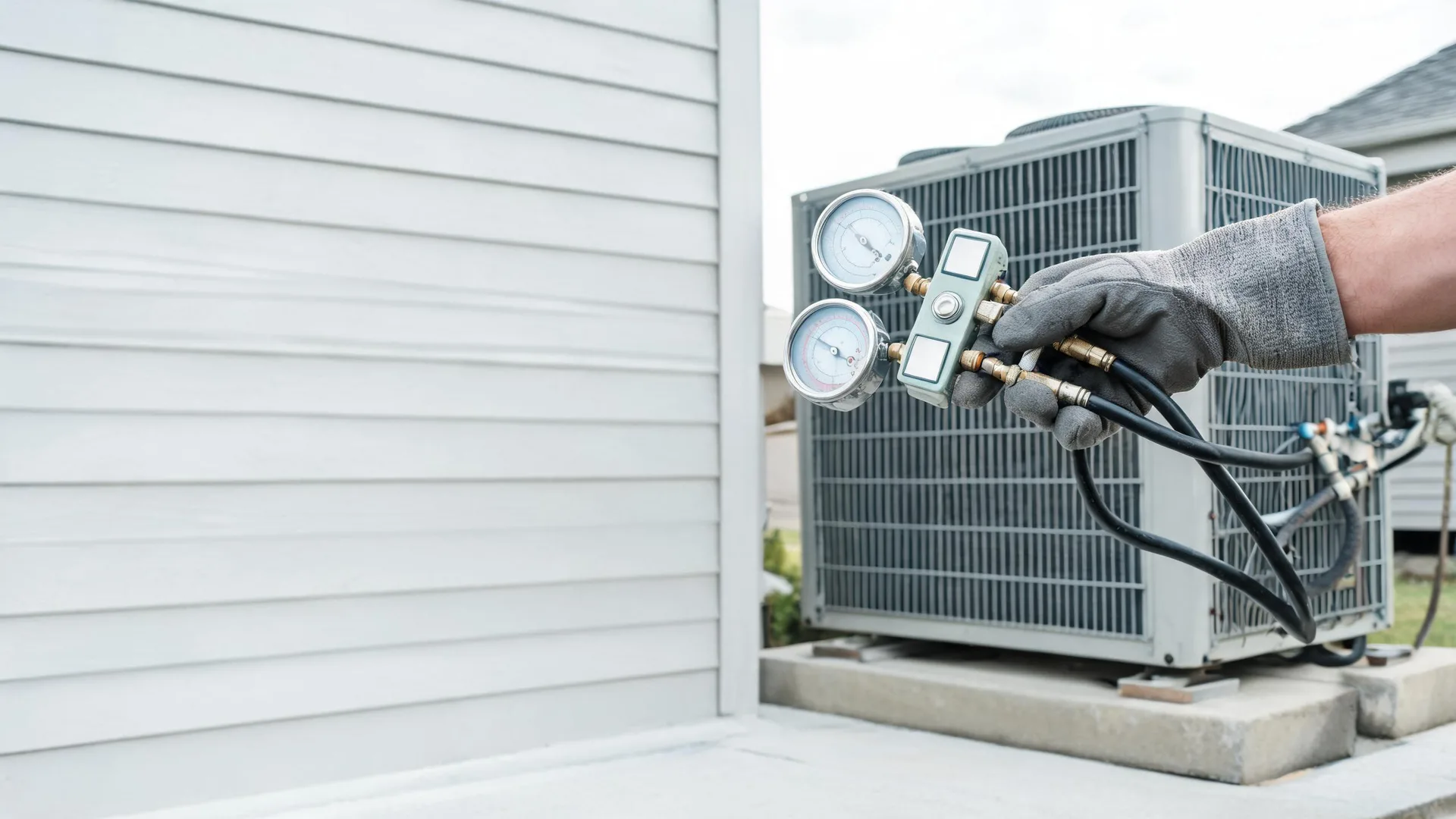
A diagnostic starts with the thermostat, not the outdoor unit. A tech checks what the system is being told to do against what it's actually doing, heating, defrost, or stuck somewhere between. Gauges go on next to read refrigerant pressure, because a reversing valve that's not seating fully shows up as a pressure difference a tech can measure, not just hear. Electrical testing follows. The defrost control board, the sensors feeding it, the capacitor running the compressor. A failing capacitor can still start the system most of the time, which is why it gets missed until it doesn't start at all. Airflow gets checked too, since a coil that can't move air will look like problems it isn't. The point of all this is finding which part is actually at fault before anything gets replaced, not guessing from the symptom alone.