






Adobe-style desert homes with warm exterior lighting, saguaro cacti, and desert landscaping along a curved street at dusk, with mountains in the background.

Furnace Repair in Reno, NV

Tell us about the job

Takes about a minute. No obligation.

RepairFurnace or heatingWashoe County, NV
Step 1 of 2

What ZIP code is the job in?

Furnaces in Reno run about eight months a year, October through May. Overnight lows average 23°F through December, January and February, and that's the stretch that puts real strain on a system. Washoe County has logged well over 200 winter storms in the past decade, heavy snow and ice among them, and on those nights the furnace runs close to nonstop just to keep up. That kind of workload wears on an igniter or a blower motor faster than it would somewhere mild. If yours is acting up, it's probably not bad luck. It's the workload catching up with a part.

8 months
October through May, your furnace is on duty
23°F
the average winter night it heats against
61%
of homes here heat with gas, so most furnaces here burn gas
232 winter storms
in ten years, the nights a failure hurts most
Isometric cutaway illustration of a single-story house with a dark shingled roof, showing interior rooms with furniture, ductwork, a flue pipe, and a furnace unit.
Your furnace works hardest from November through April.

NOAA nClimDiv, 1991–2020 normals

Half the houses in Washoe County were built in 1991 or later.

A furnace that age still has years in it, so fixing what's wrong usually makes more sense than replacing it.

Gas here runs $17.91 per million Btu, and a furnace that's struggling burns more of it every night it runs

Heat runs October through May
Winter nights average 23°F
232 winter storms from 2015 to 2024
Reno weather isn't the problem343 damaging wind events in Washoe County between 2015 and 2024, and furnaces still fail the same way they do anywhere else

September is worth paying attention to. Furnaces here sit unused since spring, and the first real cold snap in October asks a lot of them right away. A weak igniter or a tired blower motor can limp along fine in mild weather and then fail the first night it has to run for hours straight. That's why repair calls tend to cluster right at the start of the season instead of spreading out evenly. Getting a furnace looked at before October, rather than after it's already struggling through a cold night, catches the problem while it's still a small one.

The workload caught up with a part. Get it found and fixed.

A furnace that's acting up after a run of hard winters is usually just worn, not broken for no reason. Get it diagnosed and fixed properly now, and it'll be ready for the next cold snap instead of fighting through it.

Find a contractor
A man in a dark T-shirt, brown work pants, boots and a cap, seen from behind, climbs concrete steps toward a dark blue front door while carrying a worn canvas tool bag, with a potted shrub beside the entry.
A gray residential gas furnace installed in an unfinished basement, connected to sheet-metal ductwork and PVC pipes.

The age points to repair, not replacement

A furnace built with the house in 1991 or later has been running for most of its working life already, not past it. If yours was replaced more recently than that, it's even further from retirement. Either way, a furnace this age that's acting up is almost always a single worn part, not a system on its last leg. Worth having someone diagnose what's actually wrong before anyone talks about replacing the whole unit.

Most failures are one part, not the system

An igniter cracks, a flame sensor coats over with residue, a blower motor wears out its bearings. Any one of these stops the furnace cold, but the rest of the system is usually fine. Finding the one part that quit is most of the job.

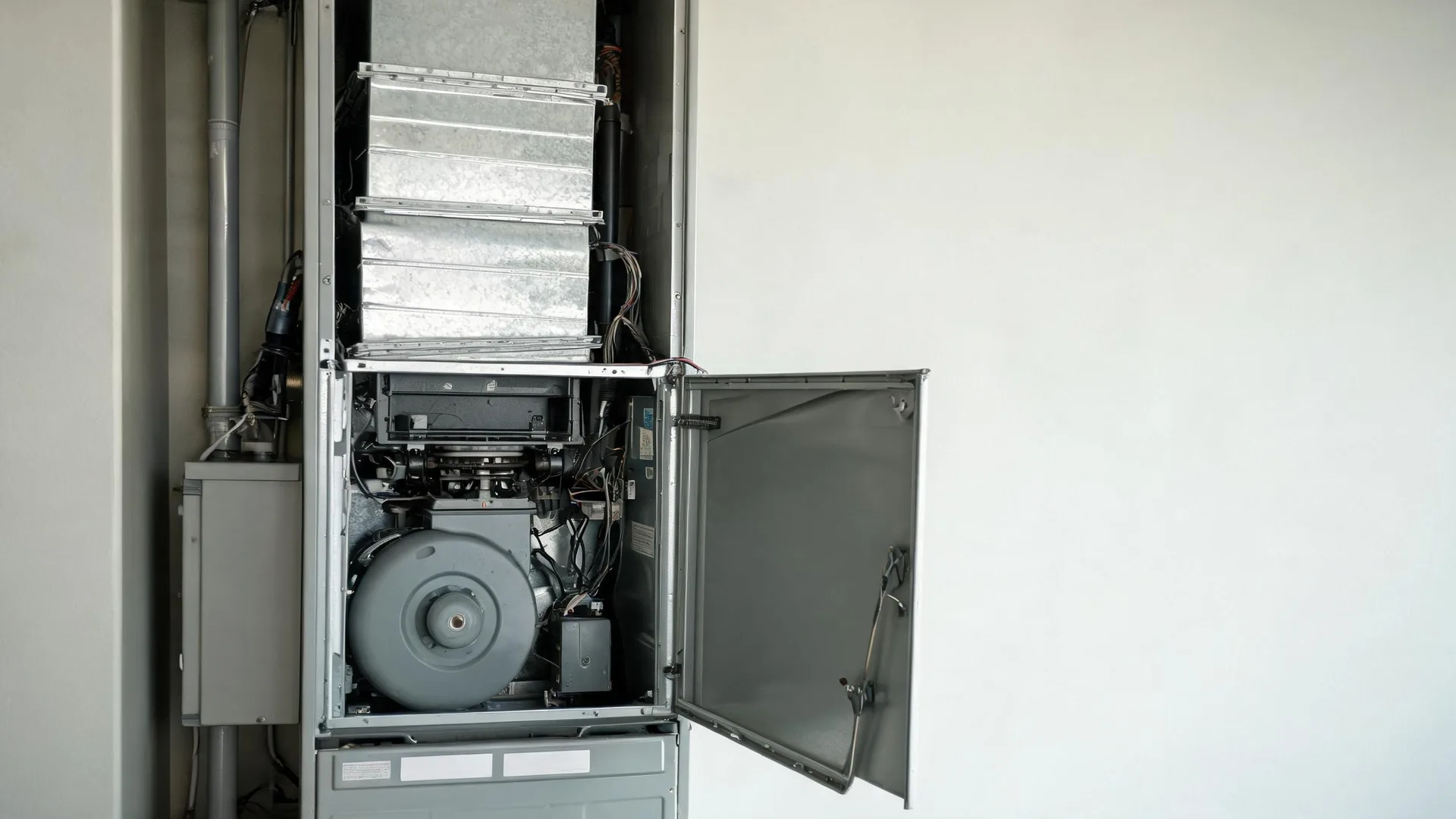
What the symptom points to

A furnace that won't light is almost always the igniter or the flame sensor. One fails to glow hot enough to catch the gas, the other gets coated with residue and can't sense the flame that's there. A furnace that lights but blows cold or weak air usually traces back to the blower motor or a filter so clogged it's choking the airflow. Knowing which symptom goes with which part is what makes a diagnosis quick instead of a guessing game.

An unfinished basement containing a metal furnace with ductwork, exposed wooden joists on the ceiling, cardboard boxes, a coiled cable, and a single hanging incandescent bulb.

A new furnace would cut about $140 a year off heating for a typical Washoe County home.

  • A new high-efficiency furnace$630 a year
  • An older furnace$770 a year

Estimates for a typical Washoe County home, compared with an older unit built to the previous federal minimum, from EIA household energy data, Nevada fuel prices and NOAA climate normals. Your home will differ.

Repair makes sense when one part has failed and the heat exchanger is sound.

Replacement makes sense when the heat exchanger is cracked or the furnace keeps needing parts.

A repair call usually comes down to one question. Is this a single part wearing out, or is the furnace itself on its way out. A cracked igniter, a dirty flame sensor, a worn blower bearing all fail on their own, and swapping the one that quit brings the furnace back to normal. That's a repair. A cracked heat exchanger is different. So is a control board that's already failed once and fails again the same year. Those point to a furnace nearing the end of its run, where fixing today's problem just buys time until the next one shows up. Age matters less than the pattern. One failure is a part giving out. Repeat failures on the same unit are the furnace telling you something bigger is wrong.