




Adobe-style desert homes lit by warm exterior lights at dusk, surrounded by saguaro cacti and native desert plants.

Furnace Repair in Lovelock, NV

Tell us about the job

Takes about a minute. No obligation.

RepairFurnace or heatingPershing County, NV
Step 1 of 2

What ZIP code is the job in?

Furnaces in Lovelock run long hours. Heat stays on from October through May, about eight months of the year, and overnight lows average 23°F through December, January and February. That's a lot of cycles on the igniter, the blower motor, the flame sensor. None of it is unusual wear for a furnace this area. It's the same machine doing the same job it would anywhere else with a winter like this. When something goes wrong, it's almost always a known part failing in a known way, not something particular to this house or this county.

8 months
October through May, your furnace is on duty
23°F
the average winter night it heats against
10 winter storms
in ten years, the nights a failure hurts most
Isometric line illustration of a cutaway single-story house with a shingled roof, showing an interior furnace connected to ductwork and a tall vertical flue pipe, plus simple furniture in the adjacent room.
Your furnace works hardest from November through April.

NOAA nClimDiv, 1991–2020 normals

A furnace that short cycles is shutting down before it should.

Short cycling like that usually points to a flame sensor losing its signal or a blocked intake tripping the high limit switch.

September is when a weak furnace gets found out

Heat runs October through May
Winter nights average 23°F
Climate zone 5B

Age by itself doesn't tell you much about a furnace. One that still lights on the first try, holds a steady flame, and cycles the way it should can be worth repairing again. What matters more is the heat exchanger. That's the part keeping combustion gas out of the air moving through the house, and once it cracks, it's done. A cracked exchanger means replacement, no question. Short of that, most failures are single parts, an igniter, a control board, a blower motor. If a tech keeps replacing the same part or chasing a new one every season, that pattern is telling you something the parts themselves aren't.

Get the usual fix

Nothing about this area is especially hard on it. It's most likely the usual problem with the usual fix.

Find a contractor
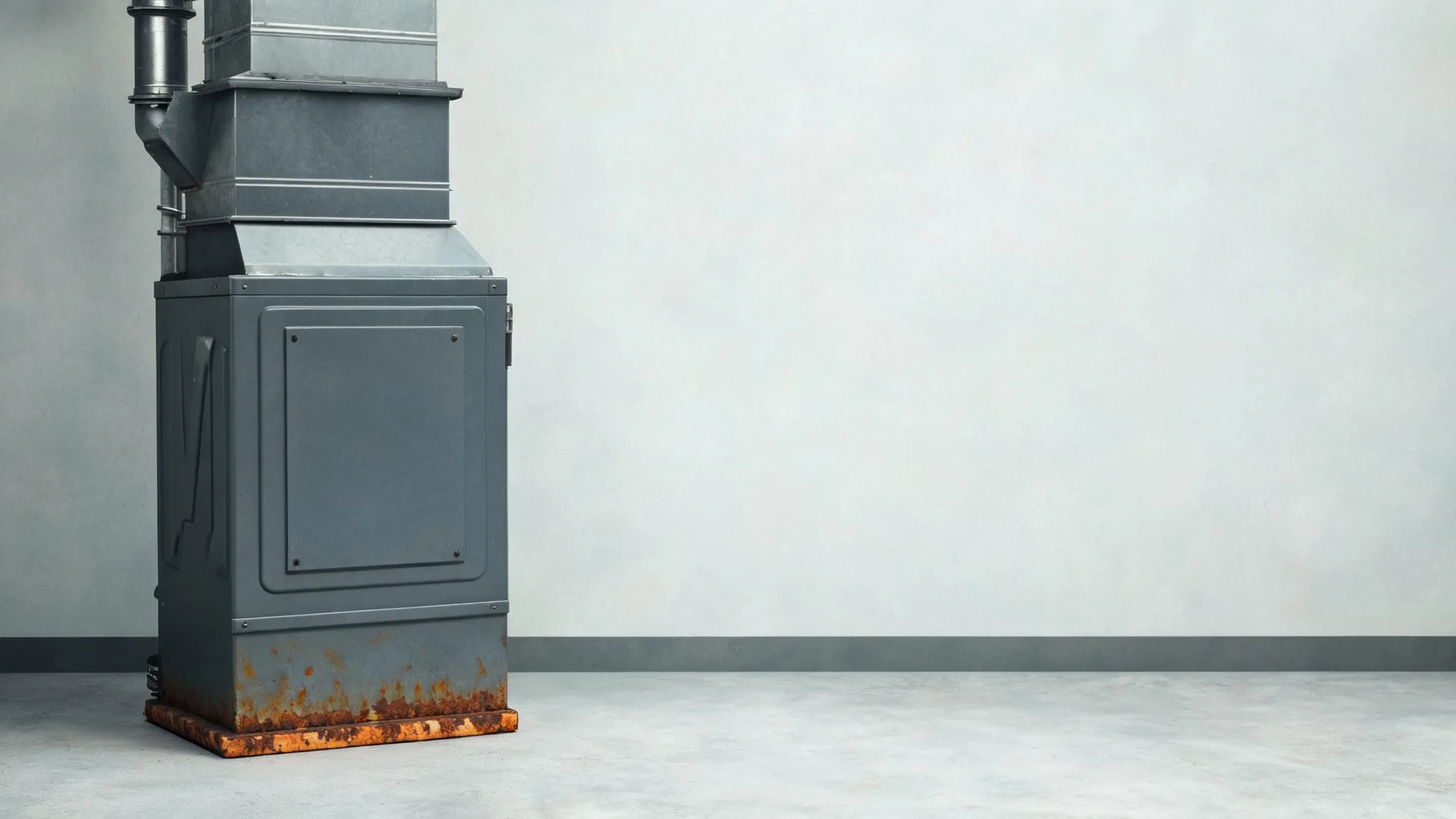
A gray residential gas furnace installed in an unfinished basement, surrounded by ductwork, a metal flue pipe, and a gas supply line.

Running it through a problem rarely fixes the problem

A furnace that's struggling doesn't stay still while you decide whether to call someone. A cracked heat exchanger gets worse with every cycle of heating and cooling metal. A flame sensor coated with a thin film gives a weaker signal each time it fails to detect properly, until the furnace won't stay lit at all. A blower motor running on a failing bearing keeps grinding until it seizes. Letting the furnace keep running through these doesn't give it a chance to work itself out. It just means more cycles on a part that's already failing, and a small problem turning into a replacement.

House age here splits down the middle

Half the homes in Pershing County were built in 1984 or earlier, half after. A furnace wears the same way no matter when the house around it went up. If your system came with the house, that's worth checking, but the county's mix of old and new houses doesn't point to a different fault than you'd find anywhere else.
Mobile homes are over half the county

Pershing County is 53.2% mobile homes. A furnace in a mobile home often sits in a different spot and has different access than one in a site-built house, which is worth mentioning to whoever comes out to look. It doesn't change what's likely wrong. An igniter, a flame sensor, or a blower motor fails the same way either place.

Before calling anyone, check the thermostat first. Make sure it's set to heat and the set temperature is above room temperature, and swap the batteries if it uses them. Next, go to the breaker box and look for a tripped furnace breaker, since a furnace that won't start at all sometimes just lost power. Check the filter. A filter packed with dust chokes airflow and can trip the furnace's high limit switch, shutting it down mid-cycle. If the furnace has a standing pilot, look for the flame itself, a steady blue flame means the pilot is fine, and if it's out, the pilot light has instructions for relighting it printed right on the unit. Last, check that the vent hood outside isn't blocked by anything, since a blocked vent can shut a furnace down as a safety measure. None of this tells you what's actually broken, but it rules out the few things that aren't a repair at all.

A diagnostic visit starts before any panel comes off. A tech asks what the furnace was doing, whether it was short cycling, running cold, making a new sound, or not starting at all, since that narrows things down before any tool comes out. Then the cover comes off and the burners get a look, checking for a steady flame and the right color. The flame sensor gets pulled and checked, since a weak signal there explains a lot of no-start and short-cycle complaints by itself. The blower gets checked for play in the bearing and resistance in the motor winding. If the furnace made it far enough to run, a tech will also check the heat exchanger for cracks, because that's the one finding that changes the whole visit from a repair to a replacement conversation. Most of this takes longer to describe than it does to do, since a tech who's seen the failure before knows where to look first.