





An unfinished basement featuring concrete block walls, exposed floor joists, and a metal forced-air furnace with ductwork near a central pillar.

Furnace Repair in Crescent Valley, NV

Tell us about the job

Takes about a minute. No obligation.

RepairFurnace or heatingEureka County, NV
Step 1 of 2

What ZIP code is the job in?

Your furnace in Crescent Valley is on the job about ten months of the year, September through June. That's most of the calendar, not just a cold snap in January. Overnight lows average 18°F through December, January and February, so once it finally gets a break in summer, it's already carrying a lot of wear into the next season. Add in the winter storms this county sees, and a furnace here rarely gets to run easy. That kind of workload is usually why something starts acting up. Worth having a tech trace it back to the actual cause instead of guessing.

10 months
September through June, your furnace is on duty
18°F
the average winter night it heats against
101 winter storms
in ten years, the nights a failure hurts most
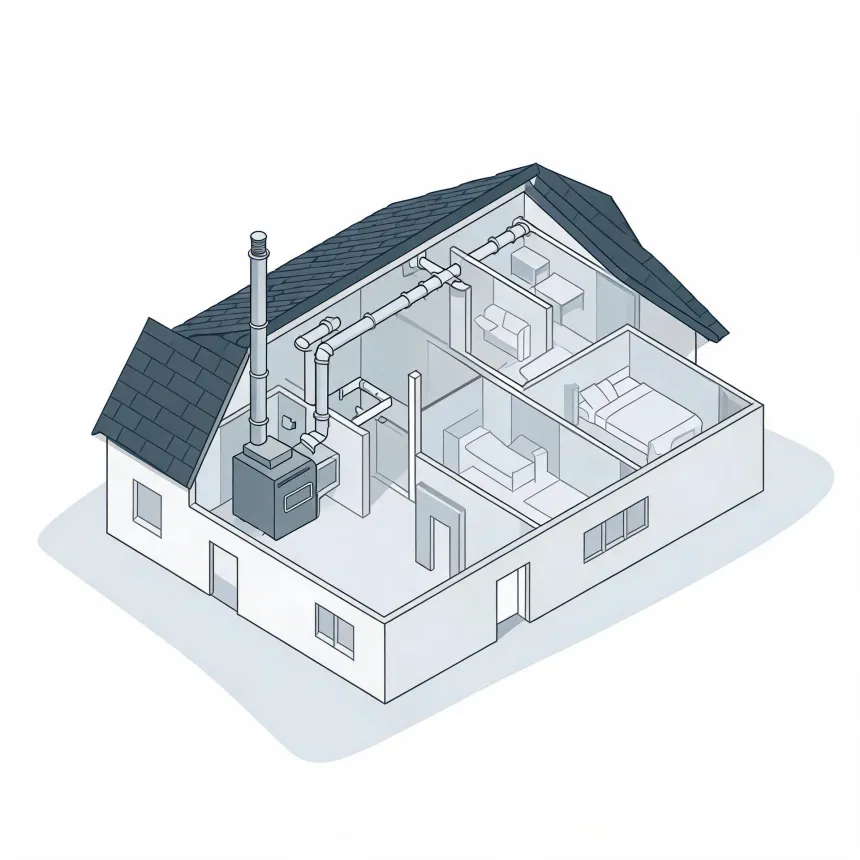
Isometric line illustration of a cutaway house showing interior rooms with furniture and a furnace with ducting and a flue pipe extending through the roof.
Your furnace works hardest from November through April.

NOAA nClimDiv, 1991–2020 normals

A heat exchanger with a crack in it is done, not fixed.

But an igniter or a blower motor is just a part, and swapping it keeps the rest of the furnace working like it should.

August is idle. September is when a weak furnace finds out

Heat runs September through June
Winter nights average 18°F
101 winter storms from 2015 to 2024
Winter is hard on a furnace here101 winter storms hit this county between 2015 and 2024.

If your furnace is short cycling, making noise it didn't used to, or blowing air that never quite gets the house warm, a tech can usually trace it to a specific worn part instead of guessing at it. That's a better use of a service call than waiting to see if it gets worse on its own. Given how long this furnace runs here, a problem that starts small tends to still be there in January, just harder to ignore. Getting it looked at early is what keeps a repair a repair.

Get it diagnosed properly

Your furnace works hard here, and that's usually what's behind the problem. Have it diagnosed properly so the fix lasts.

Find a contractor
A man in a dark work shirt, tan cargo pants and boots, seen from behind, climbs porch steps toward a navy front door while carrying a worn leather tool bag.
A gray high-efficiency gas furnace installed in an unfinished basement, surrounded by gas lines, a condensate drain, and sheet-metal ductwork.

What years of run time wear out first

An igniter heats up and cools down every single cycle, and that back and forth is what eventually cracks it. A flame sensor sits right in the burner flame and slowly collects a film that keeps it from sensing the flame at all. Blower motor bearings spin for hours at a stretch, season after season, until they dry out and start to howl or seize. The capacitor that gives that motor its starting kick loses strength a little at a time, so the blower gets slower to start long before it quits. None of these fail because something was done wrong. They fail because they are moving or heating parts, and parts like that wear down with use, not age on a calendar.

A cracked flame sensor signal gets worse with every cycle

A flame sensor coated in film still senses some flame at first, so the furnace lights, runs a minute, and shuts off early. Each cycle after that leaves a little more film behind, so the furnace that shut off once a night starts doing it every hour. Left alone, it stops sensing the flame at all and the furnace won't stay lit.
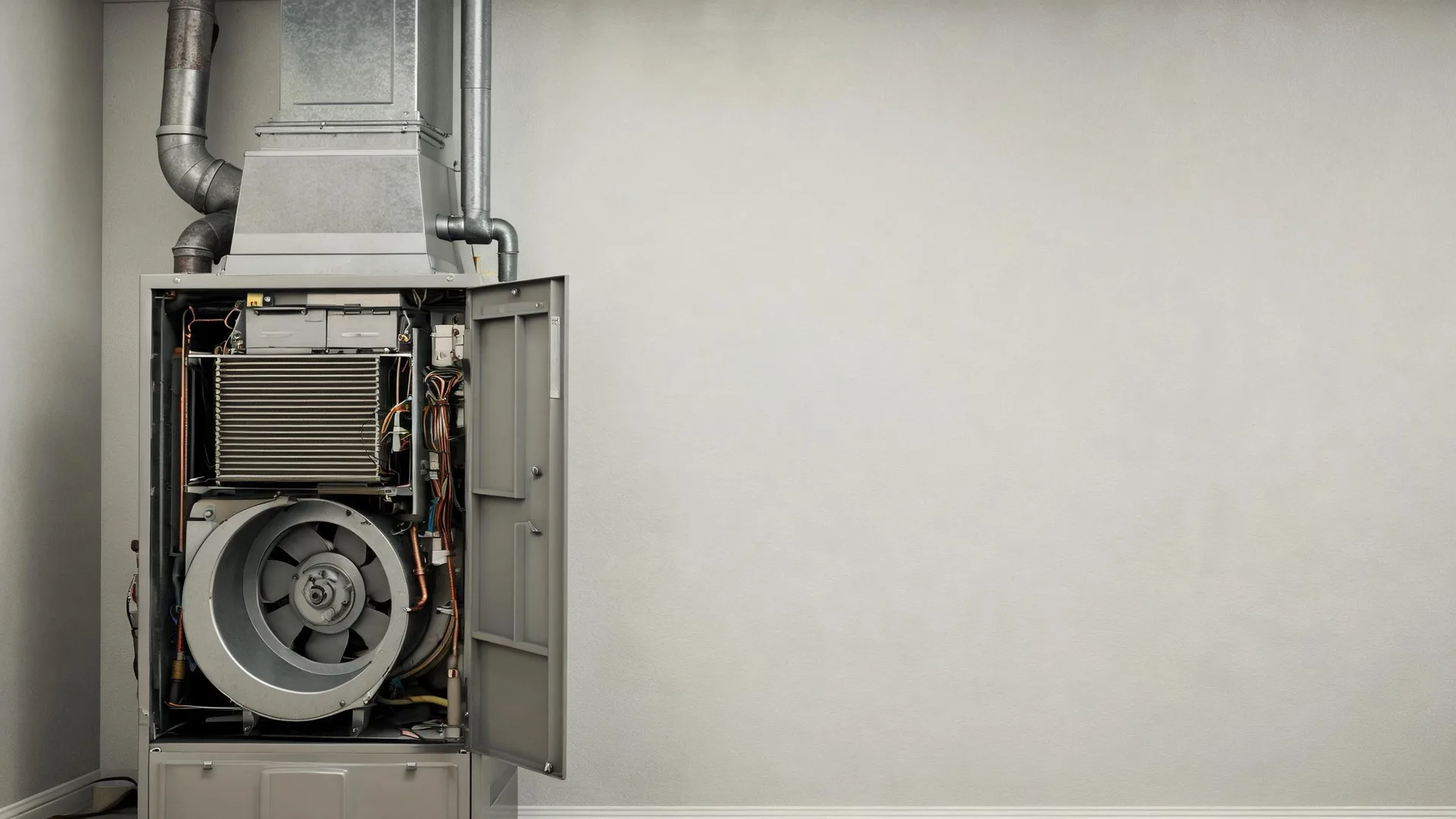
A small crack in the heat exchanger does not stay small

Metal that heats and cools all night expands and contracts, and a hairline crack opens a little wider with every cycle it runs. Running a furnace with a cracked exchanger is also how exhaust gas ends up somewhere it shouldn't. That's a safety call, not a schedule-it-for-later call.

Before you call anyone, a few things are worth a look. Check the furnace filter, and if it is gray and packed with dust, swap it. A clogged filter starves the burner of air and can cause the short cycling or weak heat you're seeing. Next check the thermostat. Make sure it is set to heat, not just fan, and that the batteries aren't dead if it uses them. Look at the breaker for the furnace and the switch that looks like a light switch on or near the unit itself. That switch gets bumped or flipped off during other work more often than people expect. If your furnace uses a standing pilot, check whether the pilot light is actually lit. None of this fixes a cracked heat exchanger or a failing blower motor, but it rules out the simple stuff first.

A diagnostic visit starts before any panel comes off. A tech asks what the furnace is doing, when it started, and whether it happens on every cycle or just some of them. Then the panels come off and the tech watches a full cycle start to finish, how it ignites, how long it runs, what the flame looks like, whether it shuts off on its own or stays lit. A multimeter checks things you can't see, like whether the igniter is pulling the right current or a safety switch is doing its job. Airflow gets checked too. A furnace starved for air can mimic a failing part that's actually fine. The goal is to watch the furnace fail in front of you, or find the reading that explains why it did, rather than replace parts until something works.