




A low-profile adobe house with glowing windows and landscape lighting, surrounded by desert rocks, shrubs, and a saguaro cactus at dusk.

Furnace Repair in Battle Mountain, NV

Tell us about the job

Takes about a minute. No obligation.

RepairFurnace or heatingLander County, NV
Step 1 of 2

What ZIP code is the job in?

Furnaces in Battle Mountain run from September clear through May, nine months of the year. That is most of the calendar spent cycling on and off, heating a house against overnight lows that average 20°F in December and January. A system working that many months, against that kind of cold, wears parts sooner than one that gets a real break every summer. The igniter, the blower motor, the pressure switch all see more hours than they would somewhere milder. Lander County has also logged well over a hundred winter storms in the past decade, and a furnace already working hard gets pushed harder when the weather turns bad outside. When something acts up here, it is usually tied to how much the system runs, not bad luck.

9 months
September through May, your furnace is on duty
20°F
the average winter night it heats against
101 winter storms
in ten years, the nights a failure hurts most
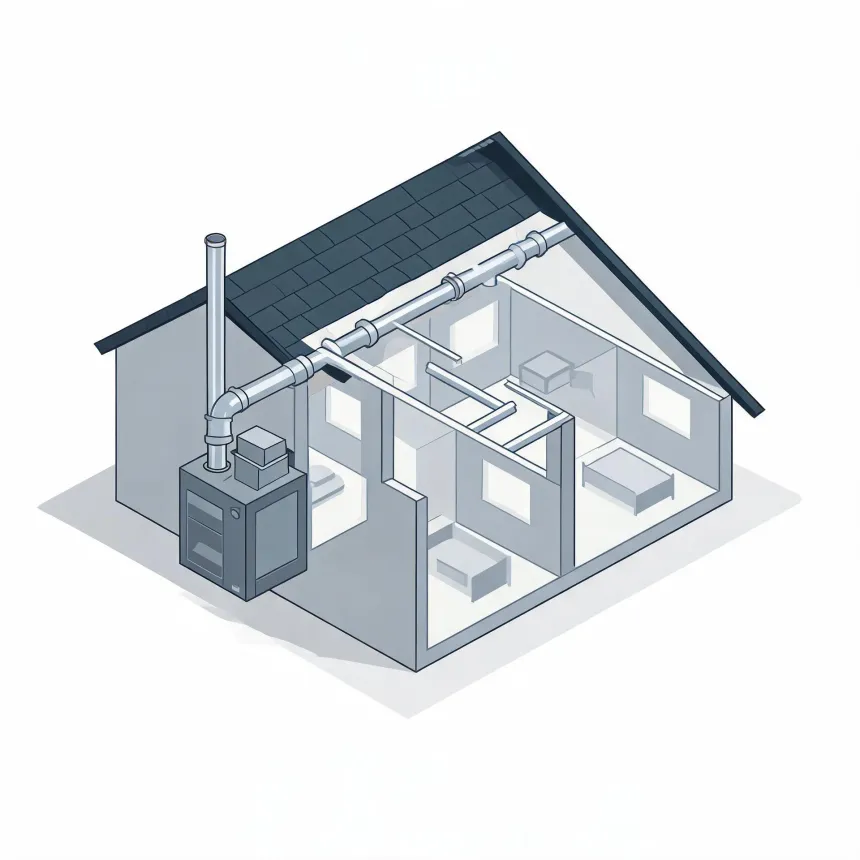
Isometric cutaway illustration of a small house showing interior rooms, ductwork running through the attic, and a furnace unit with a vertical flue pipe on the exterior wall.
Your furnace works hardest from November through April.

NOAA nClimDiv, 1991–2020 normals

Half the homes in Battle Mountain were built in 1986 or earlier.

A furnace that has been running in an older house for decades is more likely to need a repair than a replacement part to fail without warning.

September is when a weak part gets found

Heat runs September through May
Winter nights average 20°F
101 winter storms from 2015 to 2024

Have it looked at before the next cold stretch

A furnace that runs nine months a year against lows like these does not fail at random. Get the actual cause checked out, so whatever is worn gets fixed instead of just patched for now.

Find a contractor
A man in a cap, dark jacket and tan work pants carries a canvas tool bag up white porch steps toward a dark blue paneled front door, with a potted shrub beside the entry.
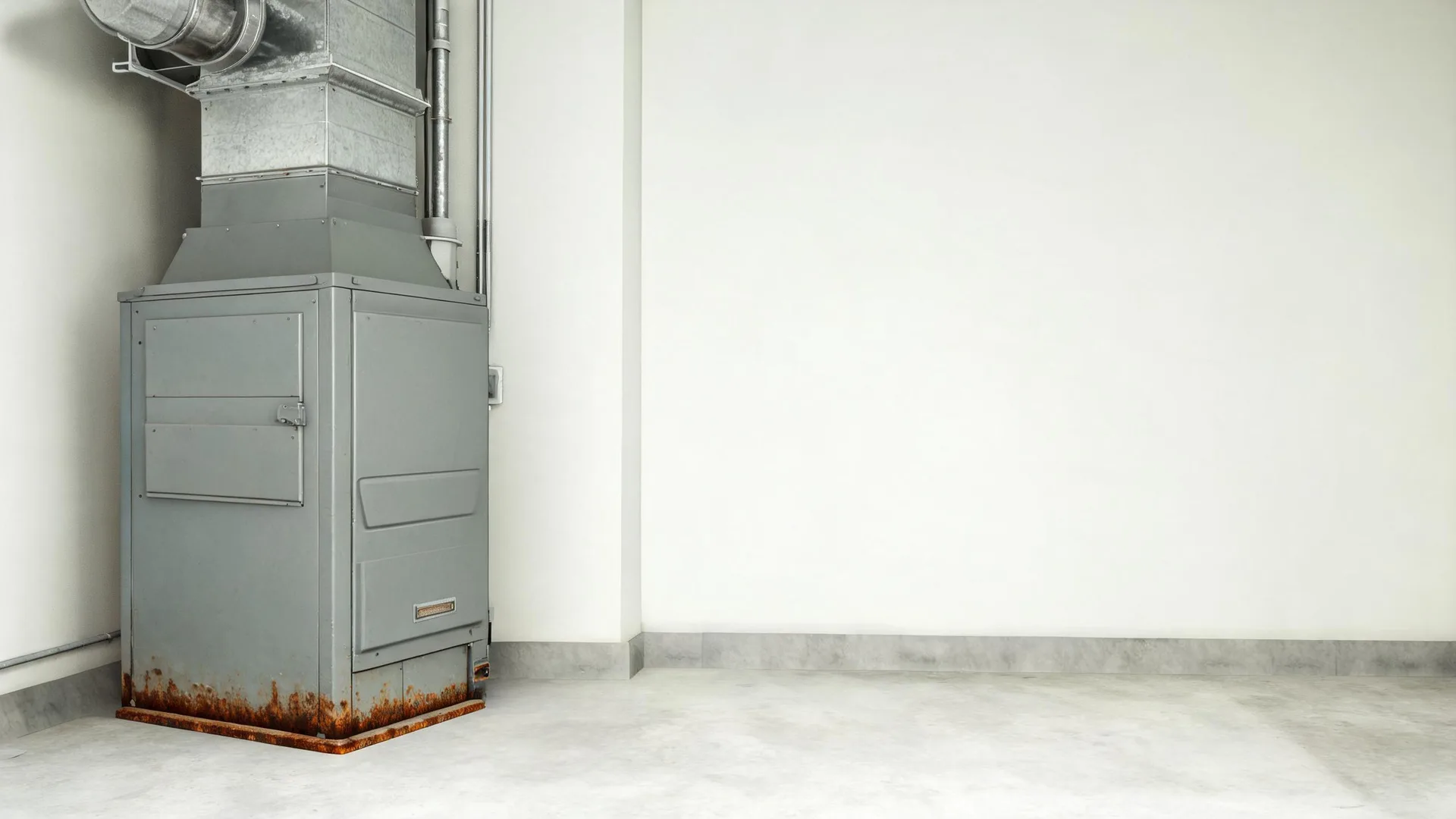
A gray residential gas furnace installed in an unfinished basement, connected to sheet-metal ductwork and PVC pipes.

The parts that wear out, and why

Most furnace failures trace back to one of a few parts. The igniter is the one that goes most often. It's a thin strip that glows hot enough to light the gas. Heating up and cooling down that many times eventually cracks it, and once it's cracked, the furnace runs through its startup and shuts down without producing any heat. The flame sensor causes a similar complaint for a different reason. It's a safety part that confirms a flame is actually burning. Soot builds up on it over time, and once it can't sense the flame anymore, the system cuts the gas even though the igniter did its job. One gets cleaned off. The other gets replaced. The blower motor fails for a simpler reason, plain run time. The bearings inside it wear down year after year until they finally give out, and at that point the motor itself needs to come out. None of this happens overnight. It builds a cycle at a time, which is why a furnace that has run fine for years can start acting up in the same season without anything unusual having happened to it.

What you can check yourself

Look at the thermostat first. Make sure it's set to heat and the set point is actually above room temperature, and swap the batteries if it runs on them. Check the filter next, and replace it if it's gray or clogged, since a blocked filter starves the burner of airflow and can trip a safety switch. Then go to the furnace itself and look for a blinking light behind the small window on the control board. Walk over to your breaker panel and confirm the furnace breaker hasn't tripped. If your furnace has a standing pilot, check whether it's still lit.

What to leave alone

Don't take any panel off the furnace beyond what's held on with simple latches, and don't reset the system more than once if it doesn't hold. A furnace that shuts itself down and won't restart is doing that on purpose, usually because a safety switch caught something, a blocked vent, a flame that didn't sense right, a limit switch that tripped on heat. Resetting it again and again doesn't fix whatever caused it. If you smell gas at any point, don't flip switches or relight anything. Leave the house and call the gas utility from outside.

A gray forced-air furnace with sheet-metal ductwork stands in an unfinished basement with exposed wooden joists, concrete walls, and a hanging incandescent bulb.

A new furnace would cut about $150 a year off heating for a typical Lander County home.

  • A new high-efficiency furnace$660 a year
  • An older furnace$810 a year

Estimates for a typical Lander County home, compared with an older unit built to the previous federal minimum, from EIA household energy data, Nevada fuel prices and NOAA climate normals. Your home will differ.

Repair makes sense when one part has failed and the heat exchanger is sound.

Replacement makes sense when the heat exchanger is cracked or the furnace keeps needing parts.

A diagnostic visit starts before any panel comes off. A tech asks what the furnace was doing right before it quit, since a system that shut down mid-cycle points to a different cause than one that never fired at all. From there it's the control board first, reading whatever fault code is stored, then a check of the flame itself if the furnace will run long enough to produce one. Gas pressure gets tested at the valve, because too little and the flame won't sense right, too much and the heat exchanger takes damage over time. The blower gets pulled if the motor sounds off or the bearings feel loose by hand. None of this is guesswork. Each check rules something out until the one actual cause is left, and that's what gets fixed, not whatever part happened to look old.