



View from beneath a dark shaded overhang toward a single-story stucco house with a concrete block wall, gravel ground, and a large twisting tree at right.

Furnace Maintenance in Lovelock, NV

Tell us about the job

Takes about a minute. No obligation.

Tune-up, service, or cleaningFurnace or heatingPershing County, NV
Step 1 of 2

What ZIP code is the job in?

October is when your furnace in Lovelock starts earning its keep, and it won't let up until May. That's eight months of straight work. September is the month to get it checked, before the first cold morning asks it to fire up at full strength. A furnace that starts the season with a clean burner and a good flame sensor runs the whole stretch better than one that starts it struggling. Wait until October and you're asking a tech to work on a system that's already running, instead of one that's sitting ready.

A furnace that never gets cleaned builds up dust and soot on the burner and the heat exchanger.

A dirty flame sensor is usually the first part to fail, and it will shut the furnace down rather than let it run dirty.

Half these furnaces are older than the house next door's

Half the homes here were built by 1984
Heat runs October through May
Winter nights average 23°F

A tune-up opens the cabinet and looks at things you'd never see from the thermostat. The flame should burn steady and blue, not yellow or lifting off the burner. A tech checks the flue for a solid connection, since a cracked or loose section can let exhaust back up into the house instead of outside. The blower wheel gets looked at too, because dust cakes onto the blades and throws it out of balance, making the motor work harder to push the same air. Wiring connections get snugged down, since a loose one can cause the furnace to cycle oddly or not start at all. None of this shows up as a symptom until the day it does, and by then it's a repair instead of an adjustment.

Book it before the season

It starts running hard in the first month of the season here. Book the check the month before.

Find a contractor
A gray high-efficiency gas furnace installed in an unfinished basement, surrounded by gas lines, a condensate drain, and sheet-metal ductwork.

The one part you can check yourself

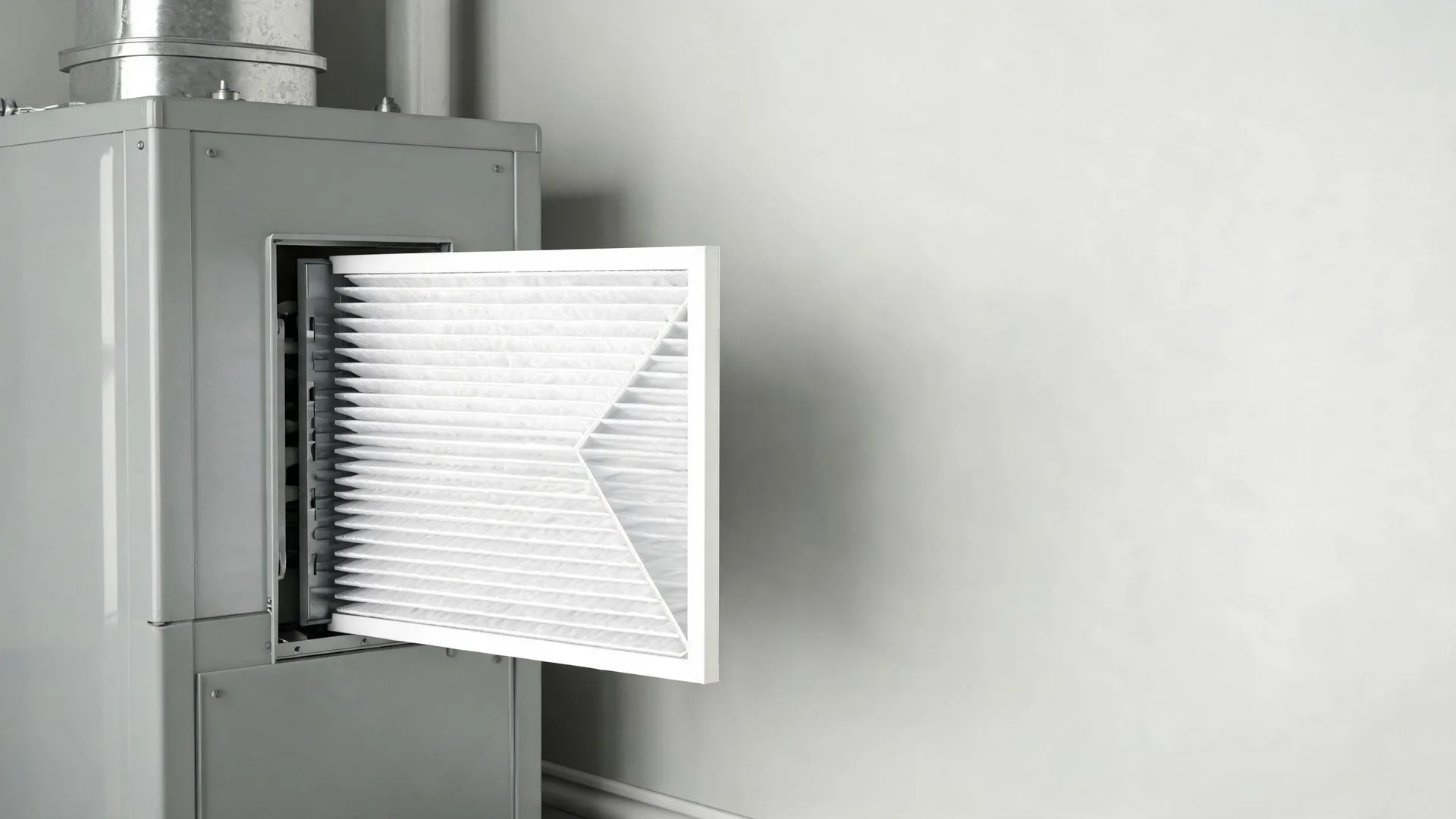
A furnace doesn't have a drain or an outdoor coil to worry about, but the filter sits right in the path of every cubic foot of air the blower moves. A clogged filter makes the blower work harder to pull air through it, and that strain carries over to the motor. Airflow that's choked down also means the heat exchanger doesn't get enough air moving across it, so it runs hotter than it should. Over time that's how a heat exchanger develops a crack. The fix is simple and it's the one piece of maintenance that doesn't wait for a tech. Check the filter while the furnace is running every day, and swap it when it's gray instead of white.

What the furnace is telling you

A furnace that's starting to fail gives warnings before it quits outright. Short cycling, where it fires up and shuts off again before the house warms, points to a clogged filter or a flame sensor losing its read. A burner that hums or rattles on startup is working against something, a worn bearing or a blower wheel out of balance. Cold air from the vents before the warm air kicks in is normal, but a longer delay than usual means the igniter is weakening. A knocking or booming sound right at startup means gas is building up before it lights, and that one shouldn't wait for a scheduled visit.
Why a check catches it early

Most of what fails in a furnace fails slowly. A flame sensor coated in residue still lights the furnace for weeks before it finally won't. A blower motor losing a bearing still runs, just louder and hotter, until the day it seizes. A maintenance visit catches these mid-failure, not after. The parts get cleaned or flagged for replacement while the furnace is still running fine, so the breakdown that would have happened on a cold morning gets handled on a tech's schedule instead.

Between visits, the filter is the main thing worth your attention, but a couple of other checks take just a glance. Keep furniture and boxes away from the return air grille, since blocking it starves the blower the same way a clogged filter does. If your furnace has a standing pilot, you can check that the flame is a steady blue rather than yellow or flickering, though most newer furnaces light electronically and skip this step entirely. Listen for anything new. A furnace that's run quietly for years and suddenly hums, rattles, or delays before the warm air kicks in is telling you something, and that's worth a call rather than a wait. Keep the area around the furnace clear of stored items too. It needs room to pull in air, and boxes stacked against the cabinet can choke that off the same way a dirty filter does.

A tune-up also covers the parts that don't show themselves even once the furnace is running. A tech tests the limit switch, which shuts the burner off if the air inside the cabinet gets too hot, usually because airflow is restricted somewhere. That switch can fail in either direction, tripping too soon or not tripping when it should, and you'd never know until the furnace either won't stay on or won't shut off. The draft inducer motor gets checked too, since it has to pull exhaust out before the burner is allowed to light at all. If it's running weak, the furnace may try to light and fail, over and over, without ever telling you why. Gas pressure gets measured at the valve, because too high or too low changes how the burner behaves even if the flame looks fine to the eye. These are the checks that don't wait for a symptom to show up, because by the time one does, the part has usually already failed.