Electricity here runs $43.95 per million Btu
Nevada power costs more than it does in most states. A furnace that has to work harder because of a dirty filter or a weak igniter burns through more of it every time it runs.
Takes about a minute. No obligation.
Nevada power costs more than it does in most states. A furnace that has to work harder because of a dirty filter or a weak igniter burns through more of it every time it runs.
Dust on the blower wheel and a clogged filter force the furnace to push air longer to heat the same rooms. In a place where power already costs more, that extra runtime shows up fastest on the bill.
Furnace season starts in September here.
Have the furnace checked in August, before it has to work.



Your furnace here runs from September through June, about ten months of the year. Overnight lows average 17°F across December, January and February, so it's not just running long, it's working against real cold most of that time. White Pine County has seen winter storms, heavy snow, ice, blizzards, 226 times in the last ten years. Each one puts the furnace through a hard stretch with no break. A worn igniter or a weak blower motor that might limp along somewhere milder gets found out fast here. Getting it looked at before September gives a contractor time to catch that before the cold does.
A neglected system uses more power, and power costs more here. A tune-up pays for itself.
Find a contractor
Half the homes in White Pine County were built in 1970 or earlier. A furnace that old has usually been swapped out at least once, but the ducts, the vents, the wiring running to it, those tend to stay from the original build. A yearly check is how a contractor catches a cracked heat exchanger or a connection going bad before it fails on a cold night instead of after.
A furnace that never gets opened up keeps running on a dirty flame sensor or a failing igniter until it just stops. Heat exchangers crack slowly, from metal flexing every time the burner fires. A contractor can spot the early signs. A furnace running on its own all winter cannot.
Airflow is what keeps the heat exchanger from overheating. A clogged filter or a dust-coated blower wheel cuts that airflow down, so the furnace runs hotter and longer to push the same heat through the ducts. Left alone, that strain wears out the blower motor years before it should quit.
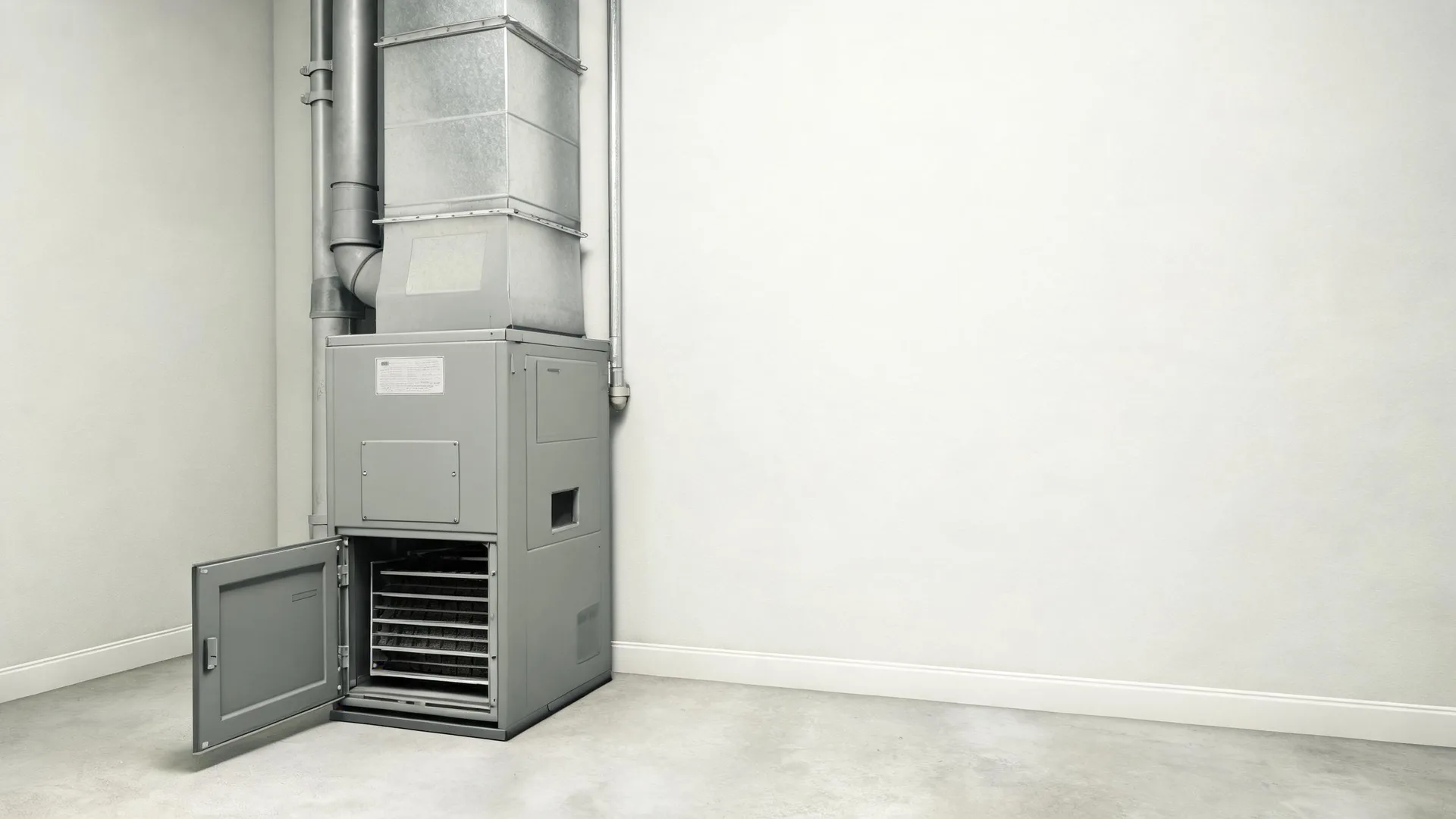
A tune-up gets at what the furnace hides while it runs. A contractor pulls the burner assembly and looks at the flame itself, whether it burns steady and blue or rolls over yellow at the edges, which points to a burner that needs cleaning before it fouls the heat exchanger. The flue connection gets checked too, because a loose joint lets exhaust leak where it shouldn't instead of venting outside. Amp draw on the blower motor tells a contractor if it's straining before it ever makes a noise you'd notice. None of that shows up from the thermostat. It only shows up with the panels off and someone who knows what the readings should look like.
A tune-up starts before the burners ever fire. A contractor checks the igniter for hairline cracks, since that's the part that fails first and the part that leaves you with no heat at all. The flame sensor gets cleaned, because a film of oxidation on it is enough to make the furnace shut itself down a few seconds after startup, thinking the flame isn't there when it is. Most furnace blowers are direct-drive, so there's no belt to check. What matters instead is the motor bearings and whether the wheel is pulling clean air or dragging through a coat of dust. The condensate line gets checked on a high-efficiency furnace, since a clogged one backs up and shuts the system down on its own. Every safety switch gets tested on purpose, not just trusted to work the one time it has to.