A furnace here runs from October through May. That is eight months to ask a worn igniter or a dirty flame sensor to hold up. One visit before the season starts catches that early, while it is still a quick fix instead of a breakdown on a cold night.
The coldest nights ask the most of it
Overnight lows in Esmeralda County average 24°F across December, January and February. A furnace works hardest on those nights, and a clean burner and a working thermostat let it keep up without strain.
A dirty filter chokes the airflow a furnace needs to run safely.
Check it monthly through the season and swap it when it looks gray, so the heat exchanger never has to work against a blocked return.
One tune-up covers the whole season
Half the homes here were built by 1986Heat runs October through MayWinter nights average 24°F
Furnace season here starts in October and runs eight months, through May. September is the last month before that, and the furnace is sitting idle, so a contractor can take the time to check it properly. Once October hits, it is running hard most days, and that is not the time to find a weak igniter or a failing flame sensor. Catch that in September and it is a scheduled repair. Wait, and it turns into a furnace down on one of those eight months when the house needs it most.
Dust builds up on the burner and the flame sensor whether the furnace runs or sits idle. Skip a season and that film stays put, and a flame sensor coated in it starts misreading the flame as out when it isn't, shutting the furnace down mid-cycle. A blower wheel caked in dust moves less air across the heat exchanger, and that exchanger runs hotter than it should. Over enough cycles like that, metal fatigues faster than it would otherwise. None of this announces itself. The furnace still lights, still blows warm air, right up until the morning it doesn't.
Change the filter, nothing else
A filter is the one part meant for your hands. Pull it, hold it to the light, and if you can't see through it, swap it. Leave the cabinet door shut otherwise. Pulling the burner cover or reaching near the flame sensor without training risks a gas connection or a cracked exchanger you won't see you caused.
Watch for what the furnace tells you
A yellow or flickering flame instead of steady blue means it is not burning clean. A burning dust smell on first startup each season is normal for a few minutes and should clear. One that lingers, or any smell beyond that, means shut it down and get it looked at before running it again.
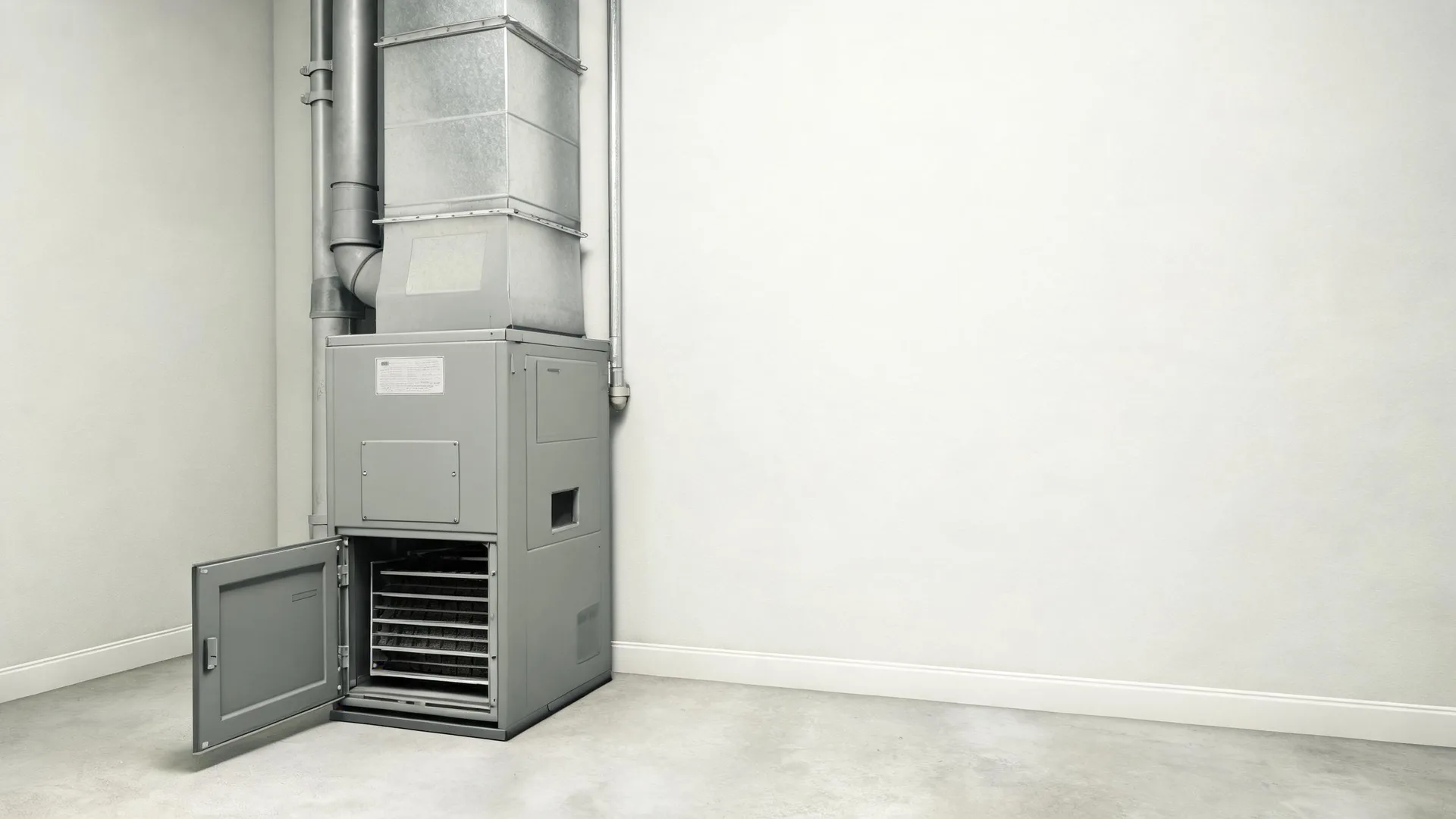
A tune-up checks things the furnace never shows you while it runs. A technician pulls the burner cover and looks at the flame itself, steady blue meaning clean combustion, yellow or lifting meaning something is off with the mix. The flame sensor comes out for a wipe down, since that film builds up slow enough that you would never notice it from the thermostat. Amp draw on the blower motor gets checked against what it should be, because a motor pulling too much is wearing out its bearings before it ever makes a noise you can hear. The heat exchanger gets a look for hairline cracks, which matter because that is the one thing standing between the flame and the air headed into the house. None of this shows up as a symptom until it fails.
A tune-up also covers what keeps the furnace from putting anything dangerous into the house. The technician checks the venting, the pipe that carries exhaust out, for a loose joint or a blockage from a nest or debris. Gas pressure to the burner gets measured and set to spec, since too high or too low both cause problems that show up as a rough flame rather than an obvious fault. The igniter gets tested for resistance, not just looked at, because one can glow and still fail to light the burner reliably. Safety switches get checked too, the ones that shut the furnace down if it overheats or if the pressure in the system is off. Each of these works fine until the day it doesn't, and there's no warning sound before that day.