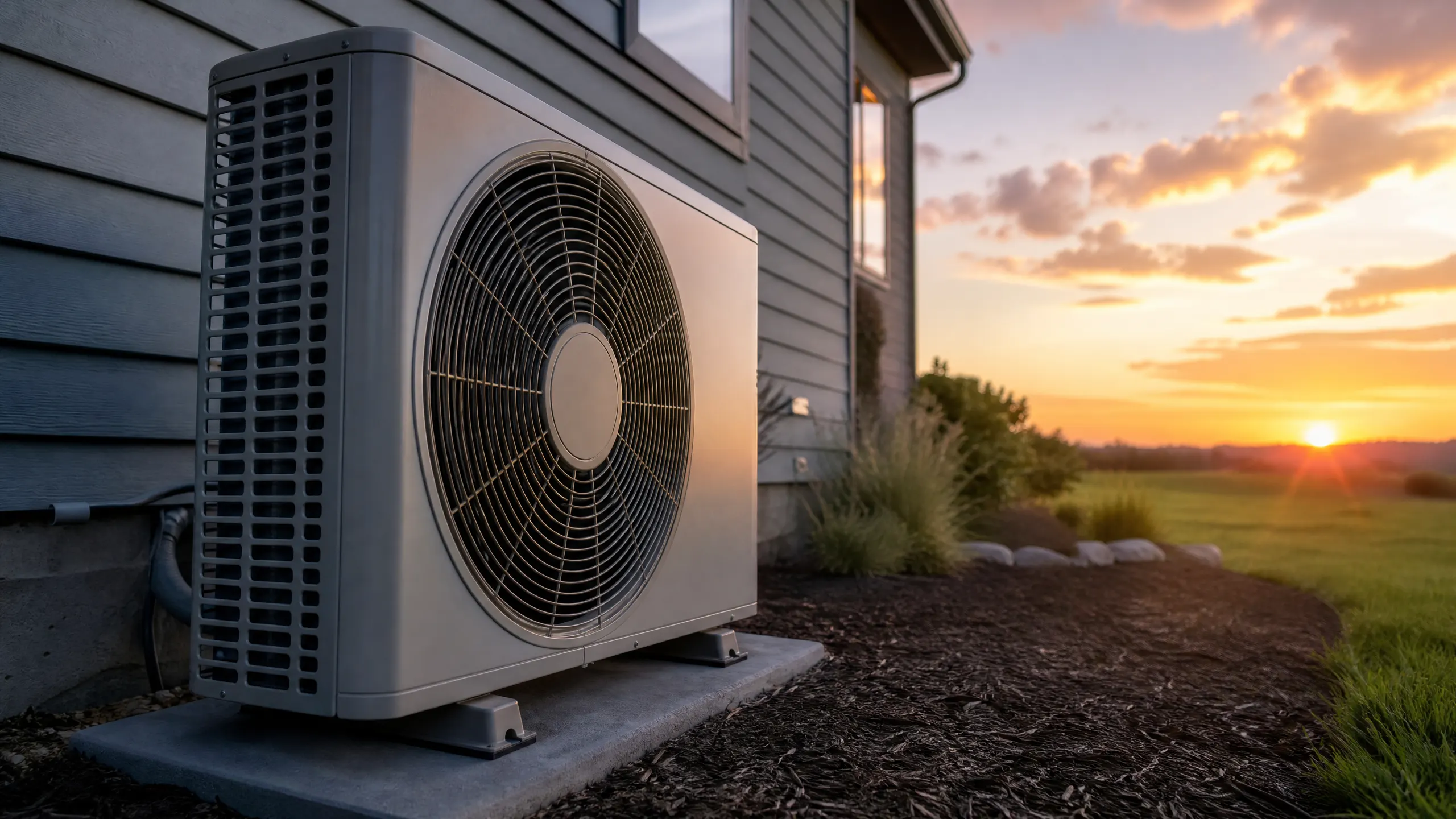





A grey residential air-conditioning condenser unit mounted on a concrete pad beside a house, photographed at sunset.

Heat Pump Repair in Winnemucca, NV

Tell us about the job

Takes about a minute. No obligation.

RepairHeat PumpHumboldt County, NV
Step 1 of 2

What ZIP code is the job in?

A heat pump works year round, so it earns its keep in a way a furnace or an AC unit never has to. That changes the math on repair versus replacement. A compressor failure on an older unit is usually the line in the sand, since the compressor is the most expensive part to replace and the labor to get at it isn't cheap either. A bad capacitor, a failed defrost control board, or a low refrigerant charge from a slow leak are a different story. Those are normal wear parts and fixing them doesn't tell you anything bad about the rest of the system. If your outdoor unit is struggling to keep up on the coldest days but runs fine otherwise, that's worth a look before you assume the whole system is done.

8 months
October through May, your system heats
2 months
July through August, it cools
23°F
the average winter night it heats against
85°F
the average summer afternoon it cools against
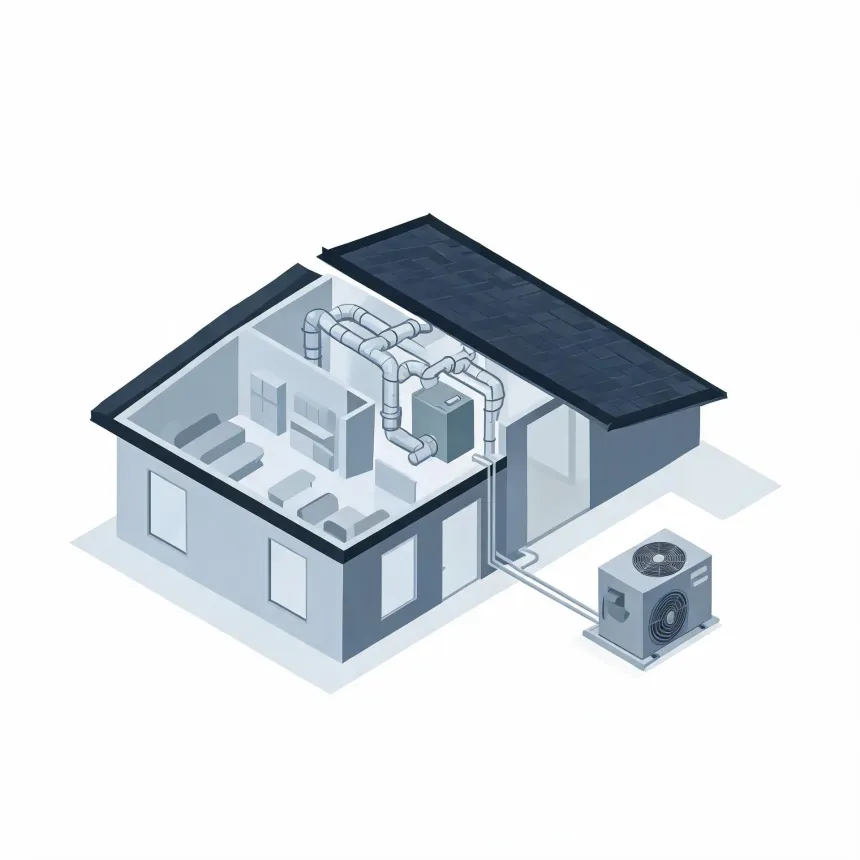
Isometric illustration of a cutaway single-story house showing interior ductwork and an air handler connected by lines to an outdoor condenser unit on a pad beside the building.
Your system heats October through May and cools July through August.

NOAA nClimDiv, 1991–2020 normals

A heat pump that's icing over or short cycling doesn't fix itself by running more.

Keep it running and a bad capacitor or stuck valve can take the compressor down with it.

At 15 cents a kWh, a heat pump that's struggling costs you every month it runs that way

Power costs 15 cents a kWh statewide
152 damaging wind events from 2015 to 2024
5 hail events from 2015 to 2024
A struggling heat pump still runs up the billNevada homes paid 15 cents per kilowatt-hour in 2024.

Heat pumps here run heat from October through May, so September is when a weak part tends to get found out. A unit that limped along in mild weather can fail outright once it has to run for hours at a stretch instead of cycling on and off. If yours is struggling now, in the first cold weeks, that timing tells you something. The part was already on its way out before the load ever hit it. Waiting until mid winter to deal with it just means doing the repair in worse weather, with the house already cold.

Get it fixed before a worn part turns into a bigger repair

A worn part is worth fixing here more often than not. Get the repair looked at now, while it's a capacitor or a control board and not a compressor that's been struggling for months.

Find a contractor
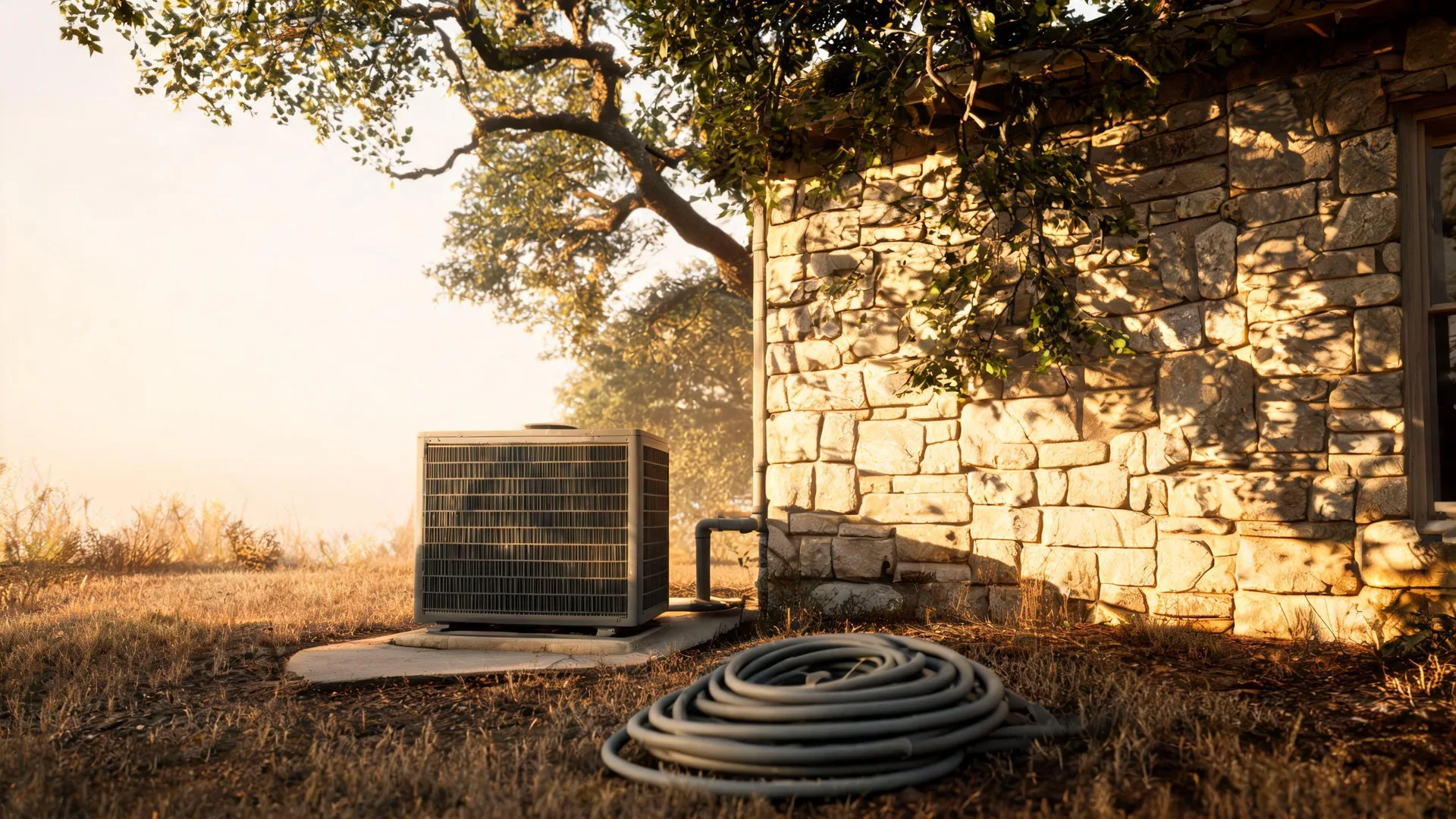
A gray heat pump outdoor unit mounted on a concrete pad next to the stone-accented exterior wall of a house.

What to check before you call

Before you call, look at the outdoor unit. If the coil is caked in ice beyond what a normal defrost cycle clears, or if the fan isn't spinning at all, that's worth noting. Check your thermostat is set to heat, not emergency heat, and that the breaker for both the indoor and outdoor units hasn't tripped. Swap or check the air filter. A clogged filter starves the system of airflow and can make a healthy heat pump act like a failing one. Walk through the house and feel the vents. Air that's barely moving, or air that feels cooler than it should, points to something different than a system that's just struggling against the cold. None of this tells you what part is bad, but it tells the tech what to check first.

The outdoor unit never shuts off

A heat pump in heating mode runs longer cycles than an AC ever does, so some of that is normal. What's not normal is a unit that runs constantly and still can't bring the house to temperature, or one that short cycles, kicking on and off every few minutes without settling into a run. Both point to something keeping the system from doing its job, whether that's a refrigerant leak, a failing compressor, or a stuck reversing valve.
Air comes out cold instead of warm

In heating mode, the air at the vents should feel warm, not just less cold. If it feels room temperature or cooler, the system may have dropped into backup heat without you knowing, or the reversing valve that switches the unit between heating and cooling could be stuck in the wrong position. Either way, the unit is running and using power without actually heating the house, which is worth having looked at before the next cold stretch.

Most heat pump failures start small, in a part that's easy to miss until it finally quits. The run capacitor gives the compressor and fan motors the jolt they need to start, and it weakens slowly over years until one day it can't do the job. Contactors pit and stick from the sheer number of times they open and close, season after season. The reversing valve, which has no equivalent in a straight AC or furnace, gets stuck from corrosion or a failed solenoid and leaves the system blowing the wrong temperature of air entirely. Defrost control boards fail outright, usually from age or a power surge, and when they do the outdoor coil ices over because the unit never gets the signal to clear it. Refrigerant leaks are slower and sneakier, usually at a fitting or a coil seam, and they show up as weaker heat rather than a sudden stop. None of these wear parts says anything about the compressor itself, which is built to outlast most of what surrounds it.

A diagnostic visit starts outside, at the unit itself. A tech checks refrigerant pressure with gauges, since that number says more about a leak or a failing valve than anything visible from the ground. The capacitor gets tested under load, not just looked at, because a capacitor can look fine and still fall out of its rated range. The reversing valve gets checked both ways, in heating and in cooling, since a valve that works in one direction can still be stuck in the other. Airflow gets measured at the vents too, not just felt by hand, because a weak blower motor or a clogged coil can mimic a refrigerant problem without being one. Each reading either clears a part or points to it, and that is what tells the tech what actually needs replacing instead of what might.