Adobe-style desert homes lit by warm outdoor lighting at dusk, with saguaro cacti in the foreground and a rocky mountain range behind them.

Heat Pump Repair in Gardnerville Ranchos, NV

Tell us about the job

Takes about a minute. No obligation.

RepairHeat PumpDouglas County, NV
Step 1 of 2

What ZIP code is the job in?

August is when a weak heat pump shows it

Heat in Gardnerville Ranchos starts up in September, and August is the month before. A heat pump that has been sitting idle through the warm stretch gets asked to work harder once that switch happens, and a part that was already marginal tends to fail right there.


What that means for the repair

If a heat pump is struggling right as the weather turns, that timing is the clue, not the cause. The job is finding what actually gave out under that first real load, whether that is a contactor, a capacitor, or the reversing valve, and fixing that part rather than guessing.

10 months
September through June, your system heats
2 months
July through August, it cools
24°F
the average winter night it heats against
82°F
the average summer afternoon it cools against
Isometric line illustration of a cutaway house showing interior rooms with furniture, ceiling ductwork, and an outdoor condenser unit connected by lines along the exterior wall.
Your system heats September through June and cools July through August.

NOAA nClimDiv, 1991–2020 normals

A heat pump that still heats and cools but takes longer to get there is usually worth repairing, not replacing.

Once the compressor itself is failing, or the repairs keep stacking up year after year, that math starts to favor a new system instead.

Electricity here runs 15 cents a kWh, so a heat pump limping along is costing you every month it stays broken

Power costs 15 cents a kWh statewide
290 damaging wind events from 2015 to 2024
221 winter storms from 2015 to 2024

Winter lows in Douglas County average 24°F, and the county has seen plenty of wind and snow over the years. None of that is unusual for a heat pump. These systems are built to run in freezing air, and the cold alone does not explain a breakdown. If yours is struggling, look at the part that actually failed rather than the weather that day. A reversing valve stuck in one position, a low refrigerant charge, or a failed defrost control will show up on a mild night the same as a cold one. Fix the part that gave out and the system handles winter here the way it was designed to.

Get it looked at early

Problems tend to show up in the first weeks of the season, when the load hits a part that was already weak.

Find a contractor
A man in a cap, gray jacket and tan cargo pants, seen from behind, carries a worn canvas duffel bag up steps toward a dark navy front door, with a potted shrub beside the entry.
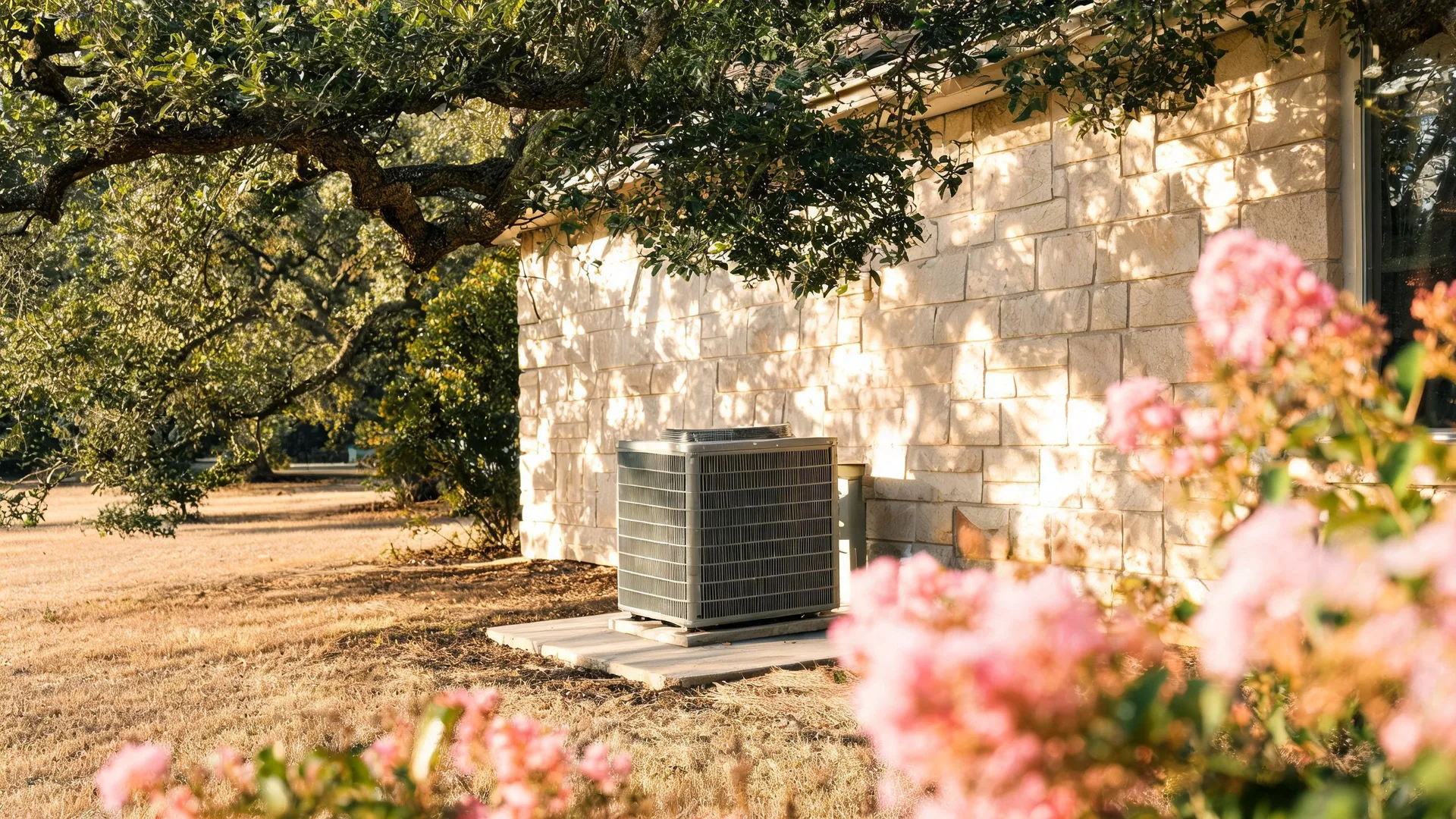
A gray outdoor HVAC unit mounted on a concrete pad beside a house with gray lap siding and a stone foundation.

A newer system still has a reason for what's wrong

Half the homes in Douglas County were built in 1990 or later. If yours is one of them, the heat pump inside it is probably not old enough to be the real problem. A system within its working life that's heating or cooling slower than it should has a specific cause. A weak capacitor, a low charge, a stuck reversing valve. That's worth tracking down and fixing rather than written off as worn out.

The reversing valve is the part unique to a heat pump

A reversing valve switches the system between heating and cooling by redirecting refrigerant flow. It can stick from a worn coil or from debris inside the valve body, and when it sticks the unit gets locked into one mode or starts blowing air that is not what the thermostat called for. An air conditioner has no equivalent part to fail this way, which is why heat pump trouble often does not match what an AC tech expects.

The rest of the failures are the same as any outdoor condenser unit

Capacitors weaken over time and stop giving the compressor and fan motor the jolt they need to start. Contactors pit and stick from the arcing of normal switching. Refrigerant charge drops from a slow leak at a fitting or coil, and a low charge makes the system run long and still fall short. None of these failures announce themselves clearly. They show up as a system that runs but underperforms, which is why diagnosis means checking the part, not guessing from the symptom.

A heat pump that is struggling will keep trying anyway, and that is where a small problem turns into a bigger one. A compressor fed on a low refrigerant charge runs hotter than it should, and heat is what wears a compressor down. Short cycling off a bad capacitor puts a hard start on the motor windings over and over instead of once. A reversing valve stuck halfway can land the system between modes, and the compressor ends up working against itself. None of this shuts the unit off right away. It just keeps running in a way that damages the part doing the struggling, and sometimes the parts around it. Catching the failing part early is what keeps a capacitor problem from turning into a compressor problem.

A diagnostic visit starts with the thermostat and the readings on the unit itself, not with guesswork. A tech will check the pressures on both sides of the system, check the temperature of the air coming off the coil, and check what the capacitor and contactor are actually doing under load rather than how they look sitting still. Some failures only show up when the compressor is asked to start, so a part can test fine at rest and still be the problem. The reversing valve gets checked by watching whether the system actually switches when it is told to, since a valve can be stuck without making any noise about it. Once the failed part is confirmed, the rest of the visit is explaining what gave out and what fixing it involves, not replacing parts that are still doing their job.