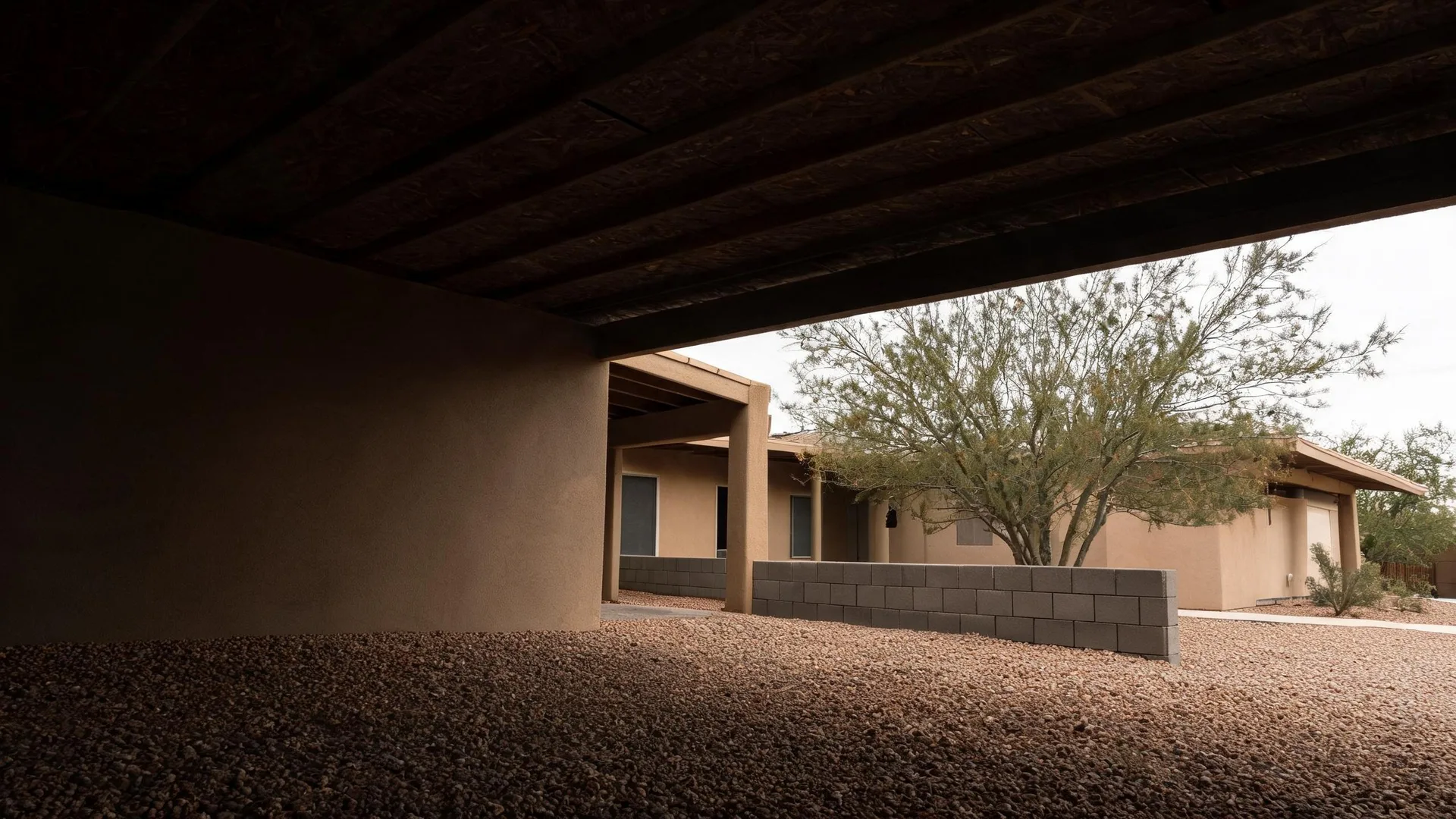
View from under a shaded wood-beamed patio of a single-story stucco house with a gray concrete block wall, gravel ground, and a mesquite-like tree under an overcast sky.

Heat Pump Repair in Fernley, NV

Tell us about the job

Takes about a minute. No obligation.

RepairHeat PumpLyon County, NV
Step 1 of 2

What ZIP code is the job in?

Winters here get cold enough to matter

Overnight lows in Lyon County average 23°F through December, January and February. A heat pump works harder on nights like that. If the system is already low on charge or the defrost control is off, that's when it falls behind and the house doesn't quite warm up.

The wind and storms aren't the issue

Lyon County sees damaging wind and winter storms most years, but that's normal for the area and not something a heat pump needs special protection from. If yours isn't working right, look at the unit itself first. A weak capacitor, a stuck reversing valve, a low refrigerant charge. Those are the usual causes, storm or no storm.

8 months
October through May, your system heats
2 months
July through August, it cools
23°F
the average winter night it heats against
87°F
the average summer afternoon it cools against
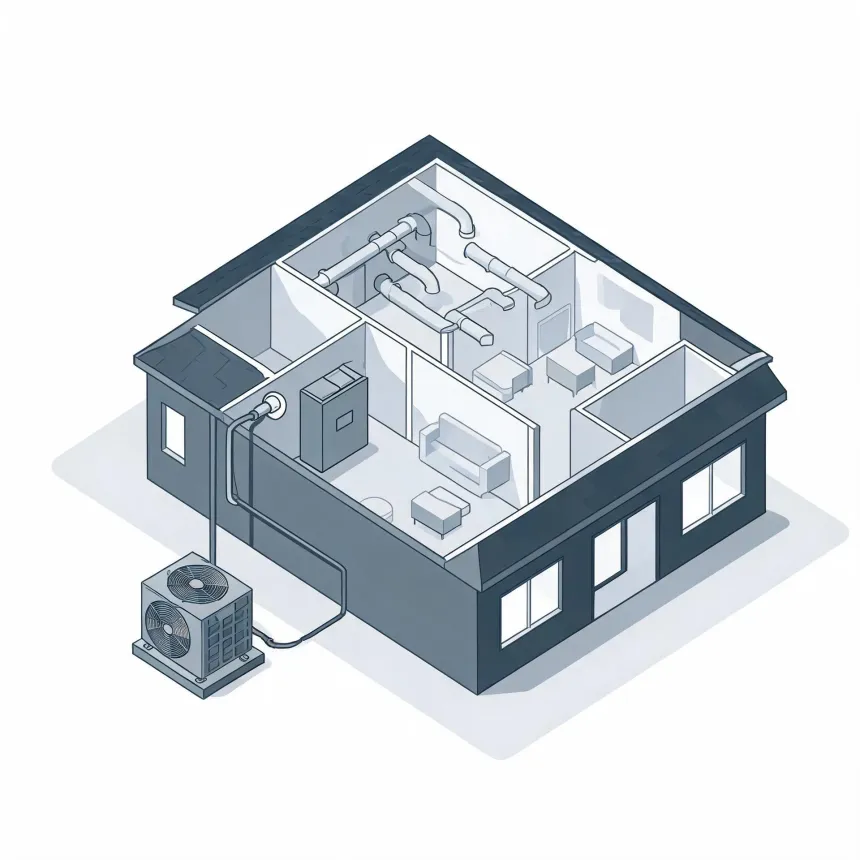
Isometric line illustration of a cutaway single-story house showing interior rooms, ceiling ductwork and an indoor air handler, connected by a line to an outdoor condenser unit on a pad beside the building.
Your system heats October through May and cools July through August.

NOAA nClimDiv, 1991–2020 normals

Heat pumps in Lyon County run heat from October through May.

A weak capacitor or low charge usually shows up in October, when the system first has to carry the load.

Half the homes in Lyon County were built in 1998 or later. If yours is one of them, your heat pump is probably newer too, especially if it came with the house. A system that age hasn't earned a replacement yet. Most problems at this stage are one part failing, a capacitor, a reversing valve, a low charge, not the unit wearing out. Worth fixing rather than writing off.

A heat pump running badly costs more here

Nevada runs 15 cents a kilowatthour for electricity. A heat pump that's low on charge or stuck in the wrong mode uses more of it to do less heating, every day it runs that way. Get the real cause found and fixed.

Find a contractor
A white mini-split heat pump outdoor unit mounted on a concrete pad beside a gray-sided house, surrounded by gravel and green shrubs.

A handful of years, not decades

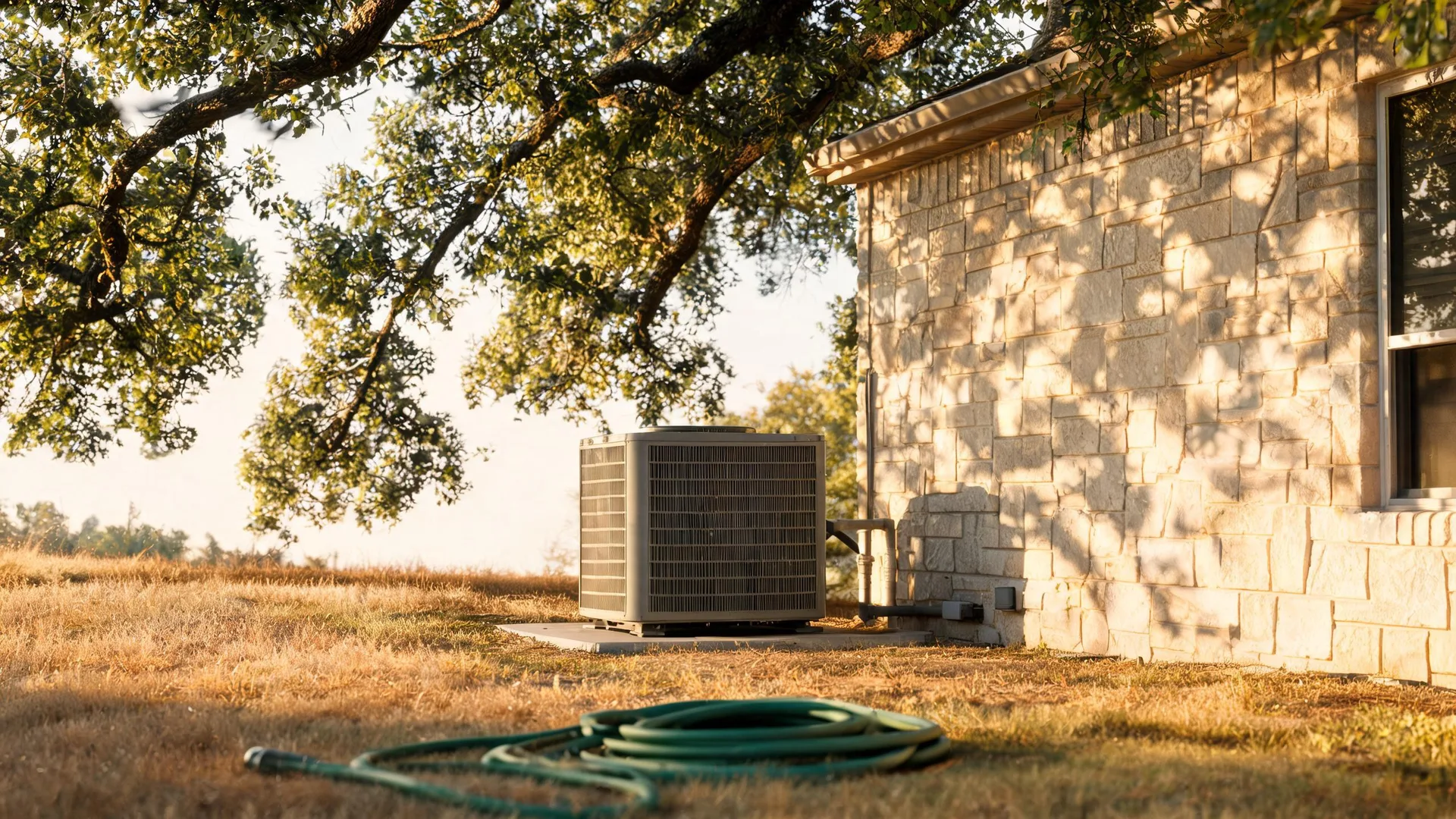
If your heat pump came with the house, it's probably run a day-into-night cycle like this one for a handful of years, not decades. That kind of age doesn't wear out a reversing valve or a capacitor on its own. A part fails, gets replaced, and the rest of the system keeps running the same cycle it always has.

The house feels wrong before anything sounds wrong

A heat pump in trouble usually shows up as comfort first. Rooms that won't hold a temperature, air coming out of the vents that feels barely warm, or the system running long stretches without catching up. By the time you hear a new noise or smell something, the problem's usually been there a while.

What the outdoor unit is doing tells you a lot

Stand outside and look at it. If it's covered in frost or ice and not clearing itself on its own cycle, the defrost control isn't doing its job. If the fan isn't turning but you can hear the unit trying, that's a motor or capacitor. If it's blowing air but the air isn't warm, suspect the reversing valve or a low charge.

Most heat pump failures trace back to one of a few parts. The capacitor gives the compressor and fan motor the jolt they need to start. When it weakens, the outdoor unit hums but doesn't start, or starts and stalls. The reversing valve is what switches the system between heating and cooling. When it sticks, the unit runs but blows the wrong temperature air, or gets stuck heating when you want cooling. Refrigerant charge is the other common one. A heat pump doesn't use up refrigerant, so if the charge is low, it's leaking somewhere, and the system will run longer and heat less until that's found and fixed. The defrost control is its own weak point, since it's what tells the unit to melt off the frost that builds up on the outdoor coil in cold weather. None of these mean the system is failing as a whole. They're individual parts that wear out or fail on their own schedule, and replacing the one that's gone usually brings the system back to normal.

A repair is worth doing when the rest of the system is sound and only one part gave out. A capacitor, a reversing valve, a defrost control board. Swap the failed part and the compressor, the coils, the ductwork all keep doing what they were already doing. Replacement starts to make sense when the compressor itself is failing, since that's the part that can't be swapped out on its own without replacing the outdoor unit. It also makes sense when the same system keeps calling for repairs, one part after another, because that pattern usually means the whole unit is wearing out at once rather than one piece failing early. A tech who's inspected the system can tell you which situation you're in before any work starts.