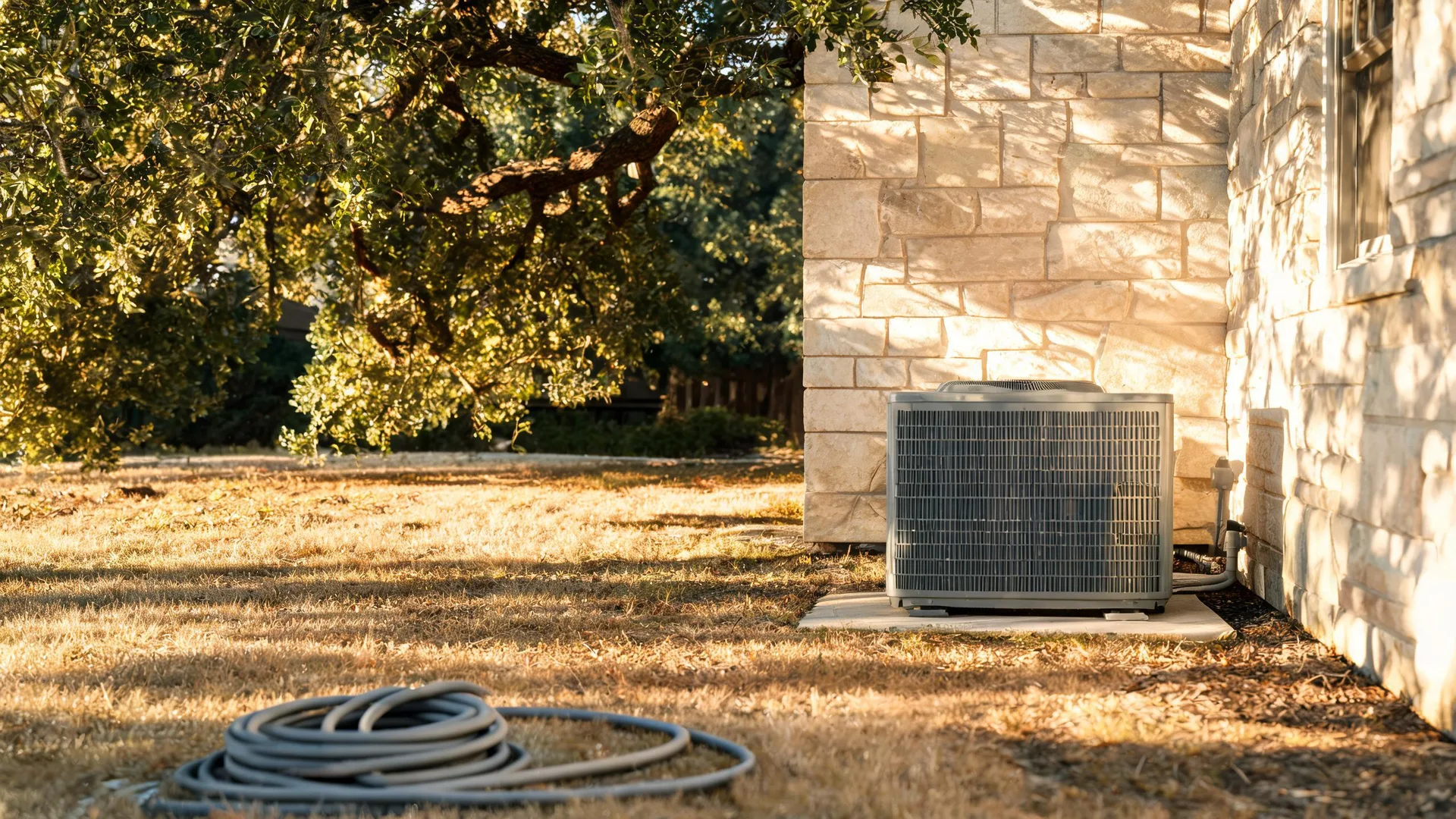
August is when weak units show themselves
Heat here switches over in September, and your heat pump has to prove itself the first cold week it runs. A part that was marginal all summer tends to fail right when you flip over to heat, not before.
Takes about a minute. No obligation.
Heat here switches over in September, and your heat pump has to prove itself the first cold week it runs. A part that was marginal all summer tends to fail right when you flip over to heat, not before.
Once heat starts in September it runs clear through June. A heat pump that's struggling in August is only going to work harder once the season settles in, so the repair gets done one way or another, early or after a harder breakdown.

NOAA nClimDiv, 1991–2020 normals
Ely sees damaging wind and winter storms most years, but a heat pump doesn't fail because of weather like that.
Winters here average 17°F overnight, which means the system runs hard and a worn part gets found the usual way, by quitting.




Before you call anyone, go outside and look at the outdoor unit. If the fan isn't spinning and the unit is dead quiet, check your breaker panel first. A tripped breaker is the easiest fix there is. If the fan is running but the air coming from your vents feels cold when it should be warm, check your thermostat is actually set to heat and not fan only. Next, look at the outdoor coil. If it's caked in ice or snow, that can be normal during a defrost cycle, but if the whole unit is frozen solid and stays that way, something's wrong and it needs a tech. Last, check your air filter. A filter clogged with dust chokes off airflow and can make a working heat pump seem like it's failing when the fix is as simple as a new filter.
A heat pump running poorly doesn't pause while you wait. At 15 cents a kWh, it draws power every hour it struggles, and that cost shows up on the bill whether or not the problem gets fixed. Get a tech out to find the real cause.
Find a contractorIf the heat pump outside is the one the house was built with, repair is worth asking about but not worth assuming. A tech can check the compressor and the coil and tell you if it's got years left or if you're paying to patch something near the end. That's worth knowing before money goes into a repair.
A heat pump switches between heating and cooling by reversing refrigerant flow through a valve, and that valve works every single cycle, all year. It can stick partway or fail to shift, and when it does the unit blows cold air when it should blow warm, or it won't defrost right. It's a common point of failure simply because nothing else on the system moves as often.
The compressor needs a jolt from the capacitor to get going, and that capacitor weakens with age and heat exposure. When it's too far gone, you'll hear the outdoor unit humming or clicking but the compressor won't actually kick on. Left alone, a compressor that keeps trying to start against a weak capacitor can overheat and fail for good, so it's worth having a tech check the capacitor before that happens.
A heat pump rarely fails all at once. It starts small, a capacitor that hesitates before the compressor catches, a reversing valve that sticks for a second before it shifts. The system still runs, so it's easy to leave alone. But a compressor forcing itself to start against a weak capacitor builds heat every time it does it, and that heat wears the windings down until they short. A reversing valve that's slow to shift gets slower, until one day it doesn't shift at all. None of this shows up on the thermostat. The house still feels heated, more or less, right up until the part that was struggling finally quits, usually on the coldest morning it has to work the hardest. Catching it while it's still just a sound or a slow start means a tech is fixing a part. Wait, and the tech is replacing a compressor.
A diagnostic call starts outside at the unit, not inside at the thermostat. A tech checks for voltage at the outdoor unit, then checks that the compressor is actually drawing the current it should. Gauges go on next to read refrigerant pressure, because a system low on charge or pushing too much pressure tells you almost right away where the trouble is. The reversing valve gets tested by forcing a switch between heating and cooling and watching whether the unit actually responds. Capacitor and contactor get checked with a meter rather than a guess, since a capacitor can look fine and still be weak. None of this takes long, but it's the difference between replacing the part that's actually failing and replacing parts until something works.