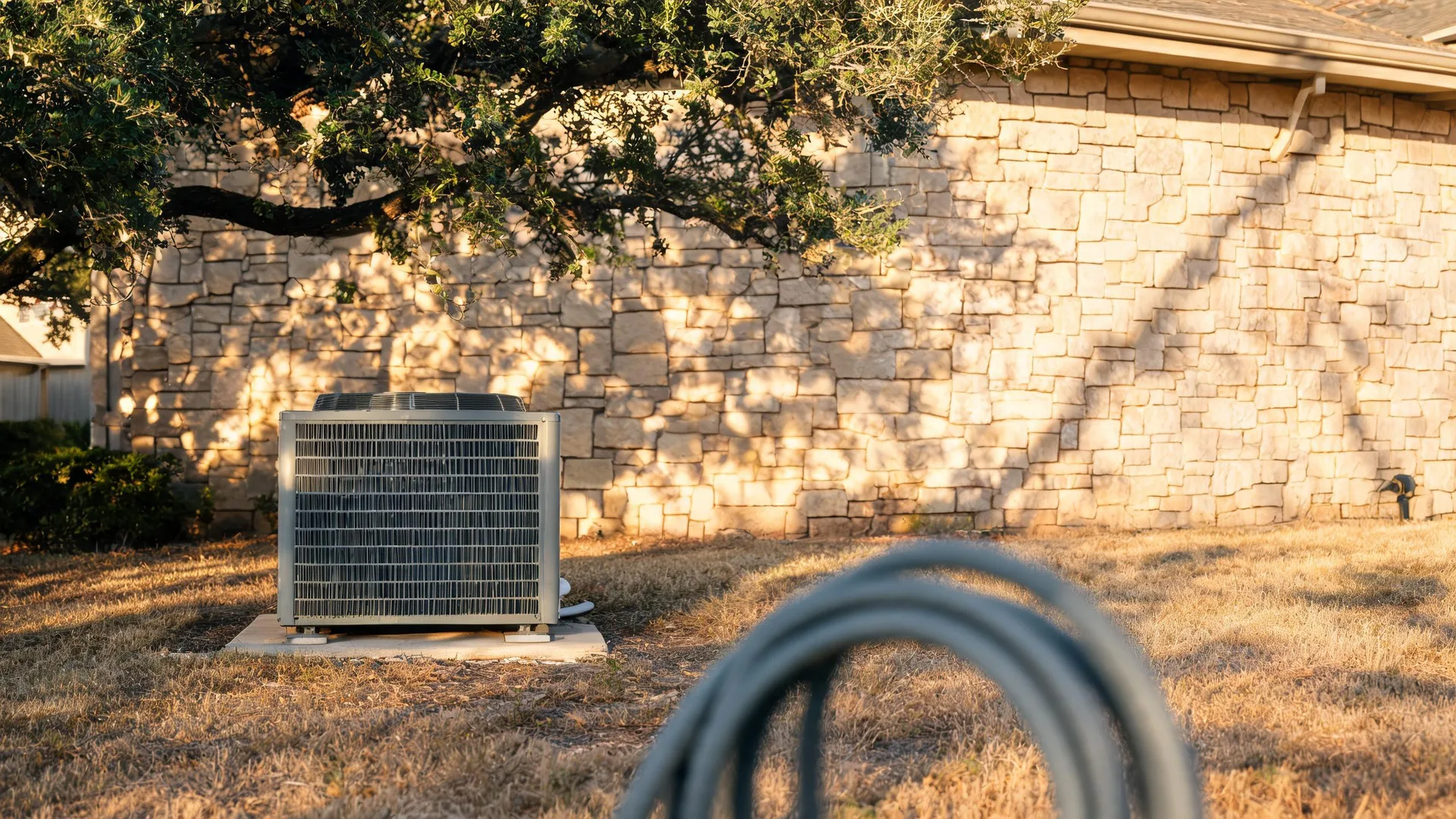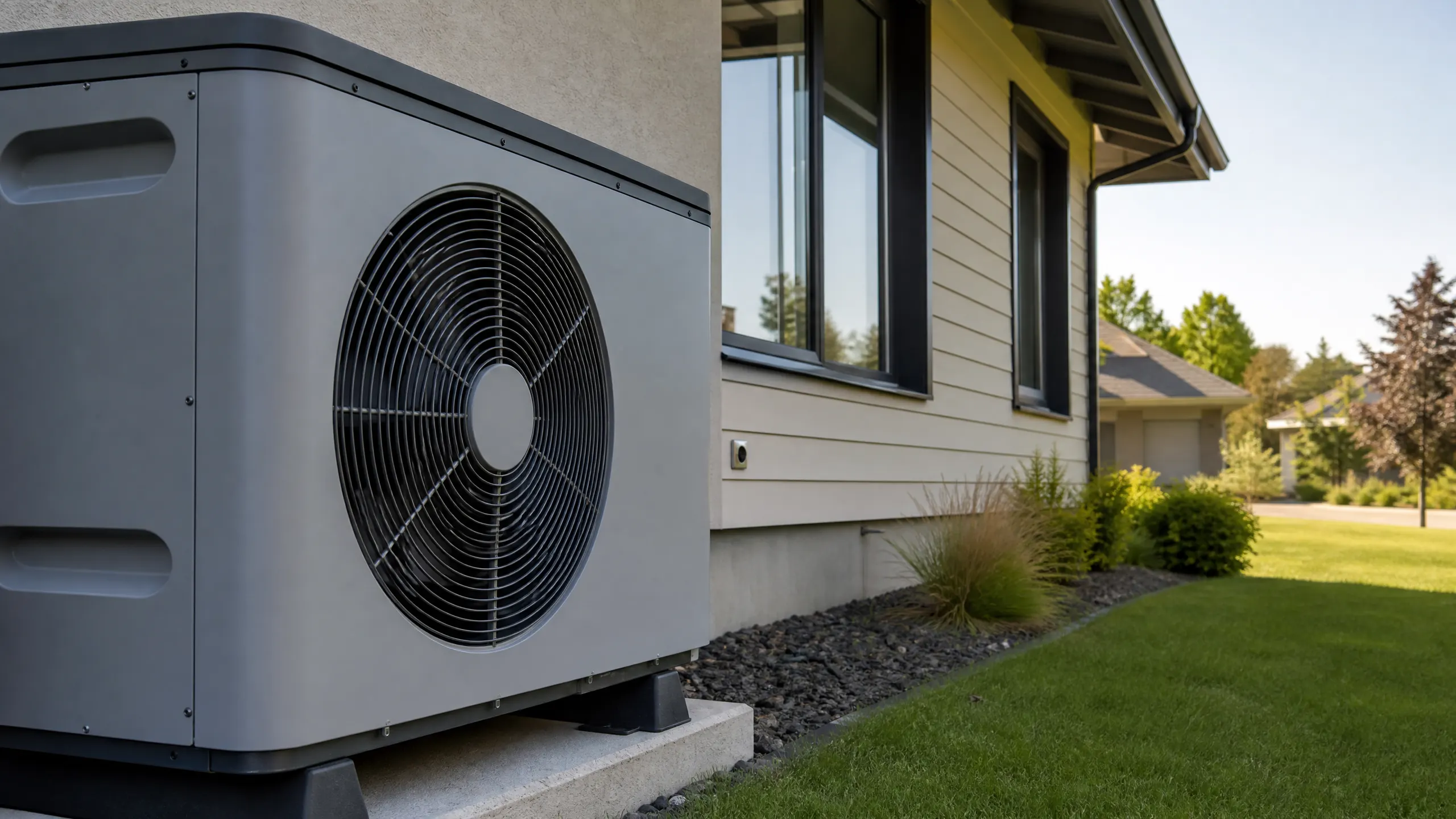
A grey outdoor HVAC unit mounted on a concrete pad beside the beige-sided exterior wall of a suburban house.

Heat Pump Repair in Elko, NV

Tell us about the job

Takes about a minute. No obligation.

RepairHeat PumpElko County, NV
Step 1 of 2

What ZIP code is the job in?

Cold nights don't break a heat pump

Elko County overnight lows average 17°F across December, January and February. A heat pump working that hard leans on the same parts that fail anywhere. A defrost control stuck in one mode. A reversing valve that won't switch. A low charge. Cold doesn't create a new failure. It just makes an existing one show up sooner.

Chase the part, not the symptom

A heat pump blowing cold air, cycling too often, or skipping defrost has a cause somewhere in the system. Find the actual sensor or valve or board behind it, and the repair holds. Patch the symptom and the same call comes back in a few weeks.

10 months
September through June, your system heats
2 months
July through August, it cools
17°F
the average winter night it heats against
82°F
the average summer afternoon it cools against
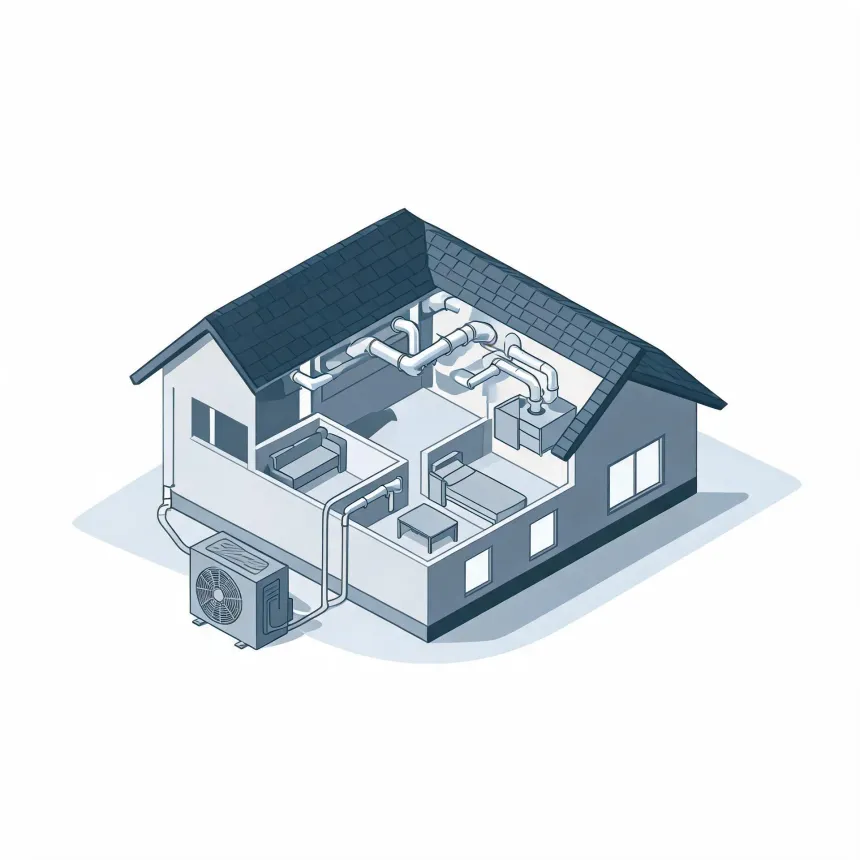
Isometric cutaway illustration of a house showing attic ductwork, an indoor air handler, furnished rooms, and an outdoor condenser unit connected by lines along the exterior wall.
Your system heats September through June and cools July through August.

NOAA nClimDiv, 1991–2020 normals

Heat in Elko County runs from September through June, about ten months a year.

August is the only full month off, so a heat pump with a weak part going into September gets tested fast.

At 15 cents a kilowatt-hour, a heat pump working harder than it should costs you every month

Power costs 15 cents a kWh statewide
428 damaging wind events from 2015 to 2024
19 hail events from 2015 to 2024

Elko County sees its share of severe weather, 792 events over the last decade between wind, hail, snow and the rare tornado. None of that is what wears out a heat pump. Wind doesn't touch the reversing valve. Hail doesn't drain a capacitor. What does happen, here same as anywhere, is parts failing on their own schedule, same as they would in a calm year. The one thing worth checking against your own situation is the power. A share of Nevada households lose power for a full day at some point in the year, and a heat pump that sat off in a cold snap can need a reset or a closer look before it runs right again.

Half the homes here were built in 1990 or later

Half the homes in Elko County were built in 1990 or later. A heat pump that came with a house that age still has working life left in it. That's a repair, not a replacement.

Find a contractor
A man in a dark work shirt, tan cargo pants and boots, seen from behind, climbs porch steps toward a navy front door while carrying a worn leather tool bag.
A gray air-source heat pump mounted on a concrete pad next to a house with gray vinyl siding, surrounded by gravel and flanked by green shrubs and white hydrangea flowers.

Check the install date before you write it off

If your heat pump came with the house and the house is newer, that's worth knowing before you decide anything. Ask when the system went in, not just when the house was built. A unit installed new still has years on it, and the parts failing now are the kind that get replaced on their own, not the kind that end a system.

The reversing valve sticks before it breaks

A heat pump switches between heating and cooling by sending refrigerant through a reversing valve. The solenoid that moves it can stick from age or a bit of debris, and the system gets stuck heating or cooling, or stops switching at all. Sometimes it frees up with a few cycles. Sometimes the valve needs replacing.

The run capacitor wears down, it doesn't just quit

The capacitor that starts the compressor and fan motors loses strength gradually, not all at once. A heat pump that hesitates before starting, or hums without starting, usually has a capacitor past its rated strength. Left alone, the motor it's supposed to help starts pulling harder than it should, and that shortens the motor's life too.

Before you call anyone, there are a few things worth a look. Check the thermostat is set to heat and the setpoint is actually above room temperature, not bumped into cool by accident. Go to the outdoor unit and see if it's caked in ice or buried in snow and debris. A little frost is normal, a solid block is not. Check the air filter, a clogged one starves the system of airflow and can make it struggle or ice up. Look at the circuit breaker for the unit and make sure it hasn't tripped. If the outdoor fan isn't spinning at all while the indoor side runs, that's worth noting before the call, it points a tech straight at the problem instead of making them start from zero.

A diagnostic call starts outside, at the unit itself. A tech hooks up gauges to check the refrigerant charge, watches how the reversing valve responds when it's told to switch, and tests the capacitors against their rated strength instead of guessing from how the system sounds. Inside, the air handler gets checked too, the filter, the blower, the defrost board that tells the system when to switch between heating and defrost. None of that shows up from the thermostat, which is why a system that seems to have one problem can turn out to have a second one hiding behind it. The point of the visit is finding the part actually causing the symptom, not the first thing that looks suspicious. A tech who checks the charge, the valve and the board before touching anything walks away with a real answer, not a guess.