Adobe-style desert homes lit by warm exterior lights at dusk, surrounded by saguaro cacti and native desert plants.

Heat Pump Repair in Dyer, NV

Tell us about the job

Takes about a minute. No obligation.

RepairHeat PumpEsmeralda County, NV
Step 1 of 2

What ZIP code is the job in?

September is when a weak heat pump shows it

Heat here runs October through May. September is the last easy month, when the system is barely working and a bad part can still hide. Once the weather turns in October, the same part has to carry hours of runtime it hasn't had to all summer.

The same is true going into summer

Cooling starts in June, so May is the other month this shows up. A heat pump that struggled at the end of last season and was never looked at often fails at the next startup, not sometime in the middle of it.

8 months
October through May, your system heats
3 months
June through August, it cools
24°F
the average winter night it heats against
89°F
the average summer afternoon it cools against
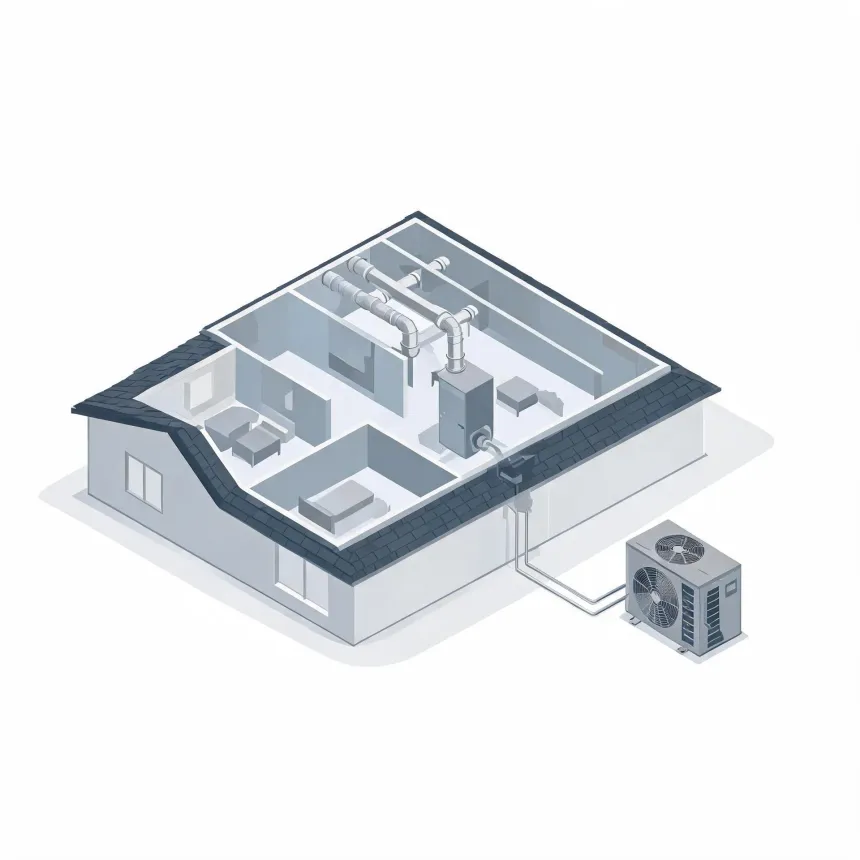
Isometric cutaway illustration of a single-story house showing interior rooms with ductwork, a furnace or air handler, and refrigerant lines running outside to a condenser unit on a pad.
Your system heats October through May and cools June through August.

NOAA nClimDiv, 1991–2020 normals

A heat pump that runs constantly but never quite warms the house isn't cycling wrong, it's failing to heat right.

A stuck reversing valve or a low charge causes that, and more runtime won't correct either one.

At 15 cents a kilowatt-hour, a heat pump running wrong costs you every month it's ignored

Power costs 15 cents a kWh statewide
52 damaging wind events from 2015 to 2024
8 winter storms from 2015 to 2024
Nothing about Dyer is hard on a heat pumpHalf the homes here were built in 1986 or earlier, half since. Age alone doesn't break a heat pump.

A tech starts outside at the unit itself, checking refrigerant pressure and the temperature split between the air going in and the air coming out. That split tells a lot. Too small and the system isn't moving enough heat either way. From there it's the reversing valve, the part that switches the unit between heating and cooling, since a valve that's stuck or leaking internally will often run the system backward without tripping anything obvious. The defrost board and sensors get checked too, because a heat pump that can't sense frost on the outdoor coil won't know to clear it, and ice buildup chokes airflow fast. Electrical connections and the contactor get a look as well, since a connection that's loosened over time causes the kind of intermittent failure that's easy to miss if nobody's checking for it. None of this takes guesswork once someone's actually out there with gauges on the system.

Fix it now, not every month until spring

A heat pump low on charge or stuck in the wrong mode runs long hours to do the job halfway, and at 15 cents a kilowatt-hour that cost shows up on the bill every month it stays that way. Getting it checked now stops the drain instead of paying it through the winter.

Find a contractor
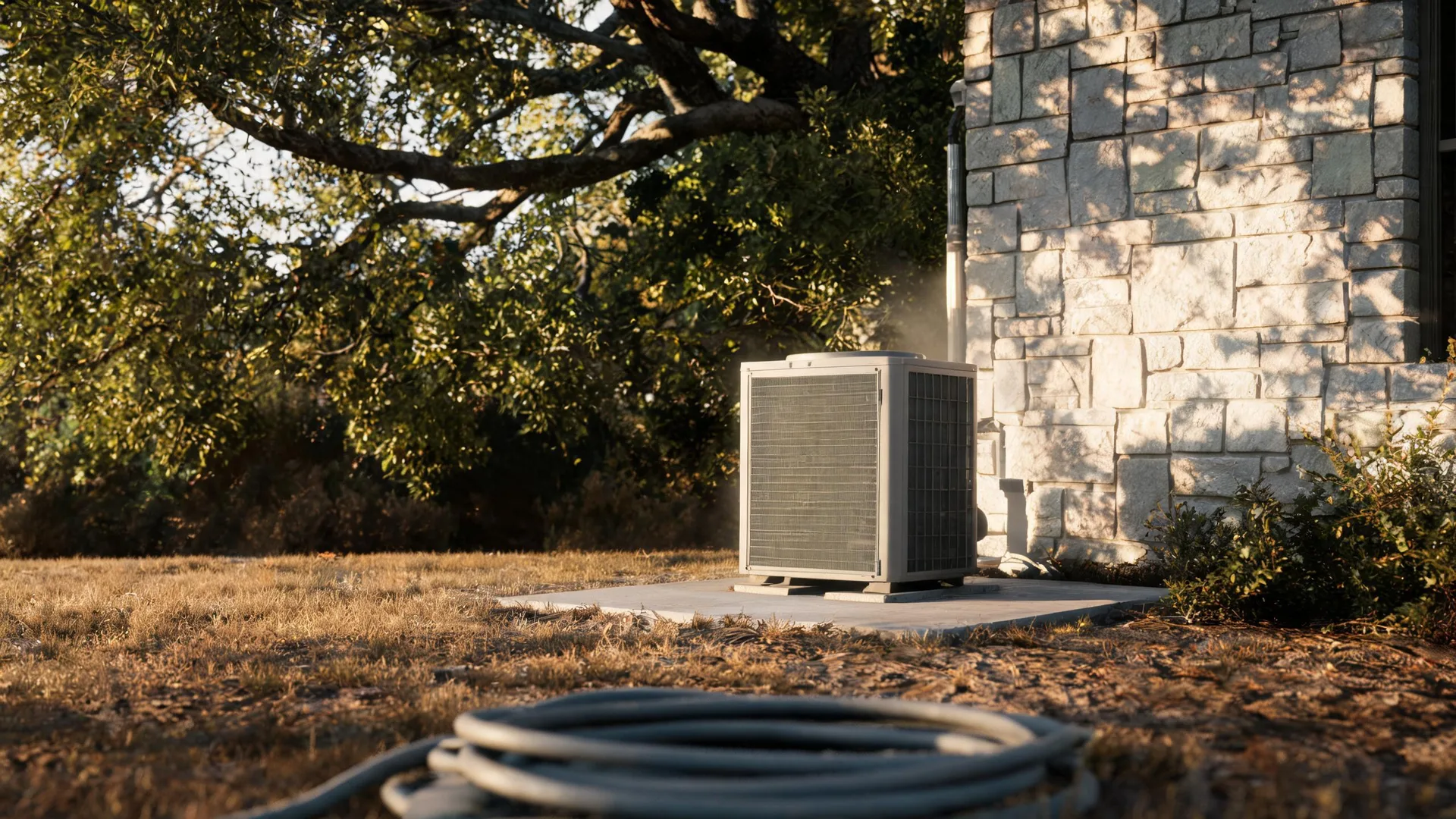
A gray outdoor HVAC unit mounted on a concrete pad beside a house with gray lap siding and a stone foundation.

What you can check before anyone shows up

Before anyone comes out, walk around outside and look at the unit itself. Check that nothing is blocking airflow around it, no leaves packed against the coil, no snow or ice piled against the side. Look at the coil fins for a heavy coat of ice when the system's been running in heat mode. A little frost is normal and should clear on its own during defrost. A solid block of ice that doesn't go away means something's already wrong. Check the thermostat batteries if it uses them, and make sure it's set to heat, not fan only. Inside, check your filter. A filter clogged with dust chokes airflow the same way a blocked outdoor coil does, and it's the one thing on this list you can actually fix yourself. Listen to the unit too. Short cycling, where it turns on and off instead of running a steady stretch, is worth mentioning to whoever comes out. So is any grinding or clicking that wasn't there before. None of this tells you what's broken. It just means you're not walking in blind when someone gets there with gauges.

A low charge gets worse on its own

A heat pump low on refrigerant can't move heat the way it should, so it runs longer to make up for it. That extra runtime puts more hours on the compressor than it was built to carry day after day. What starts as weak heat can end as a compressor that won't start at all, and a compressor failure turns a repair into a replacement.

Ice doesn't wait for a good time to spread

A coil that's icing over loses airflow a little more with every hour the unit keeps running. The system responds by running longer to compensate, and that extra runtime only feeds the ice. Left alone through a cold stretch, the unit ends up frozen solid and unable to heat at all until it's thawed and whatever caused it gets fixed.

Most heat pump failures trace back to a handful of parts that wear out doing the job they were built for. The compressor is the big one, and it usually doesn't fail on its own. It fails because something else made it work harder than it should have for months, low charge, bad airflow, a reversing valve stuck halfway. Capacitors fail on their own, no cause needed, they just wear out and the compressor or fan motor can't start without one that's good. Fan motors go when the bearings wear, and you'll usually hear it before the unit stops, a grinding or whining that wasn't there before. The reversing valve can fail stuck in one position, so the system heats when it should cool or won't switch over at all. Defrost sensors and boards fail quietly, and nobody notices until ice has built up on the outdoor coil because the system never knew to clear it. Refrigerant doesn't wear out and doesn't get used up, so a system low on charge has a leak somewhere, and that leak doesn't fix itself.

Age isn't what decides repair versus replacement, condition is. A heat pump that's been maintained and just had one part give out is usually worth fixing, even an older one, because the rest of the system is sound. One that's been running wrong for a while, low charge, weak airflow, a part struggling to do its job, has usually put strain on everything downstream of that problem, and that's where it gets harder to call. The question worth asking isn't how old the unit is but whether this failure is an isolated part giving out or a sign the compressor's been carrying damage it can't shed. A tech with gauges on the system can tell you which one you're looking at. Nobody can tell you that by guessing from the outside.