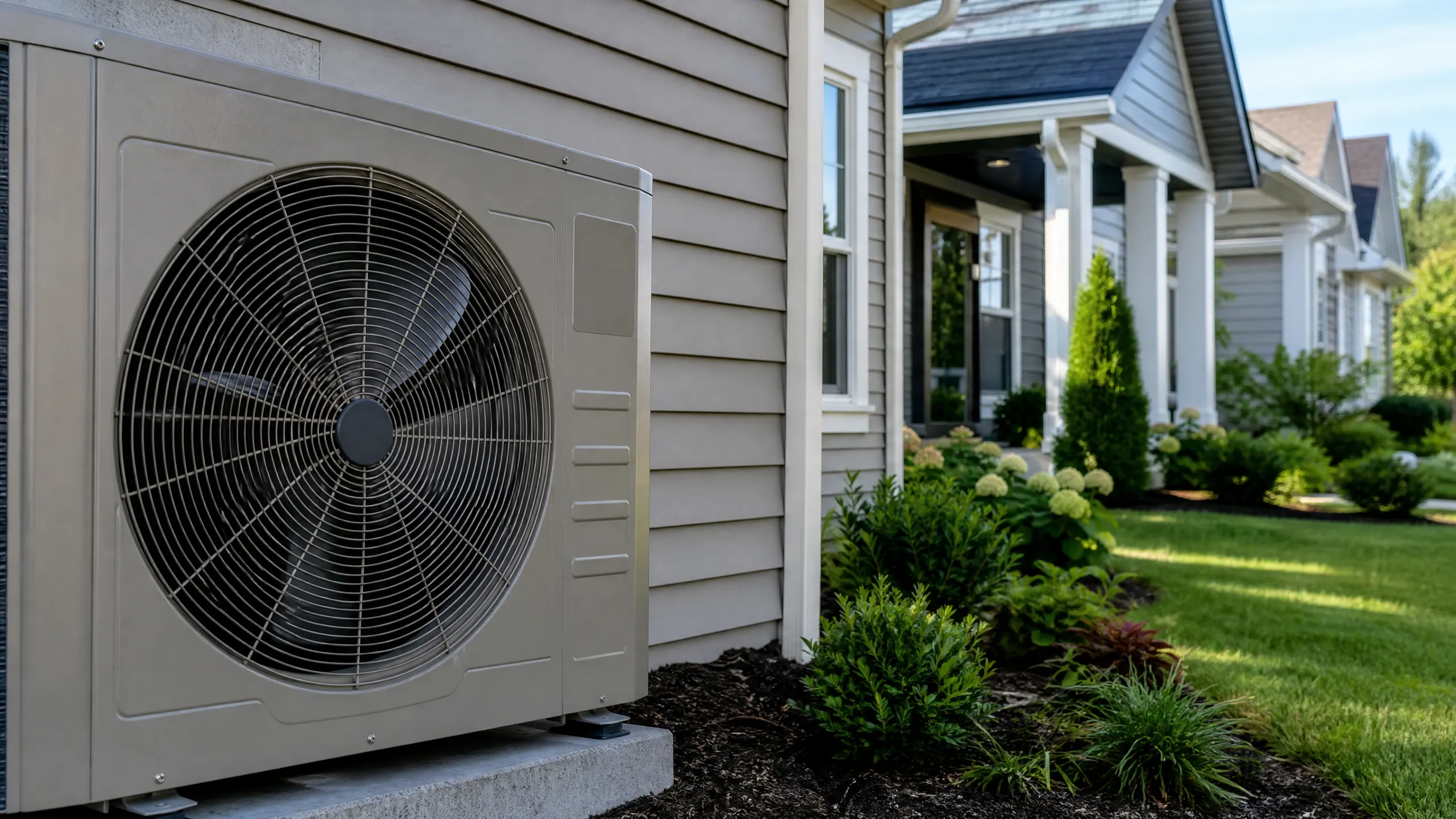







A large outdoor air-conditioning unit mounted beside a vinyl-sided house, surrounded by mulched garden beds and green shrubs.

Heat Pump Repair in Battle Mountain, NV

Tell us about the job

Takes about a minute. No obligation.

RepairHeat PumpLander County, NV
Step 1 of 2

What ZIP code is the job in?

Heat pumps here switch over twice a year, and August is when the strain starts. Nine months of heating in a row asks a lot of a system, and whatever was already marginal, a weak capacitor, a low charge, a contactor on its way out, tends to give up right when the heat pump has to take over in September. If yours is struggling now, in the heating months, that's the part to look at first. A unit that limped through last winter without a real fix is the one most likely to quit when it has to carry the load again.

9 months
September through May, your system heats
2 months
July through August, it cools
20°F
the average winter night it heats against
85°F
the average summer afternoon it cools against
Isometric line illustration of a cutaway single-story house showing interior rooms with ducted air distribution, an indoor air handler, furniture, and an outdoor condenser unit connected by lines outside the wall.
Your system heats September through May and cools July through August.

NOAA nClimDiv, 1991–2020 normals

A compressor swap costs real money, but most heat pump repairs never get near the compressor.

Find out which part actually failed before you let anyone talk replacement.

186 severe weather events in ten years, and none of them aimed at your heat pump

186 severe weather events from 2015 to 2024
13% of homes statewide lost power a day or more in 2024
82 damaging wind events from 2015 to 2024
Nothing unusual going on hereHalf the homes in Lander County were built in 1986 or earlier. That alone doesn't wear out a heat pump.

Electricity in Nevada ran 15 cents per kilowatthour in 2024. A heat pump leaning on its backup heat strip, or short cycling because of a weak capacitor or low charge, pulls more power every hour it runs that way. A unit running right costs what it should. One running wrong costs more every month it's left alone.

Get the weak part found before another bill passes through it

That extra draw doesn't stop on its own. Get the actual part found and swapped, and the system goes back to costing what it should.

Find a contractor
A man in a dark long-sleeved shirt and tan work pants, seen from behind, climbs porch steps toward a navy front door while carrying a canvas tool bag.
A gray heat pump condenser unit mounted on a concrete pad against the gray lap-siding exterior wall of a house.

What actually wears out in a heat pump

The reversing valve is the part that makes a heat pump different from a plain AC system, and it's also the part most likely to fail in a way that stops heating outright. It can stick in one position, or the solenoid that drives it can burn out. Either way the system runs but won't switch, and you feel it as a unit that blows cold when it should blow warm. The outdoor coil takes a beating too, mostly from the constant defrost cycle. Frost builds on it through the coldest stretches, the system melts it off, and over years that cycle corrodes the coil and fins faster than a straight AC coil ever sees. A compressor usually doesn't fail on its own. It fails because something upstream, a low charge or a bad capacitor, made it work harder for longer than it was built to, and it's the last part to go, not the first.

Blowing cold when it should blow warm

A heat pump stuck in one mode has a reversing valve problem, either the valve itself or the solenoid that drives it. The system still runs, it just can't switch, and no thermostat setting will talk it out of it. That's a repair call.
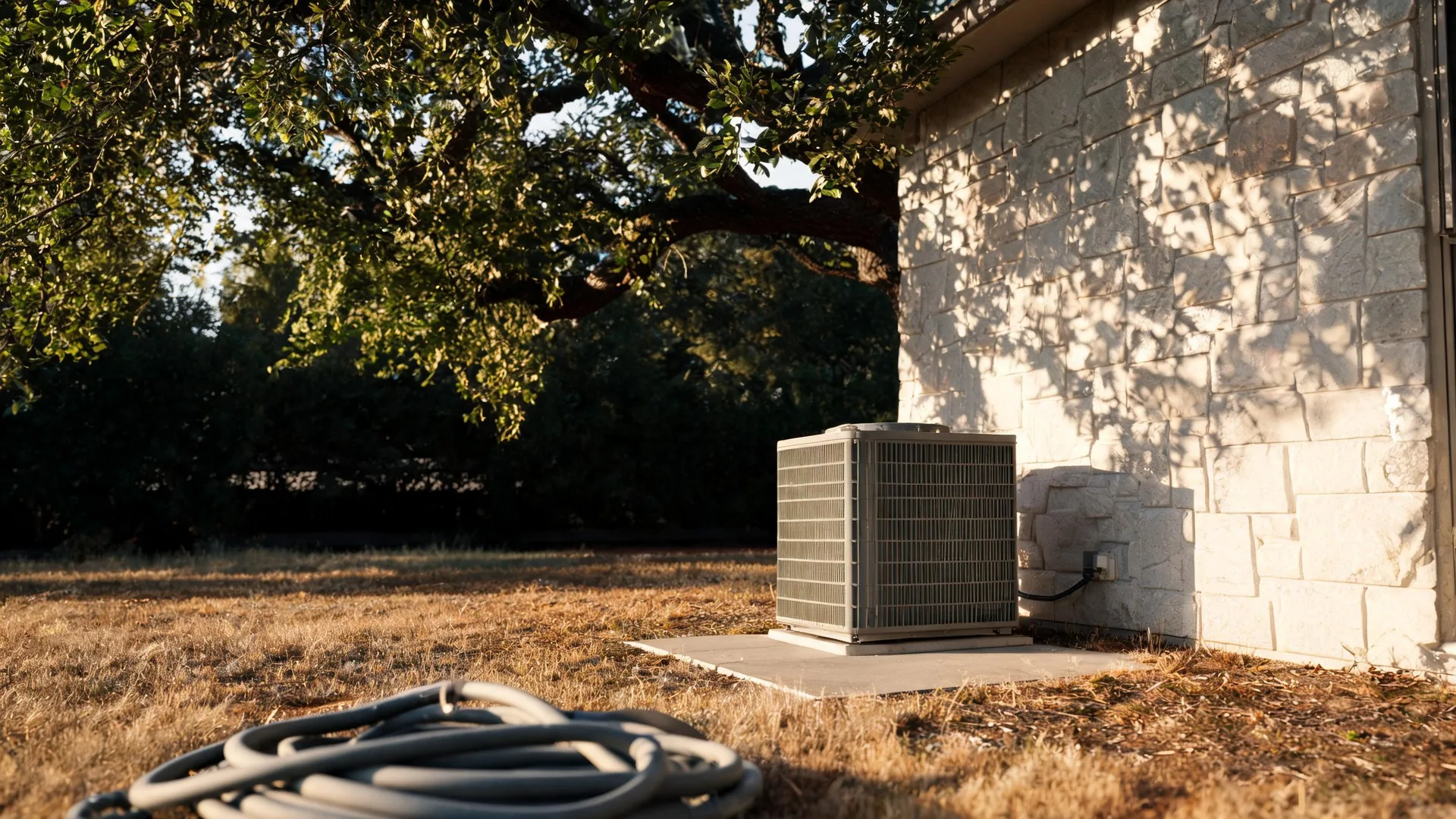
Ice that doesn't clear between cycles

Some frost on the outdoor unit in cold weather is normal, and the defrost cycle takes care of it. A layer that keeps building instead of melting off means the defrost control or a sensor has stopped doing its job, and the coil underneath can't pull heat out of the air until that's fixed.

Before you call, check the filter. A clogged one starves the system of airflow and can make a heat pump seem like it's struggling when the real problem is just dirty air trying to pass through. Look at the outdoor unit too. Leaves, snow or debris packed against the coil block airflow the same way, and clearing it takes a few minutes. Check the thermostat batteries and the mode setting before anything else, since a heat pump set to the wrong mode will act like it's broken when it's just doing what it was told. Walk the house and check that every supply vent is open and nothing's blocking a return. None of this fixes a bad capacitor or a stuck reversing valve, but it rules out the easy stuff first.

A heat pump that's struggling and gets left running doesn't just sit at that problem. A weak capacitor makes the compressor draw harder on every start, and every hard start wears the windings a little more until it stops starting at all. A low charge makes the compressor run hotter than it's built for, and heat is what kills a compressor over time. A reversing valve stuck halfway doesn't fix itself by running longer. The part that's failing now is almost never the part that fails for good. Left alone, it usually gets there.