







An outdoor heat pump unit mounted on a concrete pad in front of a two-story suburban house with a landscaped lawn.

Heat Pump Installation in Las Vegas, NV

Tell us about the job

Takes about a minute. No obligation.

New system or replacementHeat PumpClark County, NV
Step 1 of 2

What ZIP code is the job in?

Gas heats most homes in Clark County, close to six in ten. Electricity is next at just over a third, and that's the group a heat pump install here usually falls into, either a straight swap or a new electric system where gas never ran. A heat pump works as an air conditioner for most of the year and switches over to heat the house on the cold nights, so it takes the place of two separate systems. If your home already runs on electric heat, a contractor can tell you whether the ductwork and panel on hand are ready for one, or what it would take to get there.

6 months
November through April, your system heats
6 months
May through October, it cools
37°F
the average winter night it heats against
98°F
the average summer afternoon it cools against
Isometric line illustration of a cutaway house showing interior rooms with furniture, a furnace or air handler with overhead ductwork, and an outdoor condenser unit connected by lines outside the wall.
Your system heats November through April and cools May through October.

NOAA nClimDiv, 1991–2020 normals

Clark County logged 306 damaging wind events between 2015 and 2024.

A heat pump installed here has to hold up against that, not just move heat.

A standard heat pump sized right is all this climate asks for

Power costs 15 cents a kWh statewide
306 damaging wind events from 2015 to 2024
Climate zone 3B
A standard heat pump sized right is all this climate asks forClark County runs hot most of the year, with cold nights in winter. That's a normal load, not an unusual one.

October is the month to get a heat pump installed in Clark County, before homes here start running heat in November. Wait for the first cold night and you're choosing from whoever still has an opening. Scheduled in October, the old system keeps running while the new one gets sized and set up right. Summer just ended, so a contractor can still ask how the old system handled those months and size the new one against that. May works the same way, ahead of the cooling months, but October is the one that keeps a cold night from forcing the decision.

The system has to clear a federal minimum. The credit is separate.

Any heat pump installed here now has to hit 14.3 SEER2 and 7.5 HSPF2 at minimum, and if it's doing your cooling too, 14.3 SEER2 applies there as well. That's the floor, not a tier you pay extra for. A federal tax credit is available on top of that, worth asking a contractor about before you settle on a system.

Find a contractor
A man in a cap, gray jacket and tan cargo pants, seen from behind, carries a worn canvas duffel bag up steps toward a dark navy front door, with a potted shrub beside the entry.
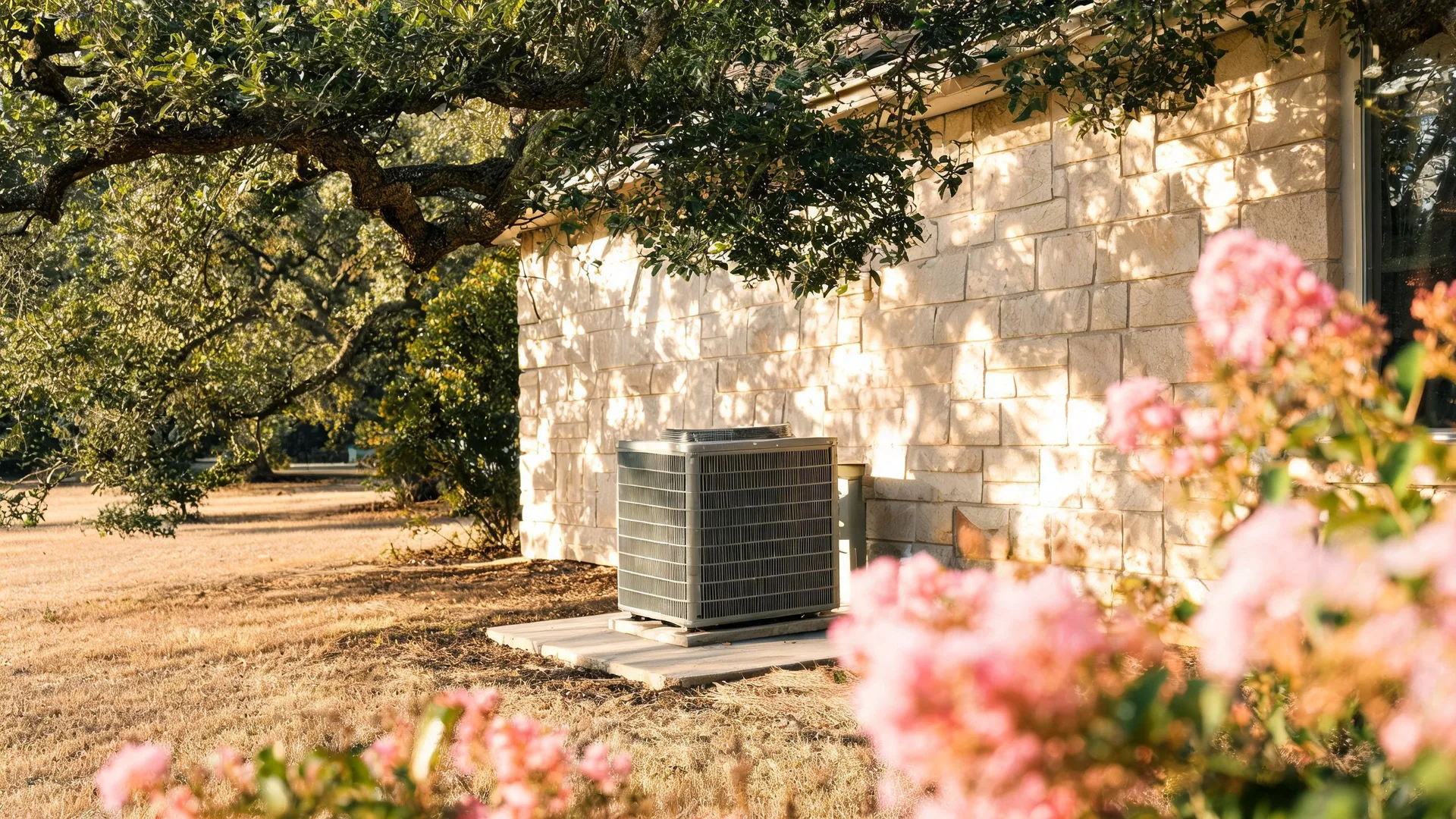
A gray outdoor HVAC unit mounted on a concrete pad beside a house with gray lap siding and a stone foundation.

Running most of the year, outdoors, through real wind

This system runs cooling for most of the year here, then switches to heat on the cold nights, and the outdoor unit sits through whatever the weather does in between. Wind is part of that. Clark County saw 306 damaging wind events between 2015 and 2024, and the unit outside has to take that standing still. A contractor sizing the job right should mount and anchor that outdoor unit for what this place actually throws at it, not for a calmer climate. That matters as much as which unit gets chosen.

The old system gets disconnected, not just unplugged

A furnace has a gas line and a flue to cap or remove, plus the low voltage wiring running to the thermostat. A straight electric system has its own circuit to deal with. Either way the refrigerant lines running to the old outdoor unit have to be recovered properly before anything gets cut loose, since that refrigerant can't just be vented.
Hauling it off is part of the job, not an extra

The indoor unit, the outdoor unit, the old line set and any abandoned ductwork all have to come out before the new system goes in. A contractor doing the install should be the one hauling the old equipment away, since it has no scrap value to you and a cluttered mechanical closet or pad just slows down setting the new unit in place.

Sizing a heat pump comes down to a load calculation, not the size of the unit it's replacing. A contractor measures the square footage, counts the windows, checks the insulation and figures out how much heat the house gains in summer and loses on cold nights. Too big and it cools the air fast but shuts off before it pulls the moisture out, so the house feels clammy even at the right temperature. It also cycles on and off more, and that short cycling wears on the compressor over time. Too small and it runs flat out on the hottest afternoons and the coldest nights and still can't keep up. The right size runs longer, steadier stretches, which is actually what keeps the house comfortable and keeps the equipment from working harder than it has to.

Install day starts with the old system coming out, then the new equipment goes in, and most of the day goes to the parts a reader never sees. The refrigerant lines get run or reused, then pressure tested before any refrigerant goes in, because a leak found after the fact means pulling things apart again. The line set gets evacuated to pull out moisture and air, since either one left behind ruins the system's efficiency and can damage the compressor over time. Electrical gets tied in next, matched to what the new unit actually draws, and the low voltage wire to the thermostat gets checked along with it. Once the outdoor unit is set and anchored, a contractor charges the system to the weight or pressure the manufacturer specifies, not by feel. Only after all that does anyone turn it on and watch it run through a full cycle, checking temperatures and airflow before calling it done.