







A flat-roofed adobe house lit from within at dusk, surrounded by saguaro cacti and desert landscaping with mountains in the background.

Heat Pump Installation in Caliente, NV

Tell us about the job

Takes about a minute. No obligation.

New system or replacementHeat PumpLincoln County, NV
Step 1 of 2

What ZIP code is the job in?

Electricity in Nevada runs 15 cents per kilowatt-hour. A heat pump moves heat instead of burning gas, which is what makes it worth looking at here, but the efficiency rating matters more when power costs this much. A unit with a higher HSPF2 rating uses less electricity to put out the same heat, and that difference shows up on every bill, not just the first one. Caliente sees cold nights and hot days both, so this system will run in both directions most of the year. The model and the installation matter more here than in a place where power is cheap.

8 months
October through May, your system heats
4 months
June through September, it cools
27°F
the average winter night it heats against
90°F
the average summer afternoon it cools against
Isometric cutaway illustration of a single-story house showing interior rooms with furniture, an attic duct system connected to an indoor air handler, and an outdoor condenser unit linked by lines along the exterior wall.
Your system heats October through May and cools June through September.

NOAA nClimDiv, 1991–2020 normals

The old equipment doesn't get left behind for someone else to deal with.

A contractor pulls it out, caps or clears what it was connected to, and hauls it off as part of the same job.

A correctly sized standard system is the right call here

Half the homes here were built by 1982
Winter nights average 27°F
Power costs 15 cents a kWh statewide
Get it in before OctoberHeat runs October through May here, eight months out of the year.

Electricity already heats close to 6 in 10 homes in Lincoln County. If your house is one of them, a heat pump replaces a system that works the same way it does. Electric in, heat out. The wiring and the circuit already there were sized for that kind of load. That makes a like-for-like swap more straightforward than switching over from gas. Still worth checking what's actually installed now before assuming anything about capacity or panel space.

Lincoln County sets the floor. Your choice starts above it.

Any heat pump installed here now has to clear 14.3 SEER2 and 7.5 HSPF2, the federal minimum for this equipment. That floor is already in place before you pick a model, so the comparison worth making is what goes in above it, not whether to meet it.

Find a contractor
A man in a dark long-sleeved shirt and tan work pants, seen from behind, climbs porch steps toward a navy front door while carrying a canvas tool bag.
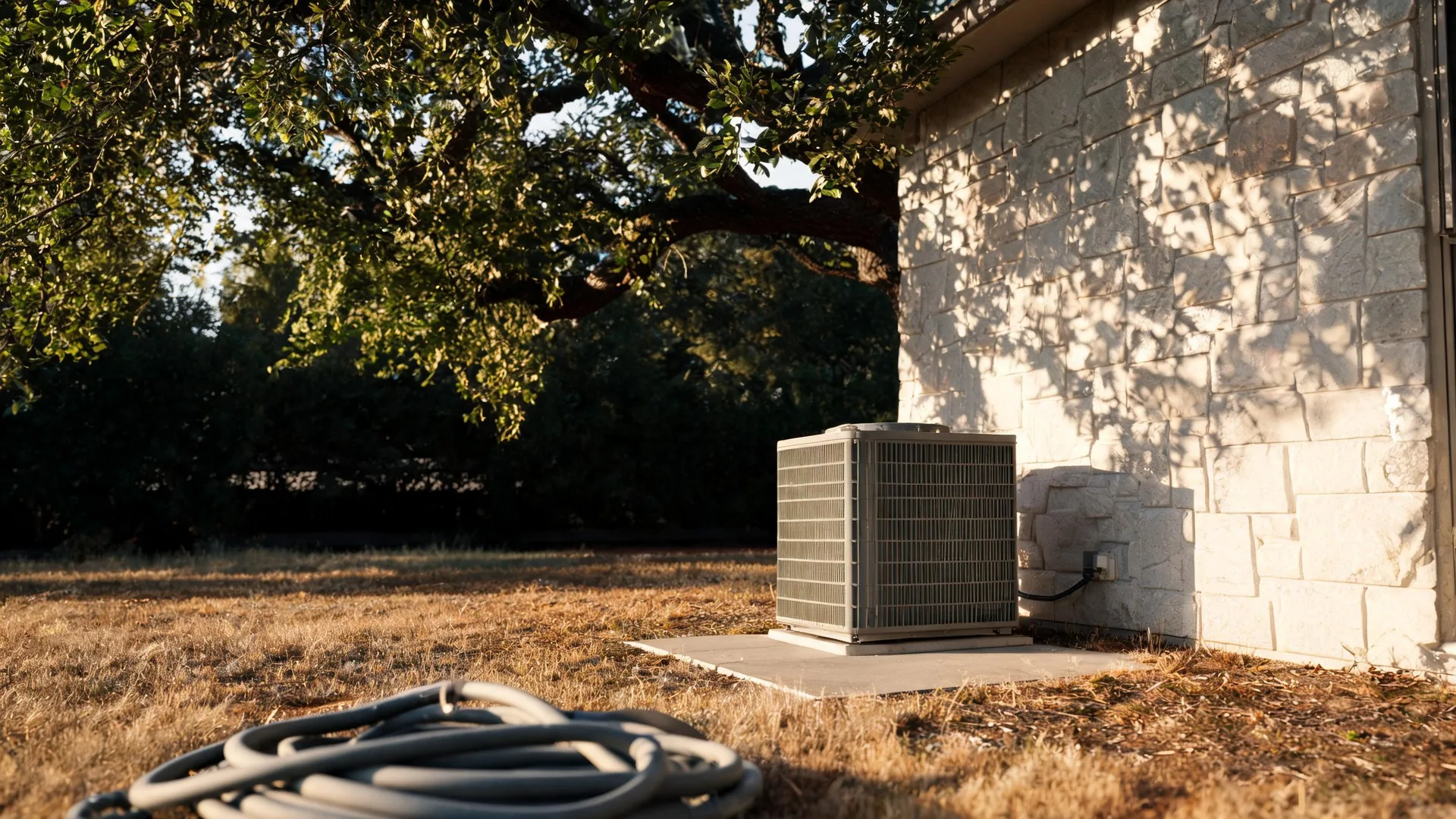
A gray heat pump condenser unit mounted on a concrete pad against the gray lap-siding exterior wall of a house.

The label tells you less than the install does

The rating on the label comes from a lab test, run the same way for every unit so they can be compared side by side. Your house isn't a lab. Duct leakage, how the unit is sized, how carefully the refrigerant charge gets set, all of that moves the number once the system is actually running. Units with the same rating on the label can end up performing differently depending on who installed them and how carefully. That's not a reason to ignore the rating. It's a reason to treat it as a starting point for comparing equipment, not a promise about what the system will do once it's in.

Sizing drives the number

A load calculation looks at square footage, windows, insulation and layout to find the right capacity. Go bigger than that and the unit short cycles, turning on and off without running long enough to hold steady heat. Go smaller and it runs constantly, struggling on the coldest nights. Right-sized costs less to buy and runs cheaper for as long as it's installed, so a contractor who sizes it properly instead of matching the old equipment's capacity is worth paying for.
What the install involves beyond the unit

Line sets have to be the correct length and properly insulated, or the refrigerant charge never settles where it should. Ductwork has to handle the airflow the new unit moves, which isn't always what the old furnace needed. Electrical work depends on whether the existing circuit and disconnect can handle the new unit or need upgrading. None of that shows up on a spec sheet, but all of it affects what the job takes to get right.

A load calculation is the only way to know what size to put in, and it has nothing to do with what's coming out. An installer measures the space, checks the windows and insulation, and works out how much heat the house actually loses on a cold night. That number sets the capacity, not the size of the old equipment and not a guess rounded up for safety. Bigger isn't a safer bet here. An oversized unit reaches the thermostat's setting fast, shuts off, then starts again a few minutes later, and that start-stop cycle wears the compressor harder than steady running does. Too small, and it runs flat out on the coldest nights and still falls behind. The right size runs longer, steadier stretches and holds the temperature without strain in either direction.

Installation day starts before anyone touches the outdoor unit. The old equipment comes out first, and the condition of what's behind it, the line set, the ductwork, the electrical whip, decides how the day goes from there. If the line set is being reused, it gets pressure tested for leaks before any refrigerant goes near it. New sets get brazed, pulled down to a vacuum, and held there to confirm there's no moisture or air left inside. That vacuum step takes patience more than anything else, and skipping it early is how a system ends up with a charge that never settles right. Once the outdoor unit and air handler are set, the electrical connections get made and the whole system gets charged to the manufacturer's spec, checked against the actual conditions outside that day, not just a gauge reading. Last comes the test run, checking airflow at the vents and making sure the thermostat is actually talking to the equipment the way it should.