View framed by a concrete overhang and columns of a single-story stucco house with a covered entry porch, a gray concrete block wall, a large tree, and a gravel yard.

Furnace Installation in Las Vegas, NV

Tell us about the job

Takes about a minute. No obligation.

New system or replacementFurnace or heatingClark County, NV
Step 1 of 2

What ZIP code is the job in?

Most furnaces here run on gas

Utility gas heats 60.2% of homes in Clark County. Electricity accounts for most of the rest, at 36.2%. If your old furnace burned gas, a gas furnace is the straightforward replacement, and the gas line and vent are usually already in place.

That changes what the job involves

A gas furnace needs a flue to vent exhaust outside and a gas line sized for it. A contractor checking your home for installation will confirm both are there and sized right before anything gets swapped in.

6 months
November through April, your furnace is on duty
37°F
the average winter night it heats against
60%
of homes here heat with gas, so most furnaces here burn gas
80% AFUE
the federal minimum any new unit must meet
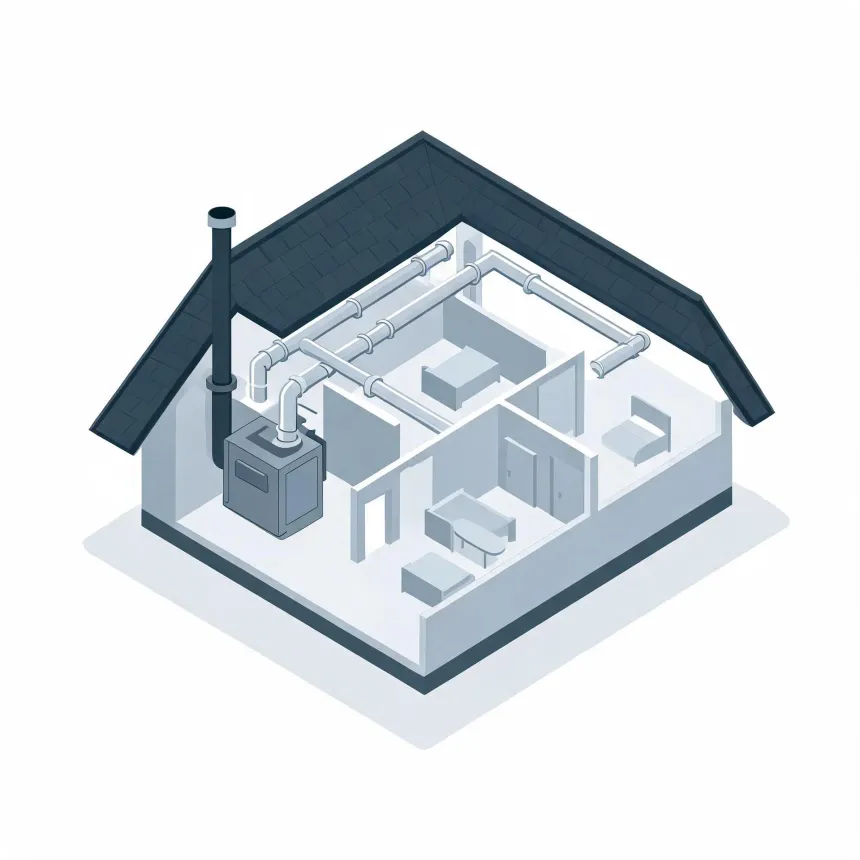
Isometric illustration of a cutaway house showing a dark furnace unit with a flue pipe and branching ductwork running through rooms with simple furniture under a dark gabled roof.
Your furnace works hardest from November through March.

NOAA nClimDiv, 1991–2020 normals

Natural gas ran $17.91 per million Btu in Nevada homes in 2024.

A high-efficiency furnace still costs more up front, and cheap gas means it takes longer to earn that back.

Six months of mild winter nights is not a hard job for a furnace

Heat runs November through April
Winter nights average 37°F
36 winter storms from 2015 to 2024
Pick the furnace that fits, not the one that promises the mostA mid-efficiency furnace does the job here without the higher price tag of a high-efficiency model.

A furnace gets sized to the house, not picked off a shelf. A contractor works out how fast the place loses heat on the coldest nights, counting the walls, the windows, the ceiling height, the square footage. That number tells them the output the new furnace needs, no more and no less. Too big and it blasts the house up to temperature and shuts off before it finishes a full cycle, so rooms end up with hot and cold spots and the furnace wears out switching on and off that often. Too small and it runs flat out on the coldest nights and still falls short. The load calculation is what separates a furnace that matches the house from one that just matches the old unit being pulled out.

October is the month to get this done

Heat here runs November through April. Put the new furnace in during October and the install happens on your schedule, not squeezed in after the first cold night already has the house asking for heat.

Find a contractor
A man in a cap, long-sleeve shirt and work pants climbs porch steps toward a dark blue front door, carrying a worn canvas tool bag, with a small potted evergreen beside the entry.
A gas furnace with attached ductwork, gas piping, and condensate lines installed in a concrete-block basement.

A mild climate means mid-efficiency isn't a compromise here

That same six months of mild nights is why a mid-efficiency furnace is worth asking for by name when you're comparing bids. A unit that spends its life cycling on and off in 37-degree weather, not pushing through sustained cold, doesn't need the higher-end components a harder climate would justify. Put the money into getting the size right instead.

The old furnace gets disconnected, not left behind

A contractor caps the gas line at the furnace, disconnects the flue, and pulls the old unit out before the new one sets in its place. Anything connected to it, the thermostat wires, the plenum, the condensate drain if it has one, gets checked too, since the new furnace may join them differently than the old one did.

What happens to it after that is worth asking about

A furnace is mostly steel, aluminum and copper, and scrap haulers take them for the metal. Some contractors haul the old unit off as part of the job, others leave disposal to the homeowner. Either way, it is worth asking before the work starts, not after the new furnace is already running.

An unfinished basement containing a gray HVAC furnace with ductwork, exposed wooden joists, a concrete floor, and miscellaneous clutter in one corner.

A high-efficiency gas furnace would save about $50 a year to run in Clark County compared with a gas furnace.

  • A high-efficiency gas furnace$270 a year
  • A gas furnace$320 a year

Estimates for a typical Clark County home, from EIA household energy data, Nevada fuel prices and NOAA climate normals. Your home will differ.

The new furnace doesn't go in until the old ductwork and venting pass inspection against what the new unit needs. A contractor checks the plenum, the return air opening, and the duct sizes against the furnace being installed. The old ductwork was sized for the old unit, not this one. The gas line gets pressure tested once it's hooked up, before the furnace ever fires. Startup is its own step. The technician checks the flame, sets the gas pressure, and confirms the blower is moving the right amount of air. Then comes the temperature rise across the furnace, checked against what the manufacturer specifies for that model. That last check is how a contractor knows the furnace is actually working right, not just turning on.