





Adobe-style desert homes with warm exterior lighting, saguaro cacti, and desert landscaping along a curved street at dusk, with mountains in the background.

Furnace Installation in Caliente, NV

Tell us about the job

Takes about a minute. No obligation.

New system or replacementFurnace or heatingLincoln County, NV
Step 1 of 2

What ZIP code is the job in?

Electricity ran $43.95 per million Btu in Nevada last year, and that number matters more over a furnace's life than the price tag on install day. A furnace with a higher AFUE rating turns more of that electricity into heat in your house instead of losing it. At these rates the difference shows up on every bill, not just the big one. Ask what AFUE rating a furnace carries before you decide between two models. The cheaper unit to install is not always the cheaper one to run.

8 months
October through May, your furnace is on duty
27°F
the average winter night it heats against
80% AFUE
the federal minimum any new unit must meet
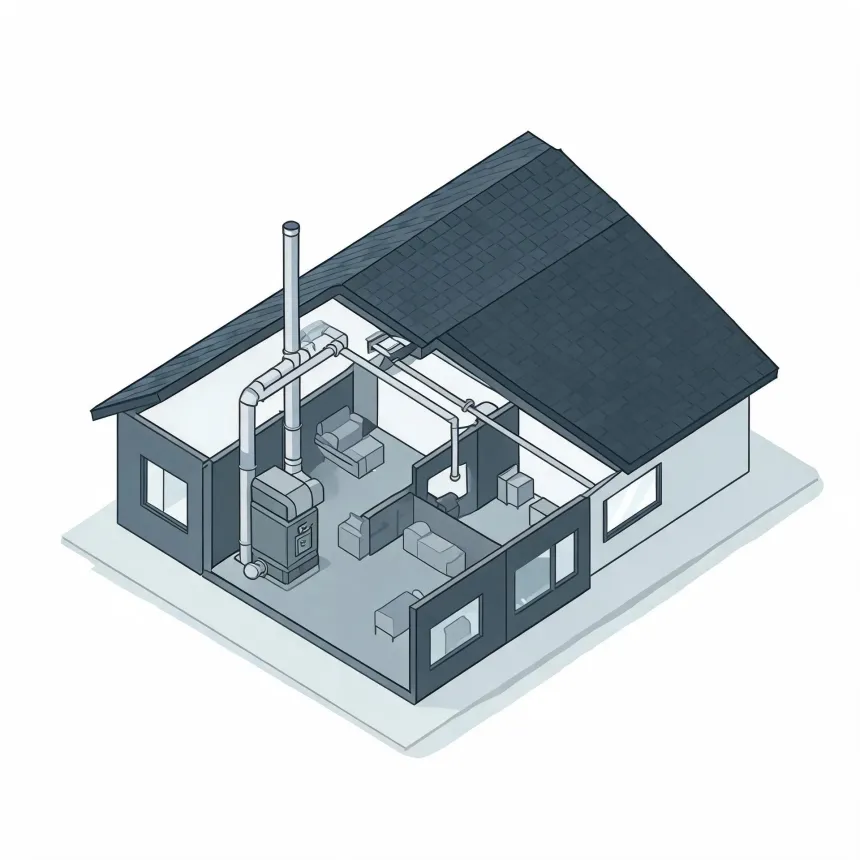
Isometric cutaway illustration of a single-story house showing interior rooms with furniture, a furnace unit connected to ducting and vertical flue pipes running through the roof.
Your furnace works hardest from November through March.

NOAA nClimDiv, 1991–2020 normals

Most homes in Lincoln County heat with electricity, 58.4% of them.

An electric furnace is the straightforward swap if that's what your house already runs on.

Eight months of heat starts in October. Get the new furnace in before it does.

Heat runs October through May
Winter nights average 27°F
Climate zone 4B

Half the homes in Lincoln County were built in 1982 or earlier, half in 1982 or later. Age alone doesn't change what furnace belongs in a house. What changes it is the house itself, its size and its duct run, and that's true whether the place went up last year or decades ago. Mobile homes are a real share of the housing stock here, and those call for a furnace rated for mobile home installation, built and certified differently than one going into a site-built house. Outside of that, there's no reason to size up or step up to a specialty unit. A standard furnace sized to the house in front of the contractor is the right call for most homes in this county.

Any furnace you install here has to clear 80 percent AFUE

Lincoln County falls in zone 4B, and any furnace installed here has to meet the federal minimum of 80 percent AFUE. That minimum is changing. Furnaces built from December 2028 on have to hit 95 percent AFUE instead. A federal tax credit is available right now on qualifying high-efficiency systems, on top of whatever you save on the electric bill.

Find a contractor
A man in a cap, gray jacket and tan cargo pants, seen from behind, carries a worn canvas duffel bag up steps toward a dark navy front door, with a potted shrub beside the entry.
A gray gas furnace with attached ductwork and piping installed in an unfinished concrete basement.

The box is the easy part

The furnace itself is only part of what you're paying for. Sizing takes real work. A contractor has to calculate the heat loss of the house, not just measure the old unit and match it. Ductwork matters too. If it's undersized, leaky, or routed badly, the new furnace has to be matched to it, or the duct work has to be corrected, and that correction is often the bigger job. Venting is another piece. A higher-efficiency furnace vents differently than an older one. It often runs through a side wall with plastic pipe instead of up a metal flue, and that can mean new venting from scratch. The gas line and electrical hookup get checked too. Either one can need upgrading if it wasn't sized for the new unit. None of this shows up on a spec sheet. It shows up when the contractor walks the house.

The old furnace gets disconnected and hauled off

Once the new furnace is in and running, the contractor disconnects the gas line, the electrical, and the venting from the old one and removes it from the house. It doesn't get left behind in the basement or the closet. Hauling it off is part of the job, not an extra.
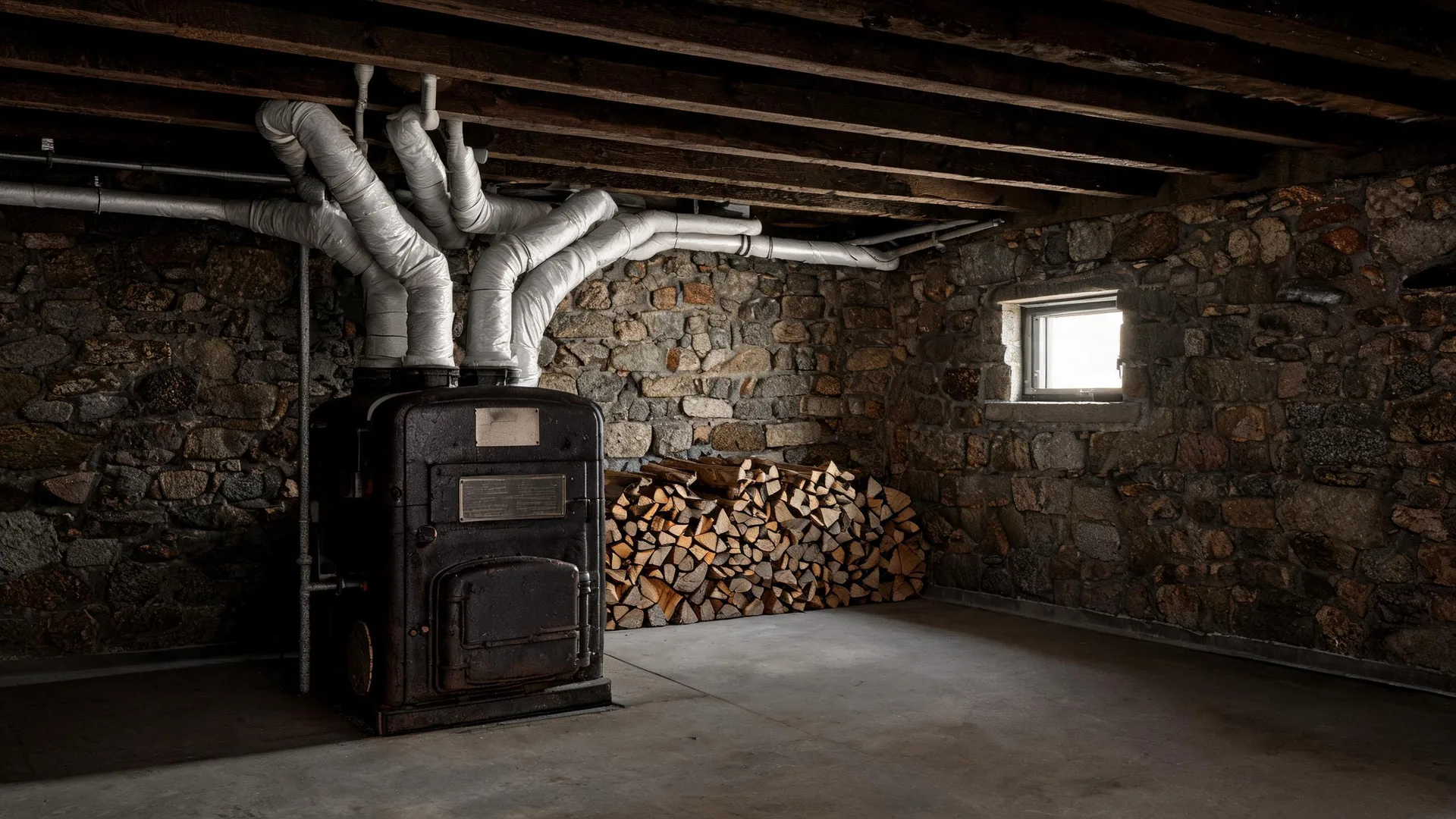
The old venting and gas line don't always carry over

If the new furnace vents differently than the old one, the old flue or vent pipe gets capped or removed, not reused. Same with the gas line if it needs resizing. Whatever isn't being used by the new system gets properly closed off, not just left in place.

AFUE tells you how much of the fuel burned turns into heat in the house instead of going out the flue. The rest escapes as exhaust, no matter how well the furnace is maintained. A higher rated furnace squeezes more heat out of the same flame, which is why it vents differently than an older one, often through a side wall instead of up a metal flue. The rating itself doesn't drift over time the way a furnace's actual performance can. A dirty filter or a cracked heat exchanger will waste fuel on a high-AFUE furnace just like it would on any other. The rating tells you what the furnace is capable of, not what it will actually do if it's neglected.

Install day starts with the old furnace coming out, not the new one going in. Once that's clear, the contractor sets the new unit, runs the venting, and connects the gas line and electrical. Each connection gets tested before anything gets buttoned up. Gas lines get checked for leaks. Electrical gets checked for a clean, secure connection, nothing loose or undersized. Then the furnace runs through a full cycle, start to shutdown, so the contractor can watch the flame, check the temperature rise, and confirm the blower is moving the right amount of air. A furnace that looks installed but hasn't been cycled and checked isn't a finished job, it's a furnace sitting in your house.