




A flat-roofed adobe-style desert house photographed at twilight, surrounded by saguaro cacti and xeriscape landscaping.

Heat Pump Installation in Virginia City, NV

Tell us about the job

Takes about a minute. No obligation.

New system or replacementHeat PumpStorey County, NV
Step 1 of 2

What ZIP code is the job in?

Electricity in Nevada runs 15 cents per kilowatthour. A heat pump moves heat instead of burning gas to make it, so it gets more warmth out of every kilowatthour than a space heater or old electric furnace does. That efficiency matters more here than in a state with cheap power, because every point of it shows up on your bill, month after month. A unit with a higher HSPF2 rating costs more to install but less to run, and in Virginia City the running part never stops being part of the math. Worth asking any contractor what rating they're quoting and why.

8 months
October through May, your system heats
2 months
July through August, it cools
25°F
the average winter night it heats against
84°F
the average summer afternoon it cools against
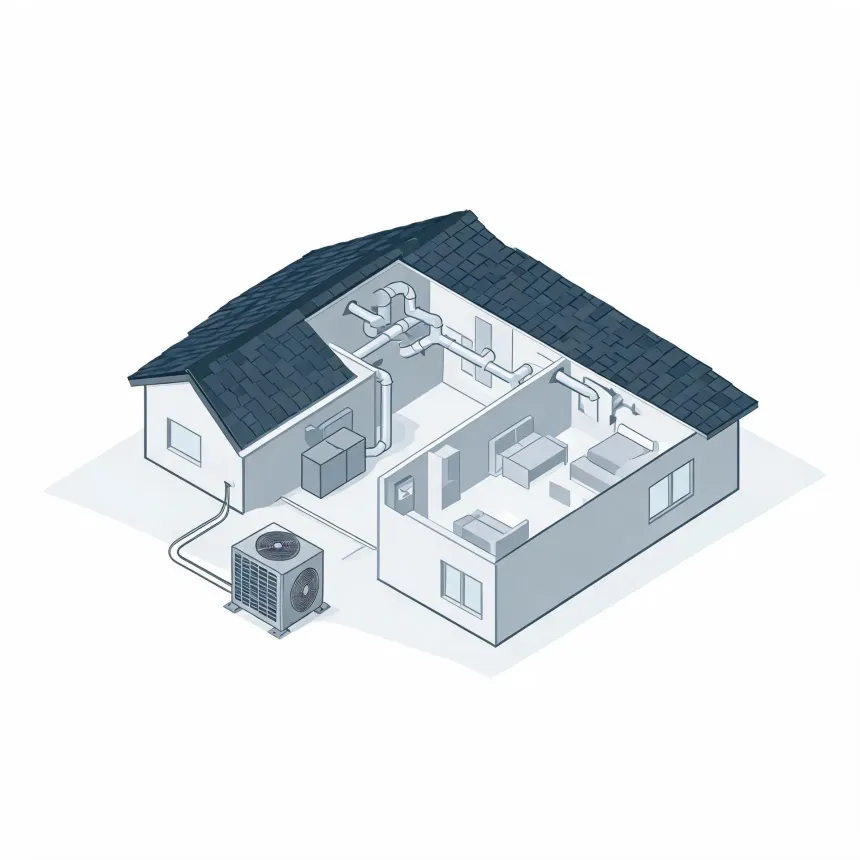
Isometric cutaway illustration of a single-story house showing interior rooms, ceiling ductwork, an indoor air handler, and an outdoor condenser unit connected by lines on the ground.
Your system heats October through May and cools July through August.

NOAA nClimDiv, 1991–2020 normals

Every heat pump has a balance point, the outdoor temperature where it stops keeping up on its own and backup heat kicks in.

Ask what balance point each quote is built around, because a system sized for a milder climate will lean on backup heat more than you expect.

A properly sized heat pump handles Virginia City winters without surprises

200 damaging wind events from 2015 to 2024
99 winter storms from 2015 to 2024
Winter nights average 25°F

Virginia City sits in climate zone 5B, a cool zone where heating carries the bigger load. Any split-system heat pump installed here has to meet 14.3 SEER2 for cooling and 7.5 HSPF2 for heating, the federal minimum since January 2023. Those numbers set a floor, not a ceiling, so plenty of systems on the market beat them by a good margin. A system that clears the minimum by more will cost less to run through a winter where it's doing most of the work. There's also a federal tax credit for qualifying heat pumps, worth asking a contractor about when you're comparing quotes.

Know what your home runs on before you replace it

Bottled or LP gas heats 43 percent of homes in Storey County, more than any other fuel. Utility gas heats another 21.8 percent. Electric heat covers just 12.9 percent. If your home runs on gas now, a heat pump means adding a new kind of system rather than swapping in a like-for-like replacement, and that's worth working through with a contractor before you decide.

Find a contractor
A gray heat pump condenser unit mounted on a concrete pad against the gray lap-siding exterior wall of a house.

Get it in before September ends

Heat here runs October through May, eight months of the year. September is the last easy month before that starts. A heat pump put in now gets tested on a mild day, not a cold one, and anything wrong with the install shows up while there's still time to fix it. Wait until the first cold snap and you're choosing a system under pressure, with whatever happens to be in stock.

Sizing comes from a load calculation, not the old unit's label

A contractor works out heating and cooling load room by room, using the square footage, the windows, the insulation and how the walls and roof are built. The system already in the house might have been wrong from the day it went in, so matching it just repeats the mistake. The output is a number in BTUs the new heat pump needs to hit, not a guess based on what's there now.
Oversized and undersized both cause real problems

A heat pump too big for the space blasts the house to temperature fast, then shuts off, cycling on and off all day instead of running steady. That short cycling wears on the compressor and leaves rooms feeling muggy in summer because the system never runs long enough to pull moisture out of the air. One too small runs constantly during the coldest and hottest stretches and still can't keep up, leaning hard on backup heat far more than it should.

Replacing the old system means dealing with whatever it left behind. If a gas furnace is coming out, the gas line to it needs to be capped off properly, not just shut at the valve. An old electric furnace or baseboard setup usually gets pulled entirely since a heat pump installation runs on different wiring and takes over the job whole. The outdoor condenser and indoor coil from a prior AC can sometimes be reused if a contractor is only adding heating capability, but most of the time a heat pump replaces both halves of the old system together, inside and out. Whoever does the work should also check the electrical panel, since a heat pump draws power differently than a gas furnace did and may call for a dedicated circuit. None of that old equipment goes back in once the new system is sized and running.

Install day starts with the outdoor unit and the indoor coil, and usually takes most of a day for a straightforward swap, longer if ductwork or wiring needs work too. The crew sets the outdoor unit on a pad, runs new line set between it and the indoor coil, and that line set gets brazed, not just connected with fittings, because any leak point there bleeds refrigerant for the life of the system. Once everything is connected, the system gets evacuated with a vacuum pump to pull out moisture and air, since either one left in the lines causes problems down the road. Only after that does refrigerant go in, charged to the weight the manufacturer specifies for that exact line length. Before anyone leaves, the system runs through a full cycle in both heating and cooling, and the contractor checks the temperature split at the vents to confirm it's moving the air it should. Walk through what was done and what to watch for in the first few weeks, because a new system still needs someone to notice if something feels off.