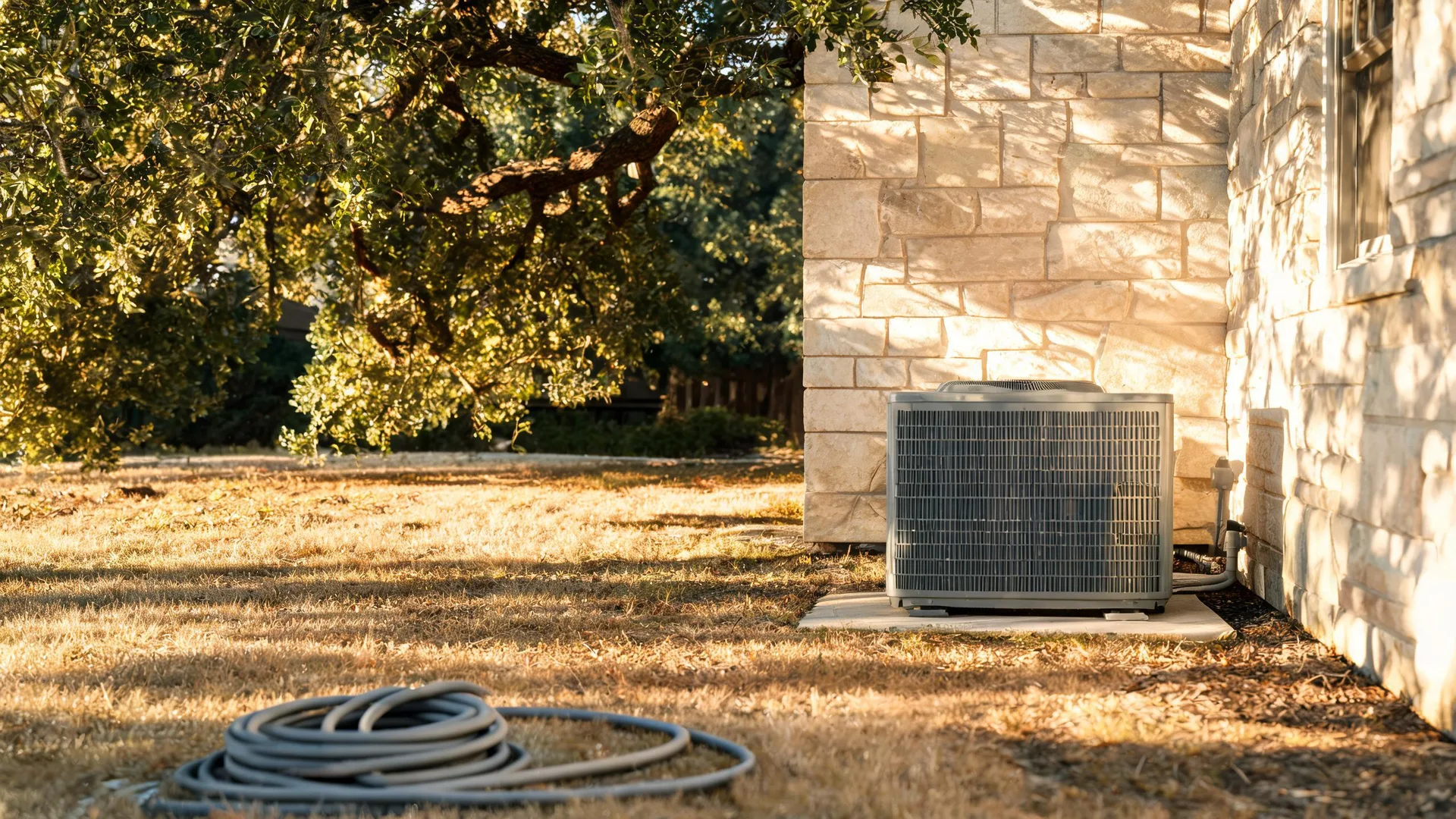
Electricity here runs 15 cents a kilowatt-hour
Nevada homes paid about that rate in 2024. A heat pump runs on electricity for both heating and cooling, so that rate applies all year, not just in summer.
Takes about a minute. No obligation.
Nevada homes paid about that rate in 2024. A heat pump runs on electricity for both heating and cooling, so that rate applies all year, not just in summer.
A heat pump sized right for your house moves heat using less power to do it. At this rate, that difference shows up on the bill, in the months you heat and the months you cool.

NOAA nClimDiv, 1991–2020 normals
Most homes in Mineral County heat with propane, not electricity.
A heat pump replaces that propane furnace with one system that also handles cooling.




Half the homes in Mineral County were built in 1971 or earlier. A heat pump going into a house that age has to work with the ductwork and electrical panel already there, not whatever a spec sheet assumes. If your system came with the house, it's worth having a contractor check the panel can handle the new load before anything gets installed. Mobile homes make up close to a quarter of the housing here too, and they take a different kind of equipment and ductwork than a site built house. None of this is a reason to wait. It's a reason to have someone look at what you've actually got before they size what goes in.
Mineral County falls under climate zone 4B. Any heat pump installed here has to clear federal minimums, 14.3 SEER2 for cooling and 7.5 HSPF2 for heating. In the Southwest, central air systems have to meet that same cooling number. A federal tax credit is available toward a system that qualifies.
Find a contractorSizing a heat pump is not about matching the tonnage of whatever is coming out. A contractor works out the heat loss and heat gain for the house itself. How much heat escapes on the coldest days. How much builds up on the hottest ones. That comes from the walls, the windows, the insulation, and how they're put together, not from a rule of thumb based on square footage. Too big and the unit short cycles. It blasts the house to temperature and shuts off before it's pulled moisture out of the air or run long enough to heat evenly. Too small and it runs flat out on the hardest days and still can't keep up, leaning hard on backup heat strips that work harder than the compressor should ever have to. A correctly sized system runs longer, steadier cycles. That's how a heat pump is supposed to work. The same calculation tells a contractor whether the ductwork already in place can deliver the air the new equipment needs to move, which matters as much as the equipment itself.
Every heat pump loses some capacity as the air outside gets colder, and every one needs backup heat for the days it can't keep up alone. Ask what the backup is, how it's controlled, and at what outdoor temperature it kicks in. A system that leans on backup heat too early costs more to run than one that's sized and set up right.
A compressor warranty and an installation warranty are not the same thing. The equipment maker stands behind the parts. The contractor stands behind the labor, the refrigerant charge, and whether the thing was put in correctly. Get both in writing, and ask what voids each one.
The equipment itself is one line item, but it's not the only one. What a contractor has to do to the ductwork before the new system can breathe right is often the bigger piece. That can mean sealing leaks, adding a return, or resizing a trunk line that was never built for this kind of airflow. The electrical work matters too. A heat pump draws differently than a furnace did, and if the panel or the circuit running to it isn't up to that load, that gets handled before the unit goes in, not after. Where the outdoor unit sits and how far the line set has to run to the indoor coil changes the labor as well. None of this shows up on the price tag of the equipment, but it's where the real cost of a correct installation lives.
SEER2 and HSPF2 measure how much heat a system moves for the power it spends, not how strong it is or how big a house it can cover. A higher number means less power spent to get the same heating or cooling, nothing more. Equipment carrying the same rating can still perform differently once it's installed, because ductwork, placement, and sizing all affect what actually reaches the rooms. The rating comes from a lab test run under set conditions, so it shows how the equipment performs on its best day, not on the coldest morning of the year. It's a fair way to compare one piece of equipment against another before it goes in. It's not a promise about what your bill will look like once it's running.