





View from beneath a concrete overhang toward a tan stucco single-story house with a gravel yard, a low concrete block wall, and a mesquite-like tree with a twisted trunk.

Heat Pump Installation in Gardnerville Ranchos, NV

Tell us about the job

Takes about a minute. No obligation.

New system or replacementHeat PumpDouglas County, NV
Step 1 of 2

What ZIP code is the job in?

Nevada homes paid 15 cents per kilowatthour in 2024. A heat pump moves heat instead of burning gas or resisting current to make it, so it uses less power to cover a given stretch of warm or cold weather than a straight electric furnace or baseboard heat would. At that price per kilowatthour, the difference between a unit that does this well and one that does it poorly shows up on the electric bill every month, not just in the first year. Look at the efficiency rating the installer quotes and ask what it means for your specific home before you decide.

10 months
September through June, your system heats
2 months
July through August, it cools
24°F
the average winter night it heats against
82°F
the average summer afternoon it cools against
Isometric line illustration of a cutaway house showing interior rooms, an air handler with ductwork in the attic space, and an outdoor condenser unit beside the exterior wall.
Your system heats September through June and cools July through August.

NOAA nClimDiv, 1991–2020 normals

Heat runs here from September through June.

August is when a new heat pump should go in, so it's ready before the heat is.

Gardnerville Ranchos sees its share of wind and winter storms, not reasons to size up

513 severe weather events from 2015 to 2024
13% of homes statewide lost power a day or more in 2024
290 damaging wind events from 2015 to 2024
A standard heat pump, sized rightWinter lows here average 24°F, within range for a standard heat pump sized to the home.

Douglas County sits in climate zone 4B, a mixed zone that asks real work of both sides of a heat pump, heating and cooling alike. Any split-system heat pump installed here new has to clear 14.3 SEER2 for cooling and 7.5 HSPF2 for heating, the federal minimum as of January 2023. That floor narrows what an installer can legally put in, so a quote well above it is worth asking about, not just one that barely clears it. A federal tax credit is available for qualifying heat pumps, separate from whatever Nevada charges per kilowatthour. Ask the installer which of their options qualify before you pick one.

Most homes here run on gas. A heat pump changes the job.

Gas heats 71.3% of homes in Douglas County. If your home already has a gas furnace, a heat pump means running a new line out to the unit and deciding what happens to the furnace, keep it for backup or take it out. That's a bigger job than swapping one heat pump for another, so get clear on what the install involves before you compare quotes.

Find a contractor
A gray heat pump condenser unit mounted on a concrete pad against the gray lap-siding exterior wall of a house.

One day of work, years of running on what got done right

Install day starts with the old equipment coming out and the new pad or bracket going in, so the crew is on site a full day, sometimes longer if the job calls for new line set or duct changes. Once the outdoor unit is set and the indoor coil is in place, the installer runs the line set between them and pulls a vacuum on it to clear out air and moisture before any refrigerant goes in. Skipping that step is what causes a system to run poorly from day one, so it's worth asking whether it's part of the process. After charging the line, the crew wires in the thermostat and runs the system through both modes, heating and cooling, checking the temperature split at the vents and the pressures at the outdoor unit against what the manufacturer specifies. A heat pump that's installed right gets tested in both directions before the crew leaves, not just switched on and left to figure out.

Sizing is a room by room count, not a nameplate match

A contractor who sizes the job right works out how much heat your home loses in winter and gains in summer, room by room, from the walls, the windows, the ceiling, and adds it up. That calculation is what tells them what size unit to quote. Going off the old system's size, or a rule of thumb per square foot, skips that work and often gets it wrong.
Both too big and too small cause real problems

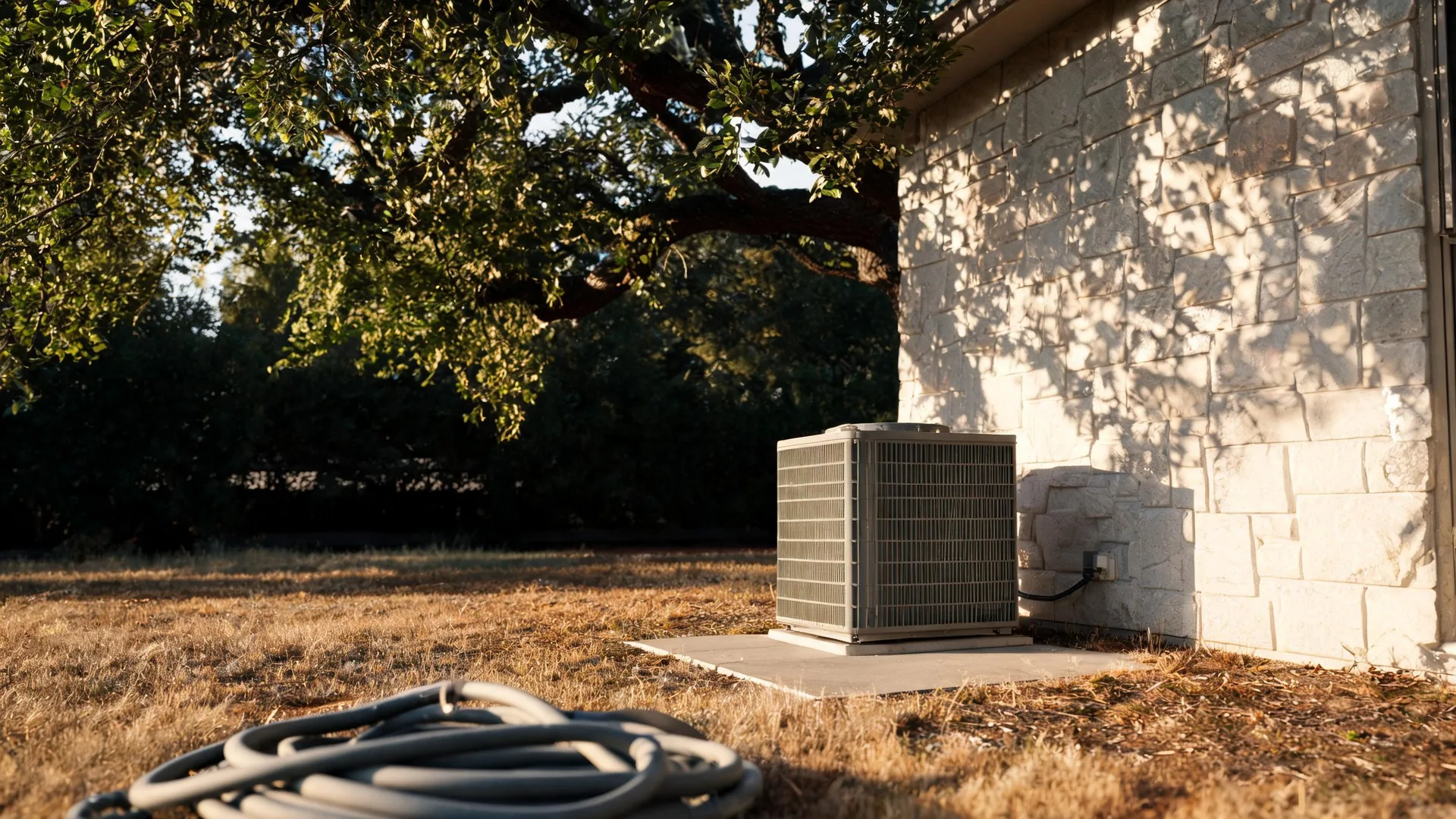
A heat pump sized too big cools the air fast and shuts off before it pulls the moisture out, so the house feels clammy even at the right temperature. It also cycles on and off more, and every start puts wear on the compressor. One sized too small runs flat out on the coldest and hottest days and still can't keep up, leaving you reaching for a backup source of heat.

If you're replacing a furnace or an old heat pump, the installer still has to deal with what's already there. A furnace gets disconnected, the gas line capped off or removed, and the unit itself cut up and hauled out, cabinet, burners and all. An old heat pump loses its refrigerant first. That refrigerant can't just be vented. It has to be recovered into a tank and handled separately, which is why pulling an old system is its own line of work, not just a few minutes with a wrench. Ductwork usually stays, but if it was sized for the old equipment, the installer should check that it still matches what the new heat pump moves. Ask what happens to the old equipment and whether removing it is already part of the quote.

Price comes down to what the installer has to do to get the unit running, not just the unit itself. Setting a line set, running new wiring, and mounting a pad is one job. Reworking a closet built for a furnace, adding a disconnect box, or running refrigerant line through finished walls is another, and it costs more because it takes longer and asks more of the person doing it. The unit matters too. A variable-speed compressor costs more up front than a single-stage one because it can hold steady output instead of just switching on and off, which asks more of its parts and its controls. Anything that touches the electrical panel, like adding a circuit the heat pump needs, adds its own labor on top of the equipment. Ask the installer to walk through what their quote covers room by room, not just unit by unit, so you know what you're actually paying for.