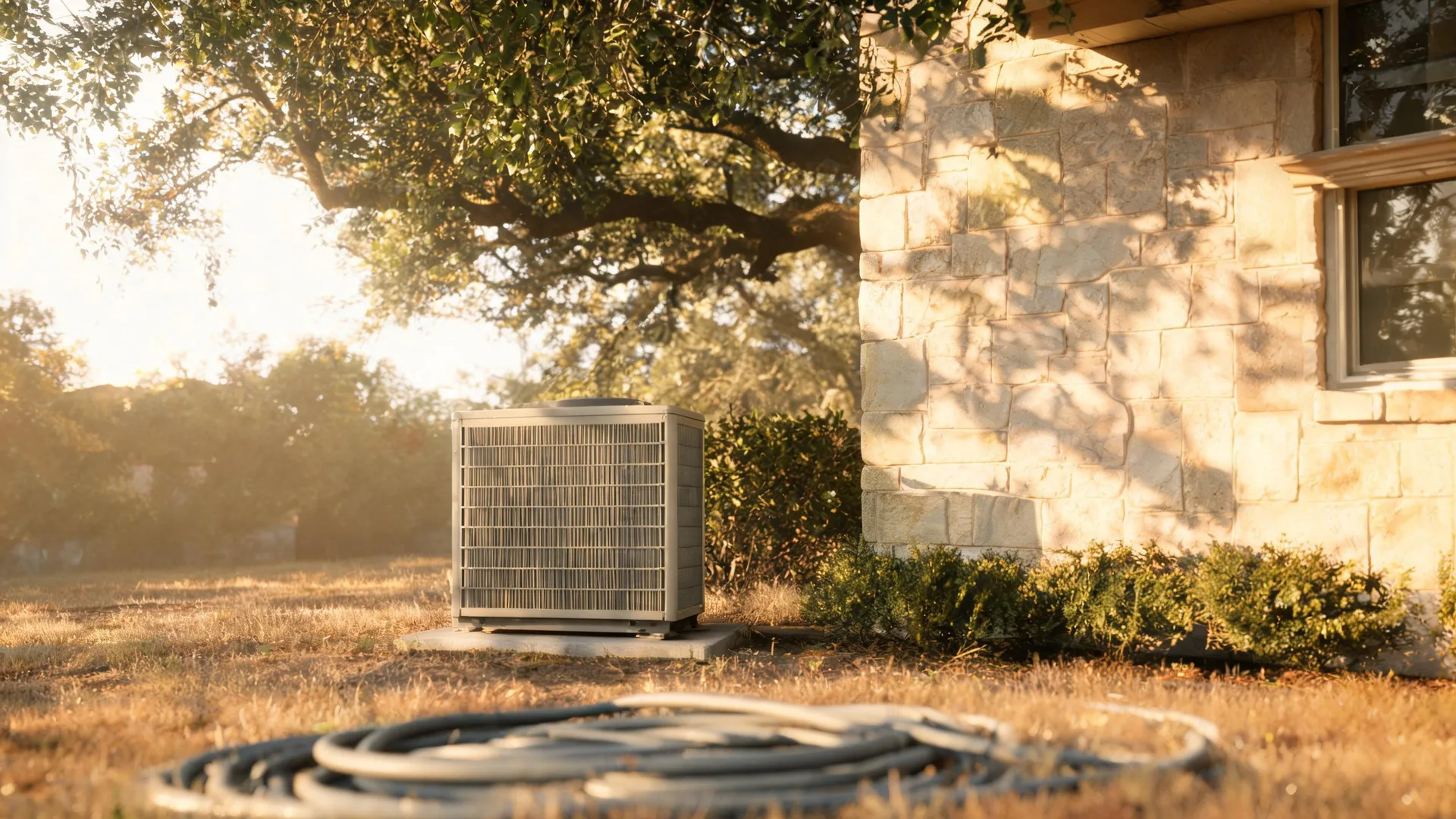
Electricity here runs 15 cents a kilowatt-hour
Nevada homes paid 15.00 cents per kilowatthour in 2024. A heat pump moves heat instead of burning gas to make it, but it still runs on that same electric rate every time it cycles on.
Takes about a minute. No obligation.
Nevada homes paid 15.00 cents per kilowatthour in 2024. A heat pump moves heat instead of burning gas to make it, but it still runs on that same electric rate every time it cycles on.
At this rate, a heat pump that gets more heat out of each kilowatt-hour costs less to run than one that doesn't. That difference shows up on every bill, not just the first one.

NOAA nClimDiv, 1991–2020 normals
The rating on the label is measured at one set of conditions, not the day your system actually has to work hardest.
A unit with a higher rating holds more of that output when it gets very hot or very cold outside, so check how it performs away from the test point too.



Heat here runs October through May, about eight months of the year. September is the month before it starts, and that's the window to get a new heat pump in. Installing before the first cold snap means it's commissioned and running right before you need it every day, not during the first hard freeze. Cooling here is short, just July and August, so this system will spend most of its life heating, not cooling. That's worth keeping in mind when you're comparing units, since the heating side of the performance is what you'll actually live with most of the year.
Power costs more here, so an efficient system pays you back on every bill.
Find a contractor
Whatever heated this house before gets disconnected, not just switched off. If it was a furnace, the gas line gets capped off by a licensed plumber, not left dangling behind the unit. If the old system used refrigerant lines, that refrigerant gets recovered, not vented into the air. If the old system shared ductwork with the new heat pump, that ductwork is worth inspecting before the new unit runs through it. A heat pump moves a steady volume of air for long stretches, unlike a furnace firing in short bursts, so leaks or crushed sections the old system tolerated will show up differently with a heat pump on the other end. The old outdoor unit and indoor coil get hauled off, and the pad they sat on either gets reused or cleared for the new one.
A heat pump has to be matched to the house through a load calculation, not picked by the size of the one it replaces. Going up a size doesn't buy comfort. It buys a unit that short cycles, wears its compressor faster, and struggles to pull moisture out of the air during cooling. The right size costs what it costs. The wrong size costs more over time even if it was cheaper to install.
The outdoor and indoor units are the easy part of the price. What varies is what the installer finds once the job starts. The electrical panel may or may not take the new circuit. The line set may need replacing instead of reusing. The ductwork may or may not be able to move the air a heat pump needs to move. Those answers come from the house, not the equipment, and they're usually what separates one quote from another.
A load calculation looks at the whole house, not just the square footage. Window area, insulation, ceiling height, how many walls face outside, all of it changes how much heat the house loses on a cold night and how much a heat pump needs to put back. Houses the same size can still need different sized units for exactly that reason. An oversized heat pump reaches the temperature on the thermostat fast, then shuts off before it's run long enough to pull moisture out of the air, so the house cools or heats in bursts and never quite settles. An undersized one runs constantly and still loses ground on the coldest or hottest days. The right size runs long, steady cycles, which is also how a heat pump is meant to run. Sizing isn't a guess rounded up for safety. It's a calculation done on this house, and it's worth asking to see the numbers behind it, not just the final unit size.
Installation day starts with the old equipment coming out, and the new outdoor unit and indoor coil going in roughly where the old ones sat, unless the load calculation called for a different spot. The electrical connections get run or reused, the line set gets connected and pressure tested, and the system gets evacuated before any refrigerant moves through it. That last step matters more than it looks. Any moisture or air left in the lines ruins the charge and shortens the compressor's life, so a tech checking gauges and waiting them out is doing real work, not padding the day. Once it's charged, the system runs through its paces, heating and cooling, while the installer checks airflow at the vents and the temperature split between the air going in and the air coming out. A thermostat gets set up last, after the system's already proven it runs the way it should.