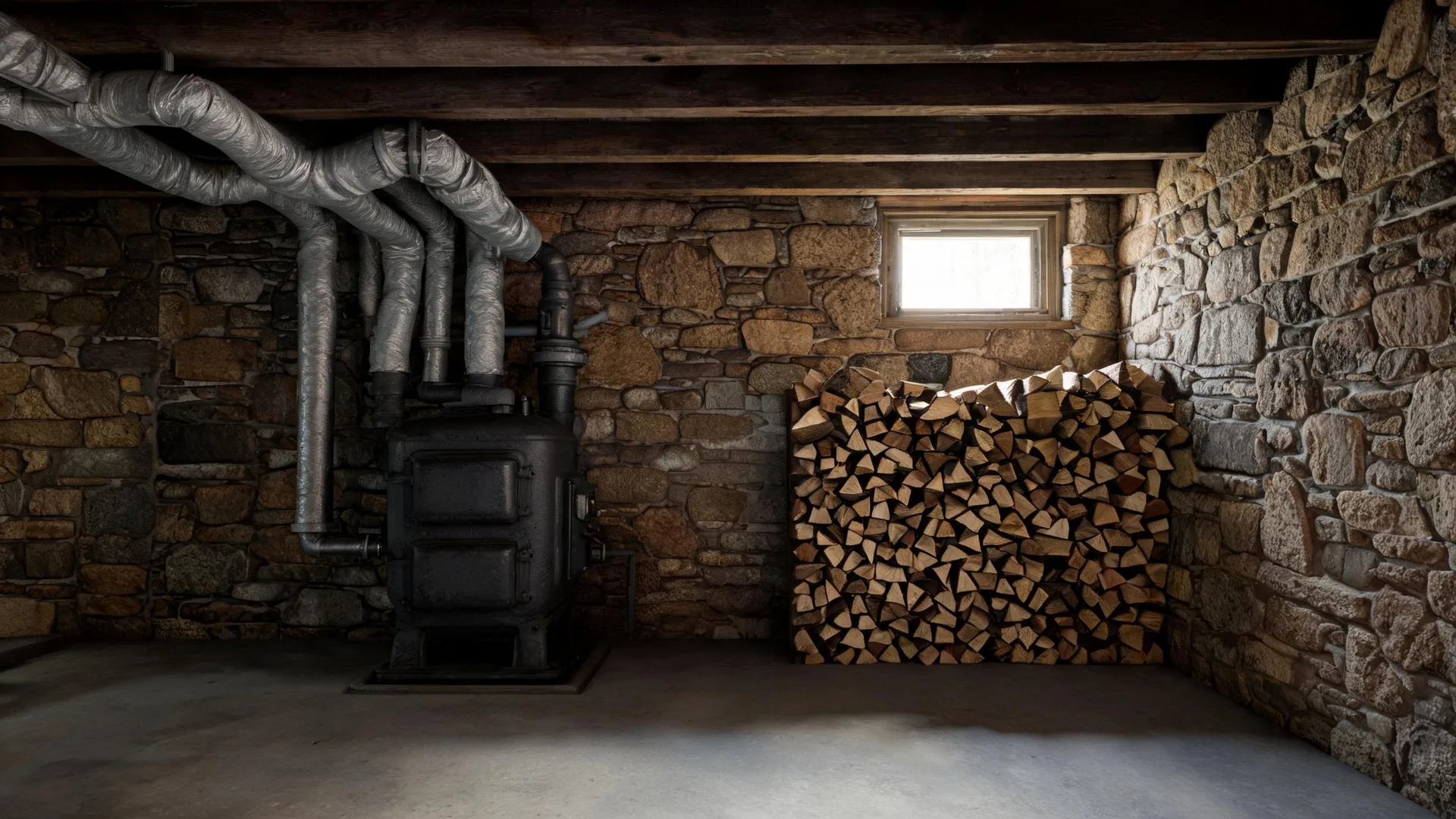
Propane runs $31.51 per million Btu here
Nevada propane averaged $31.51 per million Btu in 2024. A furnace that wastes less of that fuel keeps more of it as heat in the house instead of out the flue.
Takes about a minute. No obligation.
Nevada propane averaged $31.51 per million Btu in 2024. A furnace that wastes less of that fuel keeps more of it as heat in the house instead of out the flue.
At that price, efficiency is not a spec on paper, it is what shows up on the bill every time the furnace runs. Choosing the installation is choosing years of that cost.
NOAA nClimDiv, 1991–2020 normals
Furnace season starts in October here, and it runs clear through May.
Get the new furnace in by September and it's broken in and running right before the first cold night asks anything of it.




Half the homes in Mineral County were built in 1971 or earlier. A furnace going into one of those houses is going into ductwork and venting sized for whatever ran there before, not for whatever you pick off a spec sheet. Mobile homes make up close to a quarter of the housing here too, and those take a furnace built and certified for mobile home installation, not a standard model. None of this means guessing. It means the new furnace has to match the house it's going into, not just the one in the showroom.
Mineral County falls in climate zone 4B, and any furnace installed here has to meet the federal minimum of 80 percent AFUE. That floor is already set. Starting in December 2028, new furnaces will have to hit 95 percent AFUE instead, so a furnace bought now is likely the last one you'll get at the current standard. A federal tax credit is available for qualifying high-efficiency equipment.
Find a contractor
A straight swap, same fuel, same spot, same ductwork, is the simple version of this job. Anything beyond that adds work. Ductwork that was never right for the house needs resizing. Old venting needs replacing instead of reusing. A blower that draws more than the old one might need the electrical looked at. The furnace itself has to be sized to the house, and that takes a load calculation, not a guess based on what size came out. Bigger isn't better here. An oversized furnace short cycles. It wears out its own parts faster and still never runs long enough to heat the house evenly. The labor matters as much as the furnace does. Pulling the old unit, setting the new one, sealing the ducts, commissioning it so it fires and runs the way it's supposed to, that work is where a lot of the job actually lives.
Every furnace sold has an AFUE rating on the label, and that rating is what separates furnaces that look alike on a spec sheet. It tells you how much of the fuel becomes heat in the house and how much goes out the flue. Ask for the rating in writing before you decide, not after.
A furnace sized off the old unit's nameplate is a guess, not a measurement. The right size comes from a room by room look at the house, the windows, the insulation, how the ducts are laid out. If nobody mentions a load calculation before quoting a size, ask why not.
A load calculation looks at the whole house, not just the furnace that used to sit there. It accounts for how much wall and window area there is to lose heat through, how the rooms connect, and how much air the ductwork can actually move. Skip that step and sizing becomes a guess dressed up as a decision. Too big and the furnace fires, blasts the house to temperature, and shuts off again before it ever runs long enough to heat evenly or pull moisture out of the air. Too small and it runs constantly, straining to keep up on the coldest nights and still falling short. The right size is the one that runs in long, steady cycles, start to finish, the way it was built to.
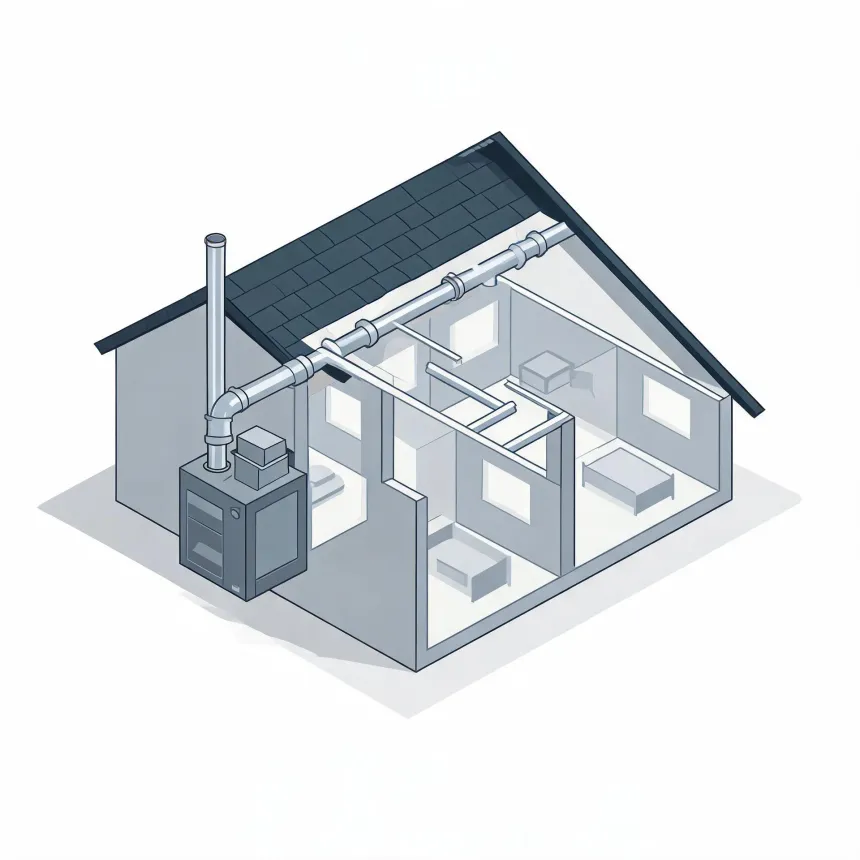
Installation day starts with the old furnace coming out, along with the old venting if it's not rated for the new unit. The new furnace gets set in place, leveled, and connected to the gas line, the venting, and the ductwork. Every joint and connection gets checked for a tight seal before anything runs. Then comes startup. The tech fires the furnace, checks the gas pressure, and watches how it ignites and runs through a full cycle. Airflow gets checked at the vents, and the temperature rise across the furnace gets measured against what the manufacturer specs for that model. A furnace that's never commissioned this way might run, but nobody actually knows if it's running right.