Gas here costs more than most places
Nevada homes paid $17.91 per million Btu for natural gas in 2024. A furnace that wastes less of that gas on every cycle matters more here than somewhere gas runs cheap.
Takes about a minute. No obligation.
Nevada homes paid $17.91 per million Btu for natural gas in 2024. A furnace that wastes less of that gas on every cycle matters more here than somewhere gas runs cheap.
When you're pricing furnaces for this job, put the AFUE number next to the price. A higher rating burns less gas to put out the same heat, and at Nevada's gas prices that difference shows up on every bill through the winter.
NOAA nClimDiv, 1991–2020 normals
Gas heats 71.3% of homes in Douglas County.
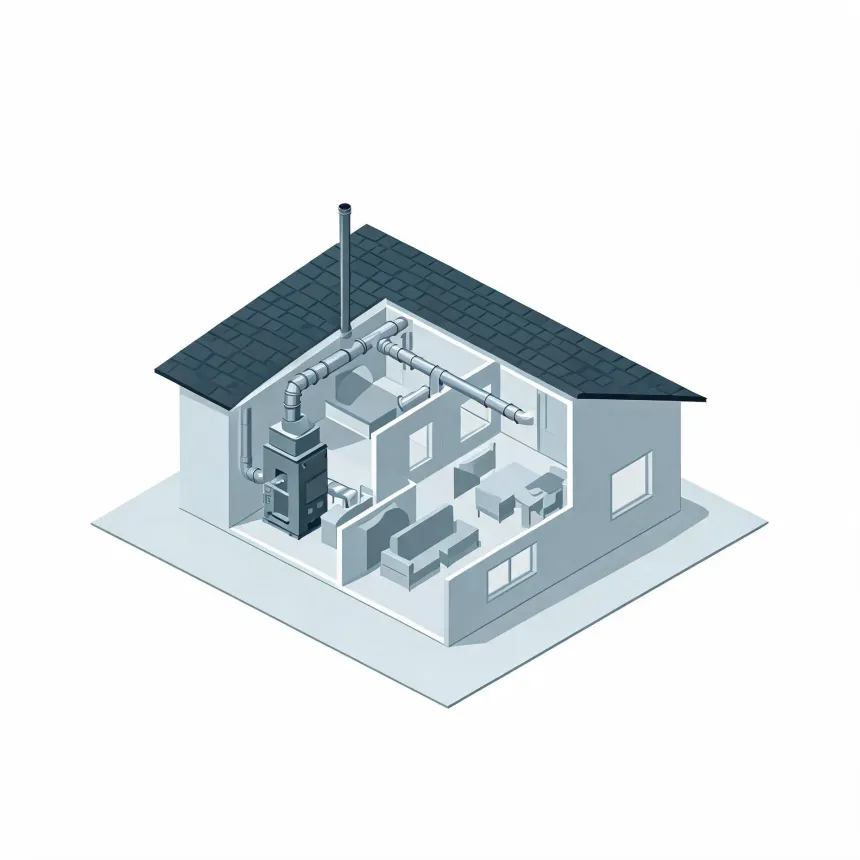
A gas furnace is the system most homes here already have the hookups for.




Heat starts running in September here, so August is when you want the new furnace already in and tested, not torn apart on a cold morning. A furnace install is usually a full day of work, and that goes easier when nobody's racing the weather. Waiting until the old one quits means taking whatever appointment is open and whatever unit is in stock. Lining it up in August means you pick the model, you pick the date, and the furnace is broken in before it has ten months of work ahead of it.
Douglas County falls in climate zone 4B, which asks real work of both furnace and air conditioner. Any furnace installed here now has to clear 80.0 percent AFUE, the federal minimum for non-weatherized gas furnaces. That floor is set to rise to 95.0 percent for units built from the end of 2028 on. A furnace that clears today's minimum by a wide margin costs less to run on every cycle, winter after winter.
Find a contractorTen months a year this furnace runs, and it's working against real cold when it does. A unit sized for an easier climate will short cycle trying to keep up, and parts wear faster running at their limit than they would coasting through a mild winter. Get the load calculated for this house, not guessed at from the old system's size. That's what the contractor bidding the job should be doing before any model gets picked.
A contractor works out the right size from the house itself. How much glass it has. How the walls are built. How much ceiling and which way the rooms face. That gets measured and run through the numbers. Matching the old furnace's size just repeats whatever mistake was built into the first install, if there was one.
A furnace too big for the house heats the air fast, shuts off, and starts again before the rooms ever even out. You get hot blasts and cold stretches in the same house. A furnace too small runs long and still can't catch up on the coldest days. Either way the parts inside are cycling more than they should, and that's what wears them down early.
Estimates for a typical Douglas County home, from EIA household energy data, Nevada fuel prices and NOAA climate normals. Your home will differ.
Installation day starts with the old furnace coming out, and that's more than unbolting a box. The vent, the gas line, the return plenum and the ductwork connections all tie into it, and each one gets disconnected before anything new goes in. The new furnace gets set and leveled, then the gas line, the vent, and the duct connections are made to fit it, which is rarely a straight swap even when the new unit is the same size as the old. Once it's hooked up, a tech fires it and checks the flame, checks for gas leaks, and runs it through a full cycle to watch how it heats and how it shuts off. Airflow gets checked at the registers, and the thermostat gets wired in and tested. None of that gets rushed, because a furnace that isn't checked properly on day one tends to show its problems on the coldest night of the year.