Gas is the default here
Utility gas heats 67.5% of occupied homes in Lyon County, more than every other fuel combined. A gas furnace is the normal setup in this area, not an exception.
Takes about a minute. No obligation.
Utility gas heats 67.5% of occupied homes in Lyon County, more than every other fuel combined. A gas furnace is the normal setup in this area, not an exception.
If your home already has a gas line and a vent for a furnace, putting in another gas furnace means a contractor can use what's already there instead of adding new fuel service or venting.
NOAA nClimDiv, 1991–2020 normals
Fernley furnaces run from October clear through May.
A furnace sized for mild winters will fall behind here, so get the sizing right before you buy.



Lyon County sees its share of rough weather, with damaging wind hitting the area 305 times between 2015 and 2024. Winter storms came through often too. That's the kind of weather a furnace here has to run through, not around. None of it means you need a bigger unit or a fancier one. A properly sized gas furnace handles a windy night the same way it handles a calm one, because the weather outside doesn't change what the furnace has to do inside. Size it to your home, not to the forecast.
Furnaces here run October through May, eight months out of the year. September is the last clear stretch before that starts. Get the new furnace in then and the install happens on a normal schedule, with time to sort out sizing and venting properly, instead of getting squeezed in once the cold hits.
Find a contractorEight months of heat, and overnight lows averaging 23 degrees through December, January and February. That's what the new furnace has to answer for, every winter it's in the ground. Get the size wrong in either direction and it shows up fast here, not years down the road. Too small and it runs flat out all winter trying to catch up. Too big and it short cycles, kicking on and off instead of running a steady stretch. A contractor sizing it for Fernley should be running a load calculation on your house, not pulling a number off the unit you're replacing.
A contractor doing this right measures the house. That means walls, windows, ceiling height, how the rooms connect, where the sun hits. The furnace already in there might have been wrong from day one, or sized for a house that's since had windows replaced or a room added on. Matching the new unit to the old one just copies whatever mistake is already built in.
A furnace with too much output heats the air fast, hits the thermostat, and shuts off before it's pulled warm air through the whole house. Rooms near the vents get too hot while rooms at the end of the duct run stay cold. The furnace that's sized right runs longer, steadier stretches, and spreads heat evenly because it's not racing to shut itself off.
Estimates for a typical Lyon County home, from EIA household energy data, Nevada fuel prices and NOAA climate normals. Your home will differ.
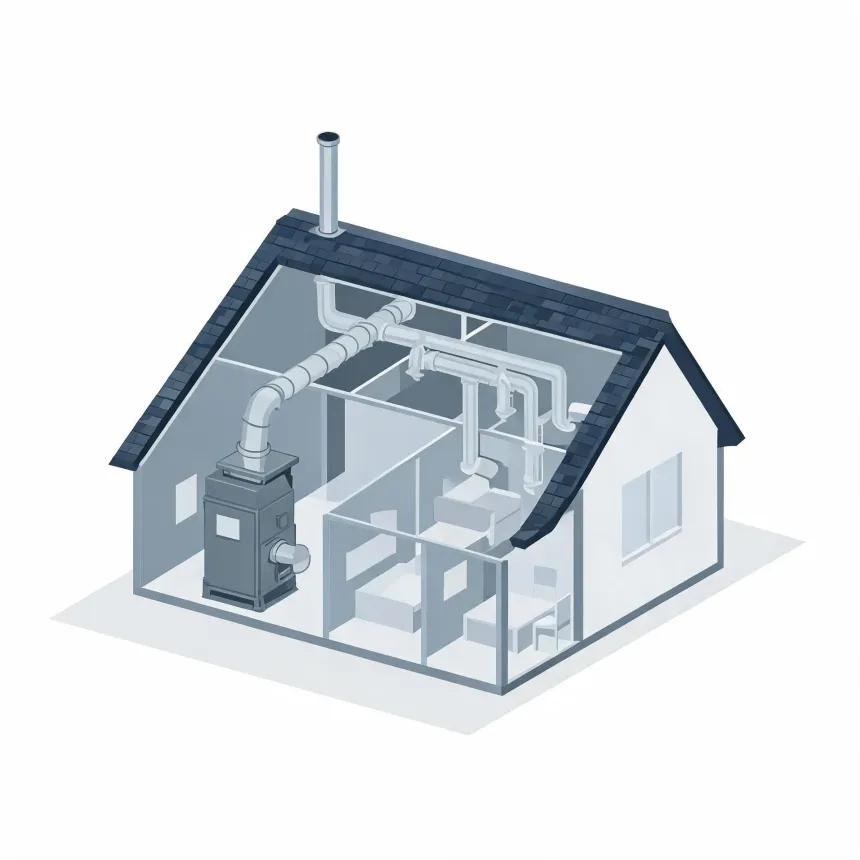
Install day starts with the old furnace coming out, and what a contractor finds underneath often shapes the rest of the day. The gas line gets checked, the vent connects to the new unit, and the ductwork gets tied in. If the take-off points don't line up with the new furnace's cabinet, that gets sorted on site, not guessed at ahead of time. Once it's connected, a contractor runs the furnace through a full cycle, checking gas pressure, airflow across the coil if there's an AC unit paired with it, and the temperature rise through the plenum. That last check matters more than people expect. A furnace can be wired right and still run outside the range it's built for if the airflow isn't set correctly, and that shows up as a furnace that short cycles or runs hot. The furnace doesn't get called finished until it's held a steady cycle, not just fired once and left.