Zone 5B sets the floor
White Pine County falls under zone 5B, a cool, dry climate where the furnace carries most of the load. Any furnace installed here needs to reach at least 80.0 percent AFUE, the federal minimum for non-weatherized gas furnaces.
Takes about a minute. No obligation.
White Pine County falls under zone 5B, a cool, dry climate where the furnace carries most of the load. Any furnace installed here needs to reach at least 80.0 percent AFUE, the federal minimum for non-weatherized gas furnaces.
Furnaces built on or after December 18, 2028 will need to hit 95.0 percent AFUE. Worth asking a contractor which standard the unit they're quoting was built to meet.
NOAA nClimDiv, 1991–2020 normals
Heat goes on in September here and runs clear through June.
Get the furnace in during August and it's ready, not rushed.




Electricity heats 64.5 percent of homes in White Pine County, more than any other fuel. Bottled, tank or LP gas comes next at 15.4 percent, and that's what most gas furnaces here run on since there's no natural gas line to tap. If your old furnace ran on propane, replacing it with another propane furnace means the tank, the line and the vent are already in place. Switching fuels means new infrastructure, and that's a bigger job than swapping one furnace for another.
Half the homes in White Pine County were built in 1970 or earlier. A furnace that size and venting worked for your house needs sizing for your house, not just a swap for whatever was there before. Worth having a contractor check the load before they quote anything.
Find a contractor
AFUE is the share of fuel the furnace turns into heat for the house instead of losing out the vent. A furnace with a higher rating keeps more of that fuel working for you, month after month, which matters most here since the furnace runs for most of the year. The rating also tells you something about how the unit is built. A furnace rated well above the federal minimum usually needs a second heat exchanger to pull extra heat out of the exhaust before it leaves, and that exhaust runs cool enough to vent through plastic pipe instead of metal. That's a different venting setup, not just a different number on the label, so it changes what the installer has to run and where it can go.
Sizing a furnace right means checking how fast the house loses heat. The windows, the walls, the ceiling height, how much air leaks out all matter. A contractor works this out room by room. Square footage alone leaves out too much to be reliable.
An oversized furnace blasts heat fast, shuts off, then starts again a few minutes later. That short cycling wears the ignition system and the blower motor faster than steady runs would. An undersized furnace never catches up, so it runs long and hard instead, and the wear adds up the same way, just slower.
A few questions tell you more than any brochure. Ask what the AFUE rating is and get it in writing, not just the model name. Ask whether the quote includes a load calculation or whether the new furnace is sized off the old one. Ask what happens to the ductwork, since a furnace that moves more or less air than before can leave rooms uneven even if the unit itself runs fine. Ask about the warranty on the heat exchanger specifically, since that part costs the most to replace and the one on the label isn't always the one that covers it. And ask who pulls the permit and handles the inspection, because that's what confirms the install was done to code, not just that the furnace turns on.
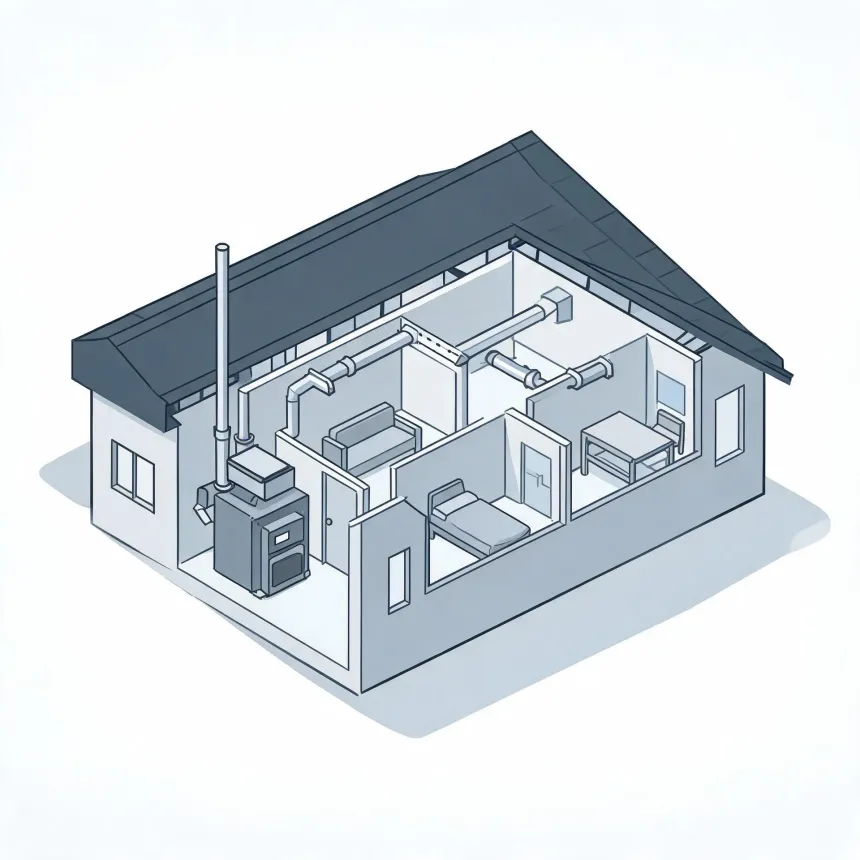
The old furnace has to come out before anything else happens. Gas and power get shut off first, then the ductwork, the vent pipe and the gas line get disconnected from the unit being replaced. Pulling it out can take a while if it was set into a tight closet or crawlspace. Once it's clear, the duct connections and the vent get checked against the new unit, since they don't always line up exactly even with a matching brand. The gas line gets pressure tested before the new furnace ever fires. The vent gets checked for proper slope and clearance too, since a vent that worked for the old furnace doesn't always suit the new one. Only then does the new unit get set, wired and started up, with the contractor checking the flame, the temperature rise and the airflow at the vents before calling it done.